Wheat vs. Watts
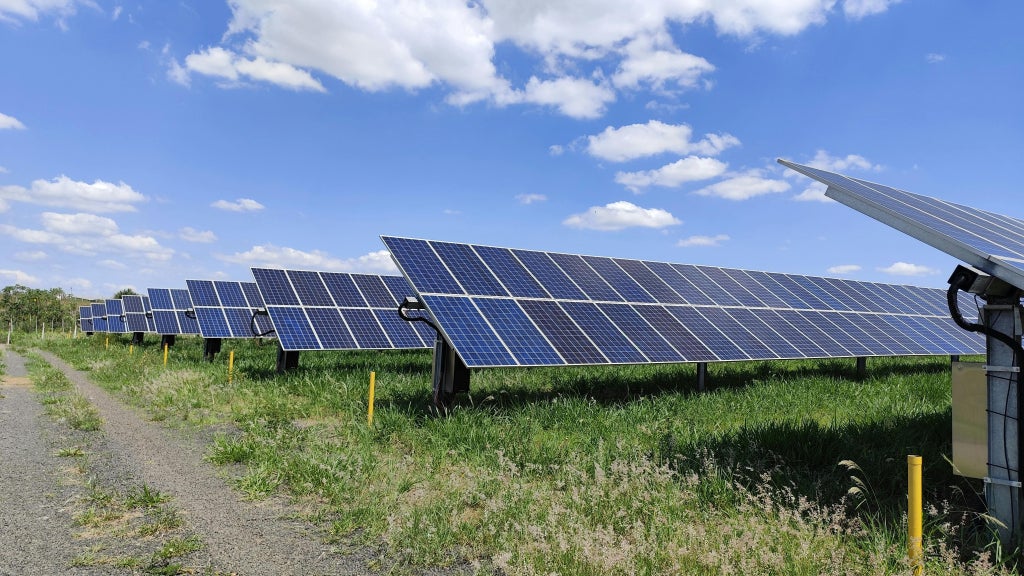
In rural eastern Oregon, the newest cash crop isn’t wheat—it’s solar panels.
Across America, agriculturists are facing a growing dilemma as renewable energy competes with traditional food production for valuable arable land. According to the Environmental and Energy Study Institute, today, 80% of global energy consumption still comes from fossil fuels, and our demand for energy isn’t slowing down. Renewable energy is urgently needed to meet this demand. Eastern Oregon’s dryland seems an ideal spot, with access to existing high-voltage powerlines carrying power to population centers throughout the West Coast, 300+ days of sunshine each year, and a relatively steady wind source. When a farmer chooses to lease land to a renewable energy company—whether wind or solar—they receive a steady income while their land generates power for our communities.
On first glance, this appears to be a win-win: clean energy for the planet and a new, steady income stream for farmers. Yet beneath the panels and turbines, a more profound question waits: How can agriculture feed a growing population while fueling a greener world?
Family farms have long been the backbone of rural economies, yet today they are under immense pressure. Soaring costs, fickle markets and a rapidly aging farmer population have made it increasingly hard to sustain traditional operations. Many farmers view renewable energy leases as a lifeline. They provide predictable income with fewer risks than farming. But every acre converted to energy production means less acreage for growing food.
The consequences ripple far beyond the individual farmer. Large-scale solar projects are typically single-use developments, taking productive land out of agricultural circulation. Wind farms have more dual-use potential. Crops can be planted and livestock can graze between turbines, but they too reshape the cultural and visual identity of rural life. And many rural residents feel that renewable energy projects are built to benefit urban areas, while the rural communities that host them shoulder all of the burdens. The result is an uneasy tension between progress and preservation, between global environmental goals and local economic survival.
Both food and renewable resources are critical for the development of our nation, and it is up to us, as the future of agriculture, to find creative solutions to these problems. The challenge isn’t a choice between food and power; it’s finding that delicate balance that sustains both. The story of modern agriculture is no longer solely about growing crops; it’s about cultivating possibilities. A new generation of agriculturists is increasingly engaged in finding innovative solutions. Crops are being developed that can thrive in lands less suited to renewable resources. Solar panels are being designed to allow for grazing underneath. Heat generated as a by-product of solar production is being used to increase the growing season of some arid environments. Finding balance between renewable energy and farming will take imagination, compassion, and humility toward the land and the people relying on it, and FFA members will be instrumental in solving these problems and securing the future of agriculture.