Grants for Growing Produce
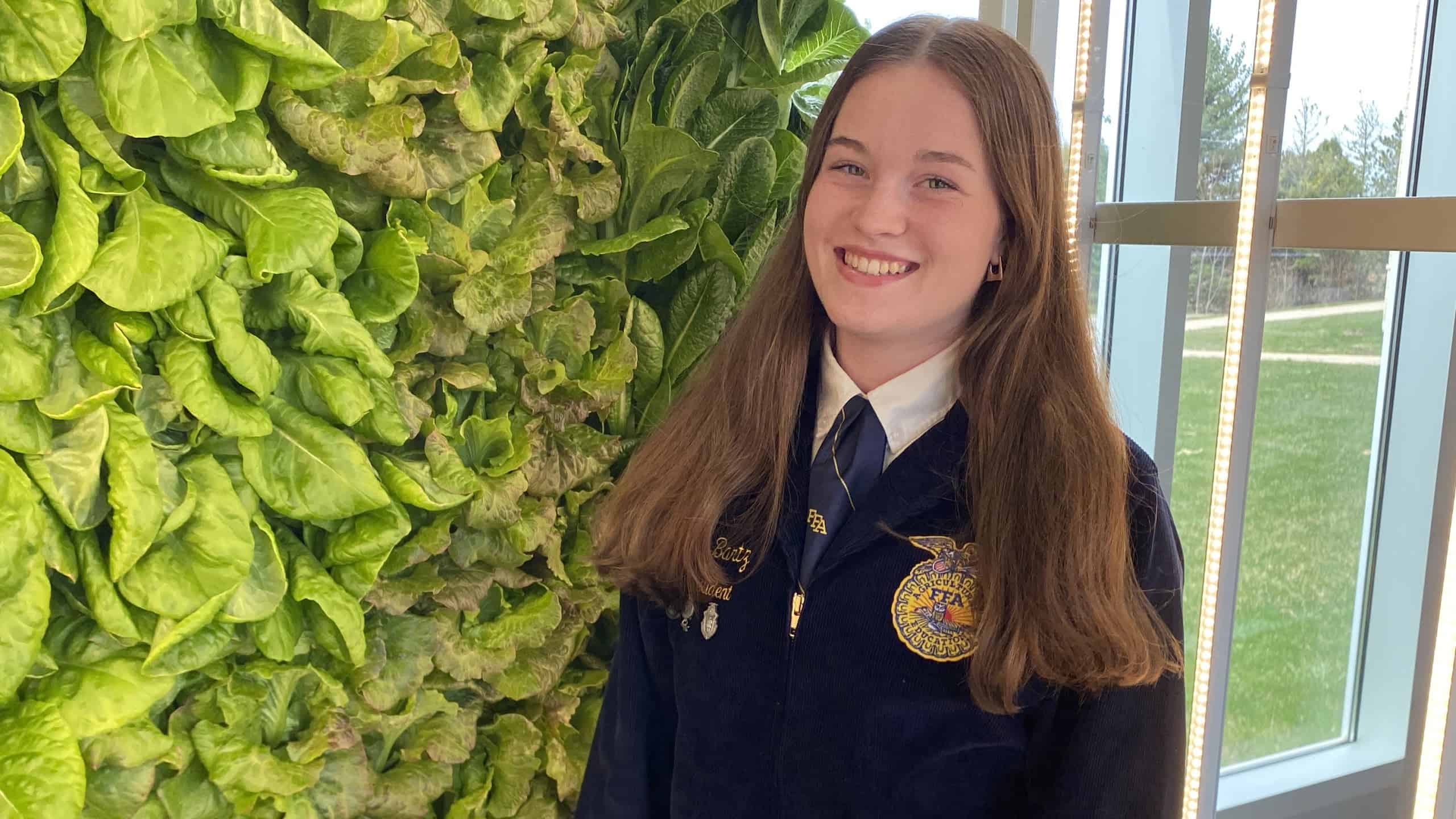 At least every other week, the Dodgeville High School agriculture program provides fresh lettuce for lunch at their Wisconsin school.
Twenty to 30 pounds of lettuce is grown weekly in a Fork Farms Flex Acre vertical hydroponic garden, which retails for around $20,000.
“We were able to get the Flex Acre fully funded through FFA grants, partnerships and an anonymous donor,” says Dodgeville FFA Vice President Abilene Bartz. She wrote the application for the National FFA Alumni and Supporters Nutrient Ag Solutions Grant with the help of Michele Storkson, a Dodgeville FFA alumna who works at the high school. Bartz completed the application for the FFA Grants for Growing program, funded by Tractor Supply Co., on her own.
Bartz was already an accomplished grant writer when FFA advisor James Rupp asked her to tackle the applications. “Both of the FFA grants, which helped us get our Flex Acre, were surprisingly similar to the SAE grants I applied for and got,” Bartz says. Through each application process, Bartz honed her grant-writing skills by drilling down on each proposal’s goals, budgeting and details to complete the project. “I learned to be as informed as possible so you can convey to the person reviewing the grant application exactly what you are trying to accomplish,” she says.
New Hydroponic System for New Opportunities
The Dodgeville ag curriculum already had a successful plant program that included two horticulture classes, a crop science class and a greenhouse where students sponsored plant sales. “We just thought a hydroponic system would be a cool thing to add to give students new opportunities,” Bartz says.
As they worked to obtain the system, however, students contemplated what they’d do with all those plants if they were successful. “I always eat school lunch, and I was just thinking one day about all that lettuce we’d grow, and that maybe we could improve what the school was serving on the salad bar,” Bartz says. “Mr. Rupp talked to the food service director about how much lettuce they go through in a week. While we can’t provide everything, we realized we could provide a good chunk of it.”
This year, students are growing romaine, butterhead and summer crisp varieties in the Flex Acre system. Through her advanced agriculture class, which operates like an independent study, Bartz maintains the system, which uses only water and nutrients to grow 5,000–6,000 plants annually, without the use of pesticides. “I clean the system, replant the seeds and do whatever else is needed,” Bartz says. On harvest days, she’s assisted by a horticulture class and other advanced agriculture students.
Eating What They Grow
She says some ag students were amazed that plants could be grown without soil. “It’s cool to see the horticulture classes take what they’re learning about nutrients in soil and then apply that hands-on where a lot of the same nutrients are needed in the Flex Acre,” Bartz says. “I’ve learned a lot about controlled environments, nutrient management and water conservation, and just making sure we’re taking care of the system in the way we will get the best success. And at lunch, it’s cool to eat what I’ve been working hard on all day, and to hear other students who aren’t even in ag classes say, ‘Wait, we grew this here at school?’ It’s kind of mind-blowing, honestly.”