Career Avenues in Animal Science
“What are you going to do after graduation?”
It’s a big question many of you have likely heard multiple times already and will several more times until you walk across the stage at commencement. Whether you already know the career path you want to follow or feel overwhelmed by the options available, your journey might take unexpected twists and turns to an agriculture career pathway you might not have considered.
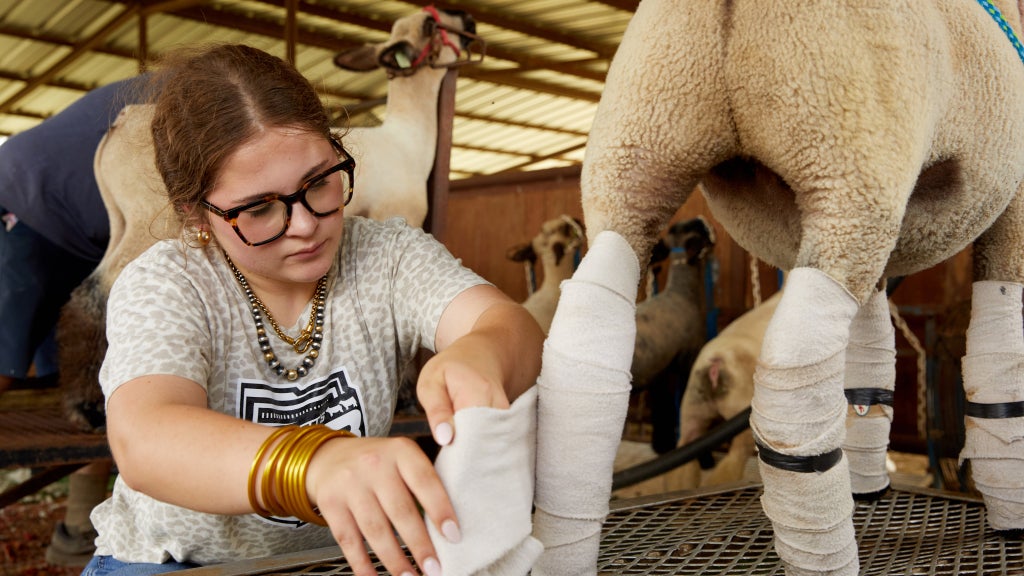
These FFA Alums and advisors share how they found success in animal science careers that align with their passions and skills. Though their experiences and job titles vary, each shares one thing in common: FFA played a defining role in shaping their interests and futures. Their stories prove that, through curiosity, openness to learning and community, a career path in agriculture is possible.
 Lindsy Moore
- National FFA Agricultural Proficiency Award Winner
- College: Coastal Pines Technical College and Ogeechee Technical College
- Major: echocardiography
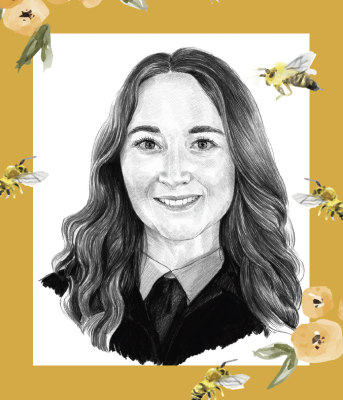
Beekeeping, specifically raising and selling queen bees, began as a summer job for Lindsy Moore. She began working for Sanders Honey as part of her supervised agricultural Experience (SAE) when she was a member of the Ware County FFA in Georgia. Now, four years later, it is her dream job, and her SAE was selected as the 2025 National FFA Agricultural Proficiency Award winner in the Specialty – Entrepreneurship/ Placement category.
Building a beekeeping business is an expensive endeavor, she says, so she is completing core classes at Coastal Pines Technical College and will transfer to Ogeechee Technical College to earn an associate’s degree in echocardiography. She plans to use an echocardiography job to fund her own beekeeping operation.
“On my days off from class, I work with [Sanders Honey co-owner] Brad Sanders, who continues to teach me about beekeeping and the business side of beekeeping,” she says. “If you’re interested in beekeeping, learn from another beekeeper for as long as you can before starting your own business — you’ll need the help.” She credits FFA with giving her confidence, discipline and connections to turn her interests into a viable animal science business.
Her advice to other FFA members: “Never give up. I’m allergic to bee stings, but that hasn’t stopped me” she says. “There will be things in life that will try to block you from pursuing your dreams, but you can’t let that happen. You can always find a way around it.”
 Bryce Winfrey
- Associate director, channel operations, Merck Animal Health
- College: Texas Tech University
- Degree: Bachelor of Science in agricultural communications, minor in animal science
Raised in a family with deep agricultural roots, Bryce Winfrey was surrounded by educators, farmers, cattle producers and animal health professionals. Their influence inspired him to explore a wide range of careers within the industry. As a member of the Seminole FFA Chapter in Texas, and later a Texas FFA state officer, Winfrey developed a passion for animal health while raising livestock for stock shows.
“Those early experiences taught me the importance of a safe, sustainable food supply,” he says. “I’d encourage FFA members to explore broadly and lean into the full range of FFA opportunities, whether that is career development events, judging teams, leadership roles, internships or volunteering, to discover what you enjoy and where you excel.”
At Texas Tech University, Winfrey built the technical and professional skills essential for success. Classroom studies strengthened his animal science foundation, while participation in college judging, student government and campus organizations honed his communication, presentation and leadership abilities. Those experiences, he says, broadened his perspective and created a professional network he continues to rely on today.
His advice to students: “If animal health interests you, focus on developing both technical and soft skills — communication, teamwork and problem-solving,” he says. “The FFA networking opportunity is invaluable; connect with advisors and industry professionals to learn about roles in the industry. There is a strong demand for talented people in animal health, and we need you to help us solve the challenges of the future.”
 Eric Duarte
- Director of global talent, Elanco Animal Health
- College: Centenary College
- Degree: Bachelor of Science in business administration and management
Eric Duarte grew up on a family dairy farm but initially had zero interest in FFA. As a sophomore, he joined the Newton New Jersey FFA Chapter but was inactive until his advisor insisted he attend the 2007 national FFA convention. That trip ignited a passion that defined his career path.
He became a chapter officer and later served as the New Jersey FFA president. After earning a business administration degree from Centenary College, he accepted a full-time position with the New Jersey FFA — a role that opened the door to a leadership development position with the National FFA Organization.
“As a state officer, I really latched on to mentorship, facilitating and helping people learn,” Duarte says. “The opportunity to serve as state staff in New Jersey allowed me to implement all of that, and when the job opened at the national level, it was a no-brainer.”
Today, Duarte works in human resources at Elanco Animal Health. “My job is to deliver strategy on learning and development initiatives across a global audience,” he says.
His advice to students considering a career in agriculture: “Don’t automatically write off HR, as leadership is a crucial skill everywhere.”
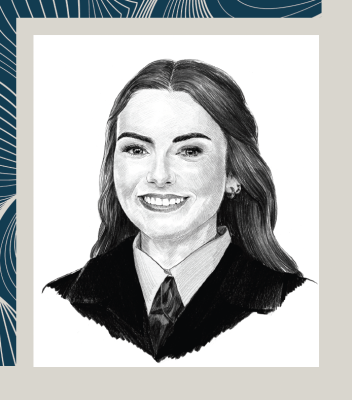 Abigale Jacobsen
- 2024-25 National FFA Western Region Vice President
- College: California State University, Chico
- Major: animal science
Growing up in the suburbs of Sacramento, Calif., Abigale Jacobsen didn’t have a deep connection to livestock or agriculture, but competing on Dressage horses sparked her curiosity about veterinary medicine. Joining her high school agriculture science class expanded that interest, giving her hands-on experience in showing sheep and exploring animal management and marketing, using both sheep and horses as multiple supervised agricultural experience (SAE) projects.
“A lot of my passion for, and the reason I majored in animal science, came from those classroom experiences,” she says. “The course let me see animal science from both the livestock management and business sides through hands-on labs at the school farm.”
Jacobsen is studying animal science at Chico State University. After serving a term as a California FFA state officer, she took a gap year to run for a National FFA office. That pursuit was a success; she was elected the 2024-25 Western Region National FFA Vice President, and will return to Chico State in January 2026.
Her advice to others exploring animal science: “Say yes to the people willing to mentor you or give you an opportunity. You never know where it might take you.”
 Carrie Hough & Katie Green
- Agriculture educators and FFA Advisors
- Dover FFA in New Hampshire
Carrie Hough and Katie Green took different paths to agricultural education, but now share the same goal: to help members of the Dover FFA in New Hampshire discover their passions for agriculture.
For Hough, the journey began at the University of New Hampshire, where she designed her own major that combined education and agriculture, after discovering no formal agricultural education program existed.
“One of my favorite classes, Ed 500, let me work with a high school ag teacher. It confirmed this was the right path for me,” she recalls. Today, Hough teaches animal science and companion and large animal courses, blending classroom learning with hands-on experience. A former member of the Coe Brown Much-to-Do FFA Chapter and a former Granite State FFA officer, Hough’s honors include being named a National FFA Agriscience Fair finalist, an Agricultural Proficiency Award winner for maple syrup production, a Granite State FFA Connor Memorial Outstanding Teacher/FFA Advisor Award winner and a National Teacher Ambassador for FFA.
Her colleague, Katie Green, took a different route. Growing up in Massachusetts without an FFA program, Green explored agriculture through 4-H. While studying dairy nutrition at Cornell University, a class called “Youth Organizations in Agriculture” changed everything. “It made me realize I wanted to teach ag,” she says. Now, Green co-teaches animal and honors veterinary science classes, manages student assistants, oversees the care of more than 75 animals and advises FFA activities.
“College broadened my perspective and helped me see the diversity of agriculture,” she says. “I took unique classes, like exotic avian husbandry and a propagation class.”
Both educators encourage students to explore widely. “Say yes to opportunities,” Hough advises. Green adds, “Take those unusual electives — you never know when that knowledge will come in handy.”
Pave Your Path
When it comes to working with animals, the possibilities are endless. Visit AgExplorer.FFA.org/Focus/Animal-Systems/ to find a career that aligns with your passions and interests.