Cultivate a Career in Plant Science
 Some people know the exact career path they want to take from a young age. For others, it begins with curiosity sparked in agriculture class, through an FFA project or by advice from an advisor or a family member.
In agriculture, that spark has a way of growing. Even for those who think they know their path, new experiences can shift direction in unexpected ways. An initial interest in plants, animals or the environment can evolve into a career that blends science, business, education and leadership.
The FFA alums and advisors featured here all share a connection to plant science, but their paths look very different. Each has built a career shaped by their own interests, experiences and willingness to explore new opportunities.
They share how FFA influenced their journey, what their careers look like today and advice to help you find your place in agriculture.
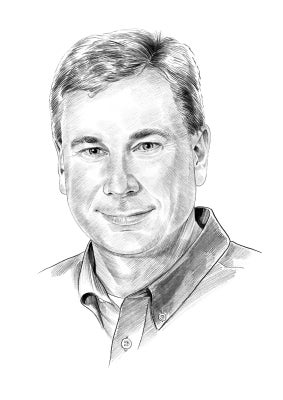 Scott Stein
- North American corn product management lead, Bayer Crop Science
- College: Kaskaskia College, University of Illinois
- Degree: Associate of Science in agriculture/row crop; Bachelor of Science and Master of Science in agriculture
Through his involvement with the Carlyle FFA Chapter in Illinois, Scott Stein met a small consulting company that hired him as a crop scout during summer breaks from college and his first year out of college. That experience helped him realize professional opportunities in agriculture, even though he wasn’t actively farming.
“My dad had sold his portion of the family operation, and I saw this opportunity to create a professional career in agriculture outside of farming and decided to take that route,” Stein says.
Today, Stein manages the North American corn business for Bayer Crop Science, leading a team of agronomists and business and project managers who select hybrids, oversee product life cycles and launch new technologies.
Stein credits his FFA proficiency projects, which focused on record keeping and business management for a small beef cattle herd, with helping him discover his interest in the business and operational sides of the industry.
“That probably had the biggest impact on me, and ultimately I was fortunate to win the FFA Star Farmer award when I graduated,” he says.
Stein offers this advice to students: “Take advantage of the leadership skills and opportunities that FFA offers you, whether it’s office holding, public speaking or networking with industry professionals.”
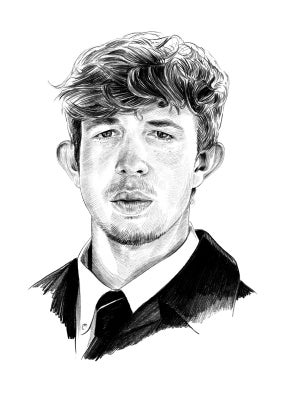 Aiden Schwebach
- 2025 National Proficiency Award Winner
- Moriarty, New Mexico
- Schewbach Farm
As a fourth-generation farmer in New Mexico’s Estancia Valley, Aiden Schwebach grew up working on his family’s 2,500-acre irrigated forage and small grain crops farm. When market fluctuations challenged the family business in 2021, they opened the first malting facility in New Mexico to process their own products and sell directly to brewers.
Schwebach stayed on the farm after high school to help expand the malting operation, and when he turns 21, he plans to pursue formal courses in distilling and brewing to deepen his technical expertise and continue growing the enterprise. He credits his experiences in the Estancia FFA Chapter for guiding his career path.
He won multiple state FFA awards and advanced to national competitions in numerous career and leadership development events (CDEs/LDEs), including agronomy, agricultural mechanics, nursery and farm and agribusiness management. His diversified crop production Supervised Agriculture Experience (SAE) earned a 2025 National Proficiency Award.
“Being able to write down all my skills and jobs, see where I’d made advancements, where more advancements could be made and the skills I needed to gain gave me a 3,000-foot view of my role on the farm,” he says. “Through FFA, I was able to find what I was good at and began to improve on those skills.”
Schwebach also found he loved working in the malt shop. His advice to FFA members searching for their career path is the same he received from his father.
“Focus on what you’re good at. Expand that skill set and develop yourself in that area,” he says. “If you learn to love it, the work will learn to love you, and it gets easier.”
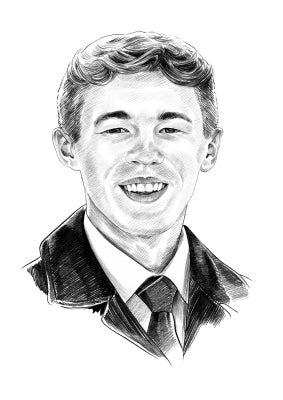 Cameron Addington
- 2025-26 Minnesota state FFA president
- College: Iowa State University
- Major: Agronomy with agricultural education minor
Despite not growing up on a farm, Cameron Addington has been surrounded by agriculture his entire life during visits to his grandparents’ 500-acre corn, soybean and cattle operation. His mother, a former Minnesota state FFA officer and Pioneer seed sales representative, played a pivotal role in shaping his career path. She encouraged him to join FFA and run for officer positions and introduced him to the world of seed sales.
“Whether riding along in the truck with her or meeting with customers, I got to see behind the scenes of working for Pioneer and the seed sales industry,” he says. “I always thought that was really cool.”
In high school, he held multiple officer positions, including Minnesota state FFA president. He participated in a variety of CDEs and LDEs, including agronomy, livestock judging, farm business management and more.
As part of his agronomy CDE, he competed at the national FFA convention and earned Gold Emblem individual and participated on a top-10 team. Outside school, he worked at a vineyard, gaining exposure to a unique crop science angle, and then at a diversified crop farm. The collective experiences inspired him to pursue an agronomy degree at Iowa State University.
His advice to FFA members is simple: “Take advantage of all the different career development events,” he says. “It gives you a great taste of all the different areas of agriculture and career pathways, whether that is plant science or something totally different.”
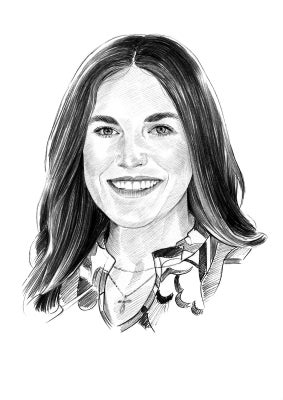 Chyenne Deno
- Agronomic solutions advisor, BASF
- College: Purdue University
- Degree: Bachelor of Science in agriculture and sales & marketing
Chyenne Deno knew she wanted a career in agriculture since childhood. She grew up on a small family row crop and livestock farm, and in middle school, she joined the South Newton FFA Chapter in northwest Indiana.
“I competed in the soil judging CDE almost every year I was in FFA and ended up being able to compete at the national level,” she says. “That was very different for me and a really fun contest.”
She was also passionate about the public speaking LDE, served on an active parliamentary procedure team, held multiple chapter offices and was the 2018-19 Indiana state reporter.
“FFA puts students in front of adults at such a young age, and I feel that prepared me for a sales job,” she says. “The soft skills often get overlooked, and FFA students develop those.”
In a college introduction to sales course, she had to choose a product, develop a customer persona to target and work with an industry mentor. The final exam was a mock sales presentation to industry professionals.
“That was the most real-world class I took at Purdue, and that helped me realize I like the selling side of my degree,” she says.
“Be curious anytime you’re with industry folks,” she says. “Ask them about their company and what they do. That is one thing I wish I had done more of in high school because you can learn so much about a job.”
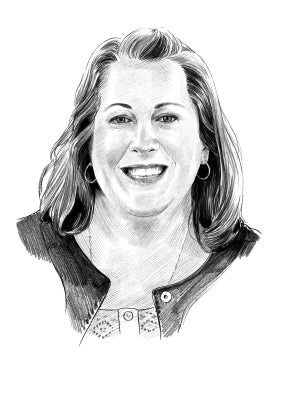 Jillian Plante
- Horticulture theory and pathways teacher and FFA advisor
- Essex North Shore Agricultural and Technical School
- College: Essex Agricultural & Technical Institute, Arkansas State University, Fitchburg State University
- Degree: Associate of Applied Science in floriculture, Bachelor of Applied Science in agricultural education, Master of Arts in curriculum and teaching
Jillian Plante’s path to teaching plant science began in her grandmother’s garden. The family lived in a coastal community, historically known for its fishing, and in thin boulder-strewn terrain that was not great for crop growing but ideal for making flower-filled rock gardens.
An early love of horticulture inspired her to apply to the local agricultural high school, where her passion for plants and floral design took root. She joined the Essex FFA Chapter, served as vice president and president, and as the Massachusetts state FFA secretary. She was also a member of the Arkansas State University Collegiate FFA Chapter.
“I had many ag teachers who made an impact on me, and my FFA advisor inspired me to be an FFA advisor,” she says. “My career goal in my 1995 yearbook was to be a happy ag instructor. I think it’s fair to say, that goal was planted, the roots took and everything’s coming up blooming!”
Plante is currently in her 26th year of teaching and has taught a wide range of plant science classes. She is currently one of nine horticulture teachers teaching students in three concentration areas — sustainable horticulture, landscape and turf management and arboriculture.
Her advice to students interested in plant science: “Try it out! There are so many cool areas that you can get into. I have had former students working on luxury golf courses in the mountains out West, another working as an interior plantscaper in Boston skyscrapers, while others are working as high-end wedding boutique floral designers. And I’ve even been lucky enough to have former students come back to join me as ag teaching colleagues.”