My Advice for Mentorship
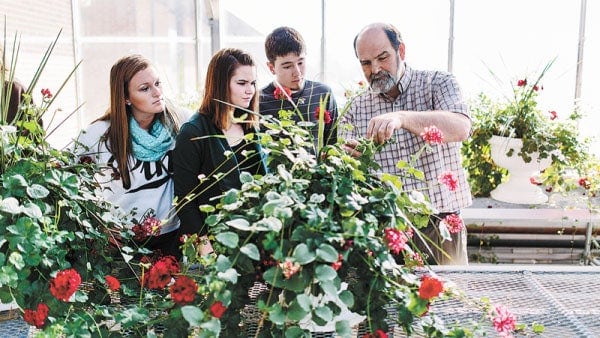 Over a 38-year career as an agricultural science and business teacher, Duane Huge helped shape generations of FFA members through outstanding classroom instruction, extensive coaching of award-winning career development events (CDEs) and a lifelong commitment to agricultural education in two school districts in Indiana.
“I hosted 13 student teachers and realized the importance of that phase of ag education where college students get an opportunity to experience the life of an ag teacher,” he said.
Since retiring in 2023, he continues that mission as the program coordinator for the Mentoring Indiana Beginning Agriculture Teachers (MI-BAT) program. In that role he supports and guides new agriculture educators across the state.
MI-BAT is funded by a small portion of a $3 million gift from the Lilly Endowment to the National FFA Organization, distributed over three years. Before MI-BAT, the Coaching Beginning Ag Teachers (CBAT) supported early career ag teachers, but when funding expired the initiative ceased. For several years, the state went without a mentorship program.
“The seven years we were without a mentorship program, we saw the turnover rate increase,” he said. “Now with MI-BAT, we’re beginning to see the turnover rate decrease.”
Through hosting student teachers and his work with MI-BAT, Huge has learned what it takes to build a mentorship program that provides meaningful support to new teachers. These are his four pieces of advice:
- Be patient. “Some of us with 20-plus years’ experience sometimes forget what it was like when we started,” Huge says.
- Encourage tenured teachers to participate. “I ask teachers in Indiana to have at least six years of experience, going into their seventh year, to apply to be a mentor,” he says. “After they’re accepted and attend an all-day training, we pair them with a beginning teacher.”
- Teach mentors how to be a resource. “One of the things I stress to them is that they are not the primary evaluator for the teacher they are paired with,” he says. “That’s their administrator’s job. Part of the reason the program is so successful is that we make that clear to the mentee and mentor.”
- Step up. “When I started, I had older teachers in my FFA district who reached out and offered to be a resource,” he says. “If your state doesn’t have a mentorship program, take it upon yourself. I think that’s how we’re going to keep young people in the profession.”