From Part-Time Chapter to Full Potential
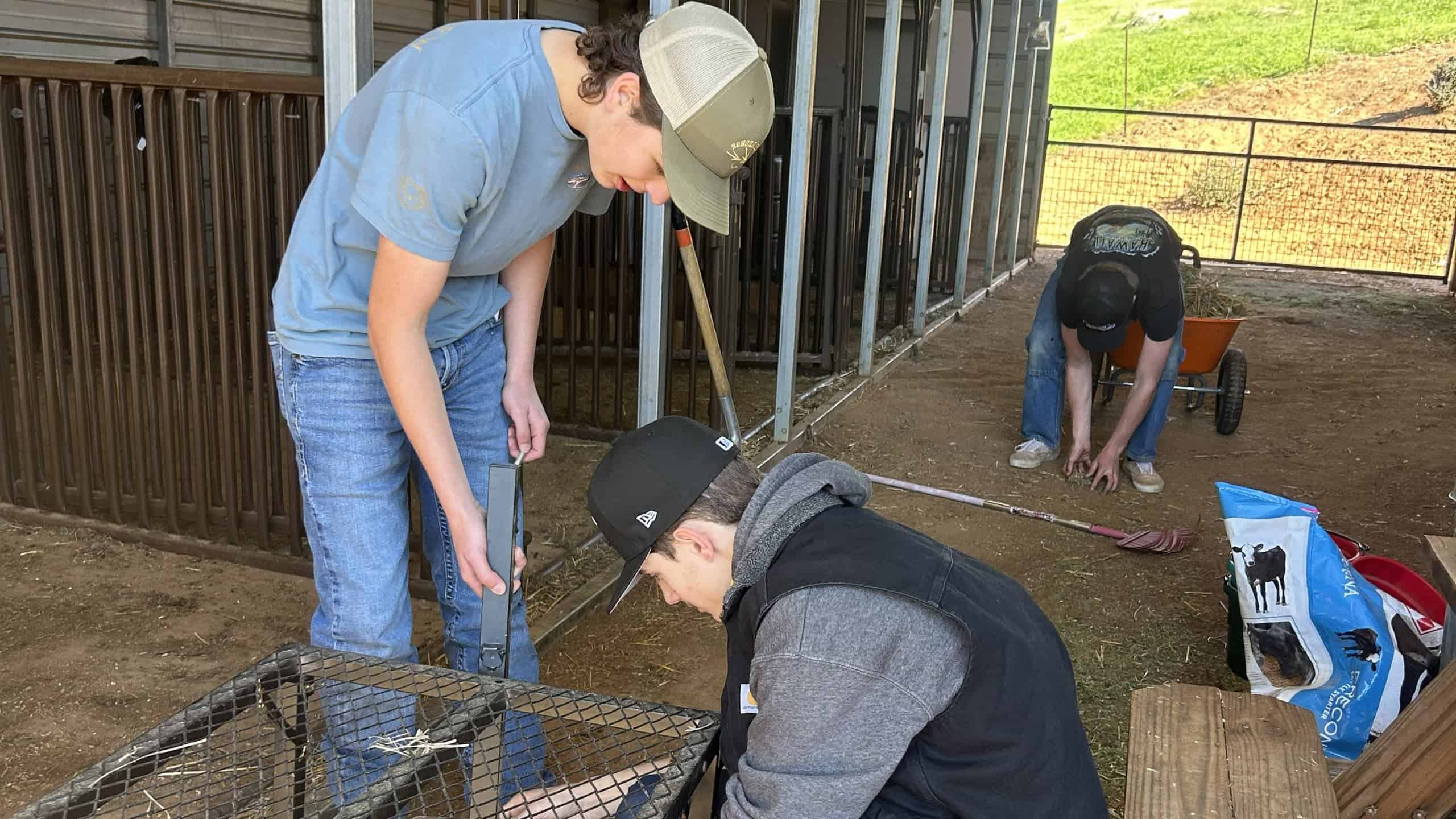 When Saira Barajas interviewed for the job teaching agriculture at Summerville High School in California, the program’s greenhouse stood empty. The pastures on the 10-acre school farm weren’t fenced. No chapter-owned animals lived in the barns. Most students had never been to the state FFA conference. And with only three ag classes, the department wasn’t even officially part-time.
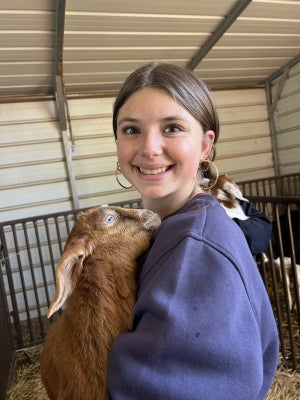
Colbie Troedson holds a baby dwarf goat during feeding time. “Each new animal opens the door for students,” says Summerville FFA advisor Saira Barajas.
“So much was possible, but nothing was being used to its full potential,” Barajas says. Undaunted by the work ahead of her, she took the job.
In her first few weeks, Barajas purchased a sow, the program’s first livestock. Floral and veterinary science classes were added to the curriculum. A farm manager was hired. By the time school started in August 2025, things were happening on the farm, and students were excited.
“We got some goats and then students started looking online at what other FFA chapters were doing,” Barajas says. “They asked why kids at other schools got to go to contests and conferences. My response was to ask them where they wanted to go and what did they want to do?” The Summerville FFA Chapter’s first big event was the California FFA Opening and Closing Ceremony Career Development Event (CDE). “That showed them that FFA opens that door to travel, competition and doing new things,” Barajas says. “Our kids just took off from there.”
New Initiatives Develop New Skills
Students in the floral class started a monthly subscription service with 35 customers. “It’s a lot of work, but the students love it,” Barajas says. “This year, the horticulture class is utilizing the greenhouse all year for propagating and raising all kinds of fruits and veggies.”
A dairy heifer and goats joined the sow. “Each new animal opens the door for students to gain skills in daily animal care
and also develops consistency, responsibility and teamwork,” Barajas says. “We’re in the process of getting our certification to breed our sow. The kids will be part of the entire process of breeding her, raising her piglets and taking them to auction.”
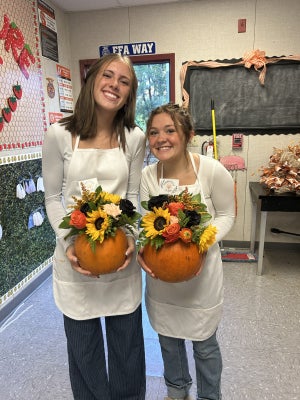
Abigail Radetich and Bailey Cognetti show off the arrangements they made during floral class.
Still Work to Do
Now in her second year as the only teacher in a full-time ag department, Barajas marvels at her students’ skills and confidence.
“In FFA, communication and leadership are embraced in a big way, but our students weren’t given the opportunities FFA provides before I came,” Barajas says. “Now they have no fear of trying something new. Their mindset has become ‘What do we want to do and how are we going to get there?’ and I really like that.”
Even with a functioning farm, a full-time curriculum and a supportive school administration, Barajas says there’s still work to be done. “But I know I can give all my students all the opportunities FFA offers at some point,” she says. “And we’ll get to where we want to be.”