5 Ways to Build Skills This Winter
 With harvest in the rearview for much of the country, fall and winter are ideal for FFA members to focus on chapter activities they haven’t had time for throughout the rest of the year.
Pontiac FFA co-advisor Jesse Faber in Pontiac, Ill., and John Jay FFA co-advisor and biology teacher Mary Jane McFarland in Wappingers, N.Y., share five ways advisors and members can make the most of offseason.
1. Extend the growing season.
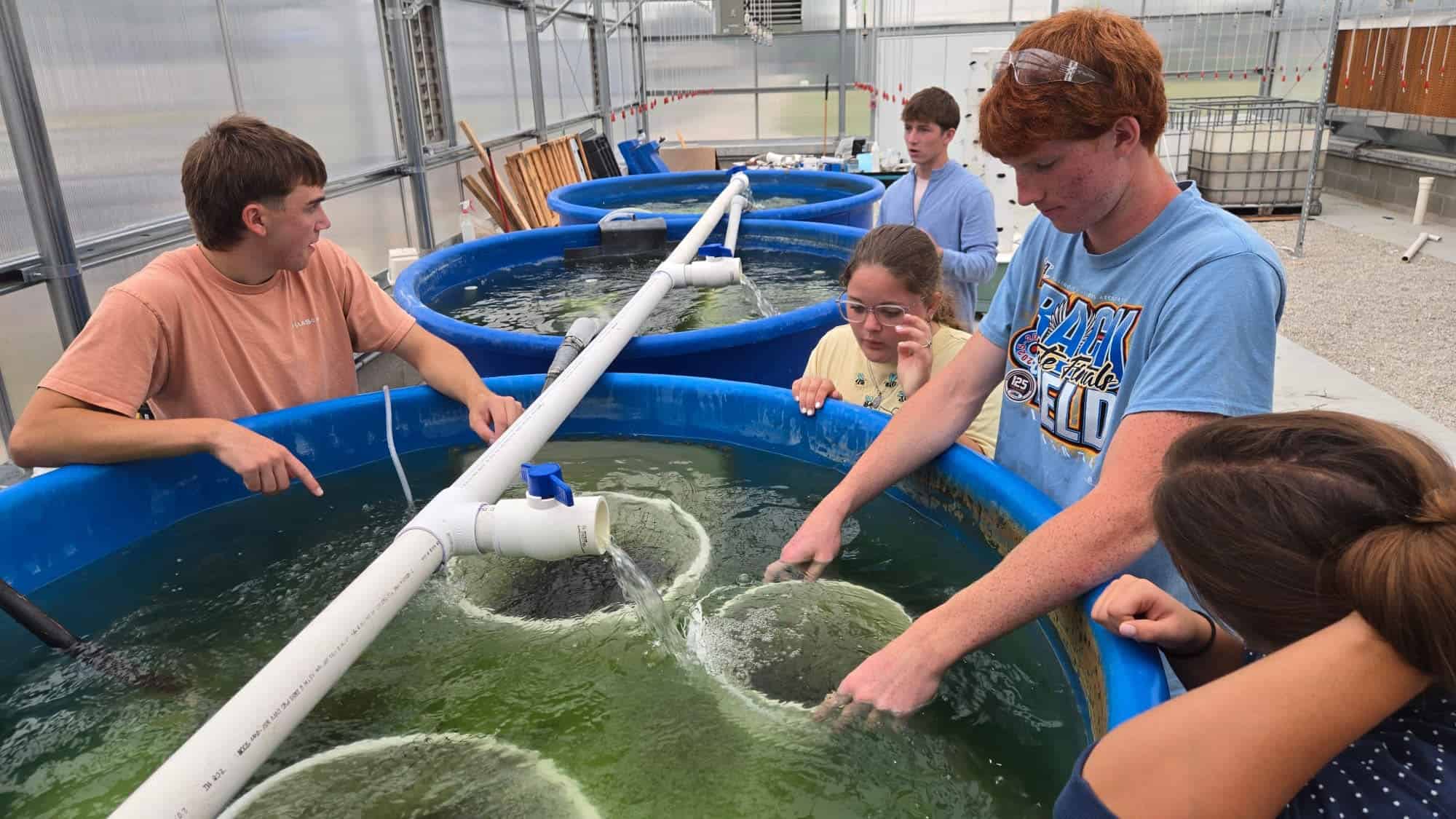
By the time students are fully engaged in FFA activities, the growing season is over and harvest is wrapping up. Faber uses the chapter’s greenhouse to grow corn and soybeans, which allows members to experience the full growing season. The greenhouse also houses tanks for freshwater shrimp and aquaponics (pictured above), exposing students to a different type of production.
2. Turn winter into planning season.
Winter can be an ideal time to prepare for spring events. The John Jay FFA Chapter hosts an annual Spring Fest, a farmers’-market-style experience where local producers sell their products and students introduce community members to agriculture and FFA.
“Our goal is to help educate the public about agriculture and to spark an interest in future FFA membership,” McFarland says.
3. Gain a new perspective.
Each January, Pontiac FFA members travel out of state to meet other members and experience agriculture in different regions. The chapter has traveled to 17 chapters, including trips to Texas, New York, Oklahoma and North Carolina.
“It has been really valuable for students to see the agricultural industry in different communities and regions,” Faber says.
4. Focus on SAE, CDE and LDE projects.
Post-harvest season gives members time to focus on their Supervised Agricultural Experience (SAE), Career and Leadership Development Event (CDE/LDE) projects.
“Working on SAEs in the fall is a great way to get into the habit of closing out the year and updating recordkeeping,” Faber says. “Closing records at the end of the calendar year lines up with degree applications and proficiencies.”
McFarland adds that it’s convenient for her to bring in a local veterinarian to help students prepare for the vet science CDE, because it was a slow time in their equine practice.
“The vet hosted members at her clinic where she explained tools and techniques that they would be tested on,” she said.
5. Practice interview skills.
Preparing students for job interviews is part of the FFA experience. Often, they’re in mock interview settings. Faber takes it step further by having students coordinate off-site interviews to create a real-life scenario.
“I’ve had a couple of kids get hired out of it, without even intending to,” Faber says.