Built in the Barn: An SAE That Goes Beyond the Gate
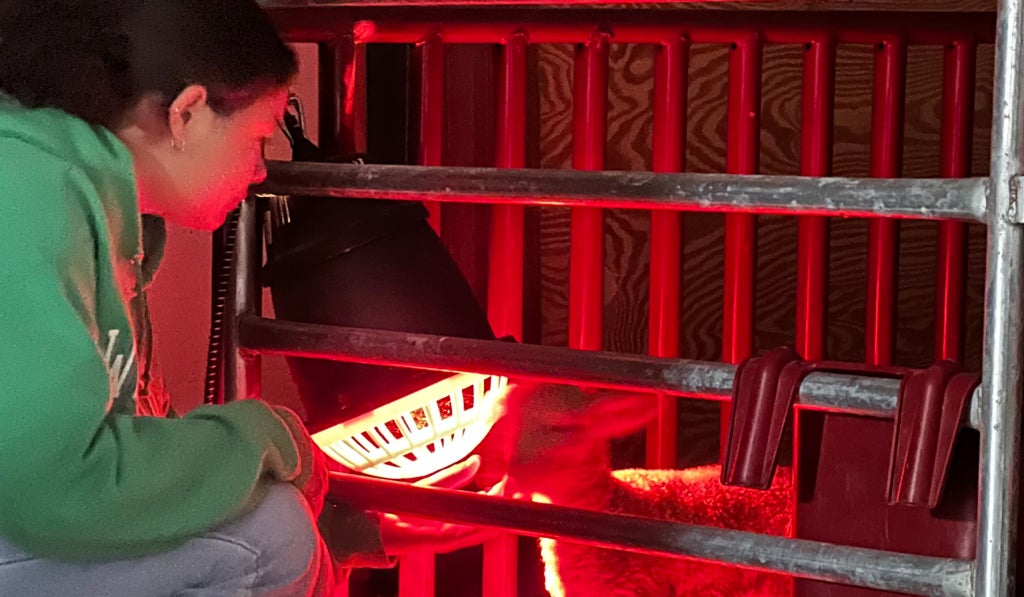
Katrina Shea attending to a newborn.
FFA is known as an organization of agriculturists dedicated to the development of leadership, personal growth, and career-ready practices. While there is an emphasis on speech giving, career and leadership development events, and other competitions, it takes more to be an FFA member than meets the eye.
Supervised Agricultural Experiences (SAEs) are a fundamental part of FFA. They allow members to investigate aspects of agricultural life in a hands-on way that they may not get to do within the classroom.
While SAEs are considered mandatory in some chapters, for some members, they don’t just last the duration of the school year — they are an integral part of daily life. Cristina and Katrina Shea from the Western Hills FFA Chapter are two members who model this exactly.
Beginning in their eighth-grade year, the Shea twins began an SAE raising and showing sheep. They currently have four show sheep and 31 meat and breeding sheep. From early mornings in the barn to long days in the show ring, Cris and Kat work on an SAE that is more than meets the eye.
From December to January in particular, they hardly leave the barn. This is a time of year known to many sheep producers as lambing season. While this isn’t the only time of year sheep producers can lamb, Cris and Kat breed market and show lambs as well as commercial ewes, making the most convenient time to lamb fall and winter.
Kat explains how the season can be challenging, depending on the ewe. “You always want a lamb to come out by its front legs. Sometimes they can get stuck, and the longer they are in there, the more likely they are to get smothered in the amniotic sac. When this happens, Cris and I have to assist in the birth.” Following the delivery of a lamb, it is critical to clear their breathing passages of fluid.
After clearing the breathing passages and cleaning off the newborn to prevent hypothermia, the twins make sure the ewe and lamb have time to bond, which can help with feeding later down the line. Cris goes on to include, “The first thing we do after this is cut the umbilical cord and apply iodine to prevent infection and ensure the area is clean. We then inject the lambs with B12 and dexamethasone, which are important to help them get moving and stay healthy.”
Following after-birth care, issues in ewes and newborns can arise. “Typically, we strip the teat following birth, which ensures the lamb can get milk. If the lamb doesn’t want to latch on, it can lead to mastitis (the hardening of the bag). To treat this, we massage the bag and administer injections of LA200 under the skin.”
Complications in lambs during early months can include diseases like Flystrike and Joint Ill, which can be deadly if left untreated. Cris explains, “Flystrike is when flies burrow under newborns’ tails and lay eggs, causing irritation and infection. We dock the newborn’s tails to prevent it. With Joint Ill, fluid builds up in joints and prevents walking. To treat this, we put them in a splint and administer antibiotics to encourage recovery. Sometimes we aren’t able to treat it.”
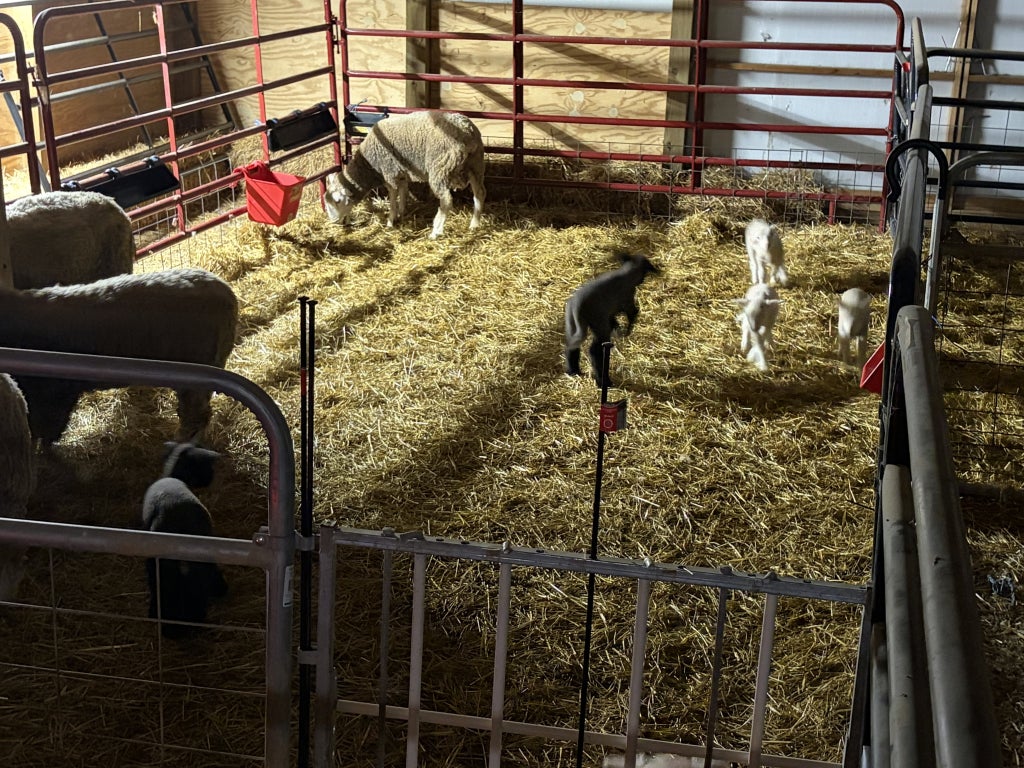
Lambs from the 2025-26 season.
The twins also have a business, Shea Farms, where they sell pork and lamb products as well as farm-fresh eggs. You can sometimes find them selling their products at the Baghdad Farmers Market, which will start back up in May.
All in all, Cris and Kat’s dedication to upkeep their SAE sets them up with the skills and confidence needed for success. With this strong foundation, their future in agriculture looks incredibly bright.