Students Explore the Future of Ag
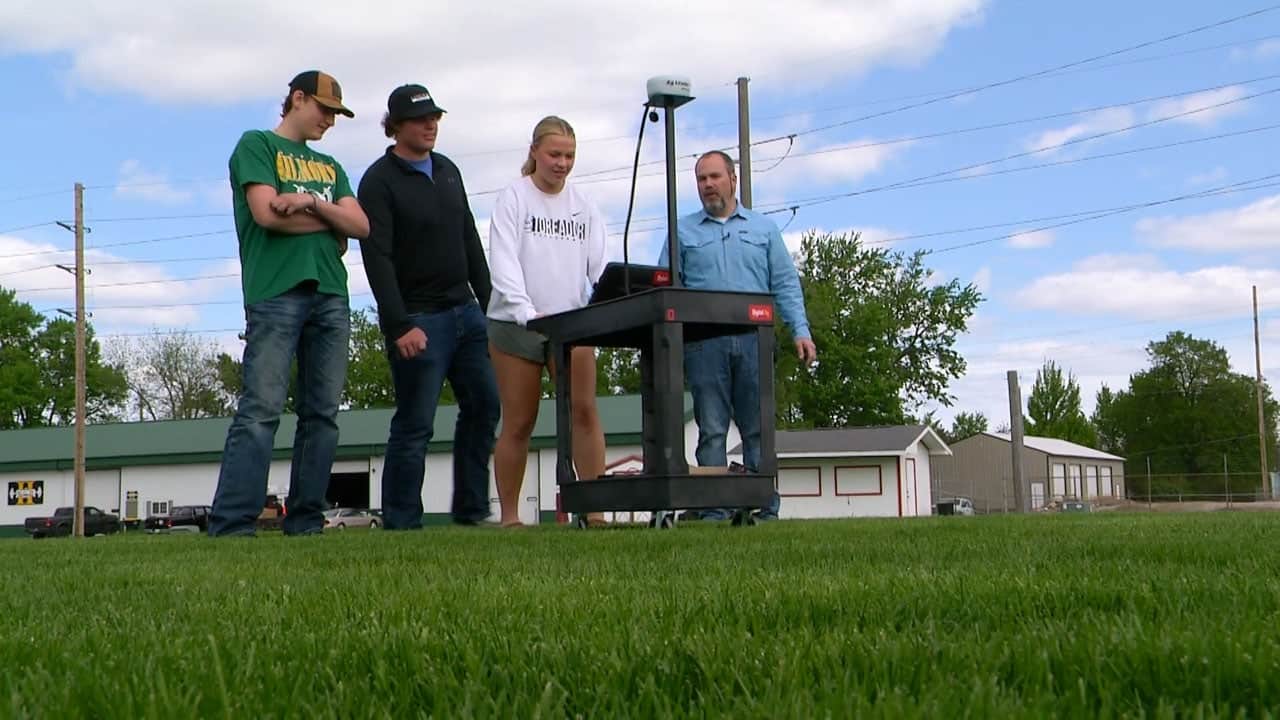 When Jim Fitzgerald began teaching precision agriculture at Boone High School in Iowa, the subject attracted just a handful of students. That changed when the school participated in the Precision Ag Technology Curriculum for High Schools (PATCH) program.
Iowa State University (ISU) introduced the program in 2025. PATCH provides teachers with a structured collection of lessons, resources and hands-on activities to address a gap in high school agricultural education. The curriculum introduces students to the fundamentals of crop production and mechanization, and technologies such as auto steering, drones and precision spraying.
“It’s something that we saw as a future opportunity for students,” says Fitzgerald, who also serves as the Boone A&M FFA advisor. “We are just surrounded by crop production and precision agriculture is just a huge, huge industry and it’s just continuing to grow.”
At Boone High School, PATCH allowed precision agriculture to become a full-semester class with 10 students. While some of the students have ag backgrounds, others have little experience in farming or crop production.
The curriculum offers a glimpse into how precision agriculture can engage students with very different starting points. Each of the 45 Iowa high schools that participated in the program also received a precision agriculture cart valued at $12,000 that includes an Ag Leader GPS 7000 receiver, an Ag Leader InCommand 1200 display, wiring harnesses and a one-year TerraStar-C Pro subscription.
“The technology is a draw for some students,” Fitzgerald says. “It’s getting to do something more hands-on versus just learning about the theory of something.”
Wide-Eyed Outlook
Luke Fuhrer, a precision agriculture engineer with the Digital Ag Innovation Lab at ISU believes the exposure to precision agriculture is valuable whether FFA members want to return to a family farm, pursue an agricultural career or continue their education.
“I think it’s incredibly important to have early exposure to these future generations of agriculturalists,” he explains. “Having them understand what is out there from a technology standpoint, what options are available to them and how to use them even if it’s just a very base understanding [can make a difference].”
For FFA members, PATCH offers more than an introduction to new equipment. It provides insights into an evolving agricultural industry and the growing range of STEM careers behind it.
“We want to make them wide-eyed at the options that are available to them,” he says.