Go for a Yearlong Grant
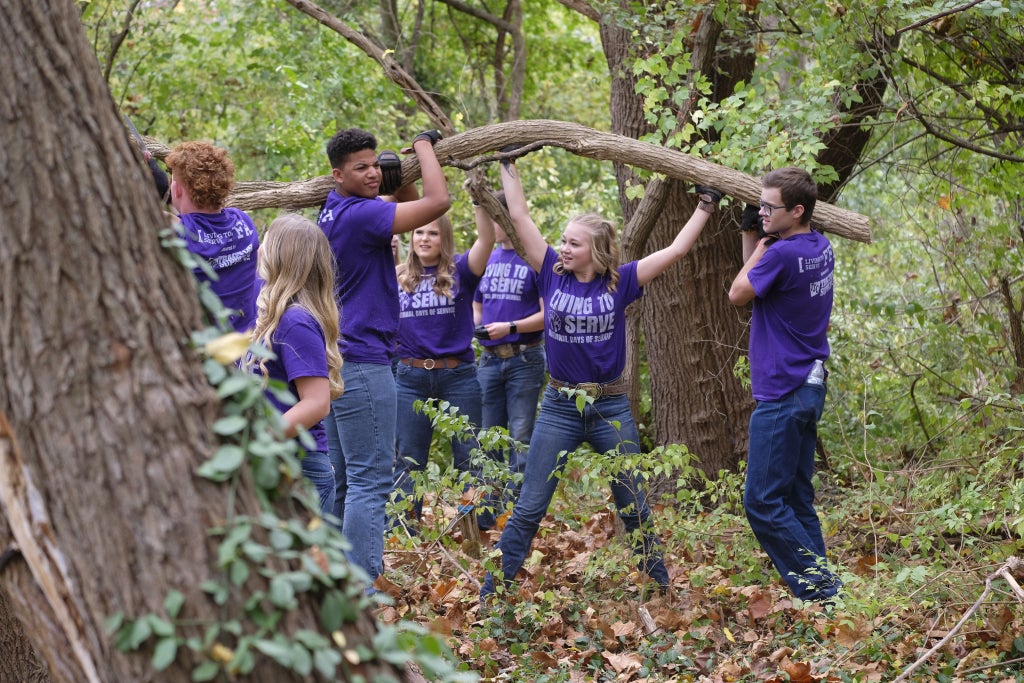
Do you have an idea for a service-learning project that spans an entire school year? Consider applying for an FFA Yearlong Living to Serve Grant. These grants provide middle and high school FFA chapters with up to $3,000 to support their service-learning projects that last for a whole school year — or longer.
Read on to learn more about what service-learning is, get project inspiration and learn how to apply for a yearlong grant.
Understand the difference between service-learning and community service.
While community service and service-learning have similarities, they are not the same. Community service encompasses short-term volunteer projects, such as picking up trash or holding a canned food drive, while service-learning projects occur over a longer period of time — think a semester or a year — and provide a meaningful way for participants to apply the leadership and educational skills they learn in school or FFA to meet a need in the community.
As an example, a chapter might serve the homeless at a soup kitchen for a community service project, but for a service-learning project, they might teach low-income families how to grow a garden or use the skills learned in a horticulture class to grow fresh produce for a local soup kitchen. Service-learning projects have an educational component and a longer–lasting impact.
Seek out funds for a service-learning project.
Through a competitive application process, FFA Yearlong Living to Serve Grants help chapters fund several types of service-learning projects with up to $3,000. Before applying, you’ll need to identify a need in your community that falls within one of four focus areas — community safety; hunger, health and nutrition; environmental responsibility or community engagement.
Remember the four steps of a successful service project.
-
- Investigate issues facing your community and find out what your community needs most to maximize your project’s impact.
- Plan your project by setting goals and breaking them into pieces that need accomplished.
- Serve your community by putting your project into action.
- Evaluate your project’s success. Track your progress and gather results so you can showcase your impact and celebrate meeting your goals.
Learn from other FFA chapters.
David Crockett FFA in Tennessee received a yearlong grant in 2025 to provide landscaping for people who lost their homes to Hurricane Helene. Their project, called Nolichucky Blooms, was designed to bring color and beauty back to newly constructed homesites that had been devastated by floodwaters.
The chapter started by holding plant drives to collect donated flowers and plants from local community members.
“We are using most of the grant funds to buy more plants, because with a plant drive you don’t always get what you need or what a homeowner wants to see on their property,” says Jesse Ford, co-advisor of David Crockett FFA. “The funding also helped us get equipment to move soil and to break through silt deposit, because when the river flooded, it picked up sand and silt and deposited it here downstream. It was so compacted, it was almost like digging through concrete. Our students have been learning how to use the equipment.”
“Our students got instant gratification from doing the landscaping, and if the homeowner was present, we had great interactions between our students and homeowners,” says Josh Conger, co-advisor of David Crockett FFA. “The project brought great joy to both our kids and the homeowners who had lost everything. Those students out there bringing beautification back to homeowners gave everyone a sense of pride and community.”
Students used skills they learned in landscaping and greenhouse classes about proper planting techniques. They even taught homeowners how to properly care for their new plants and flowers.
“It has been a nice blend of community service and learning,” Ford says.
Apply for yourself.
Keep a close eye on the FFA Living to Serve Grants page for application dates and deadlines. The application typically opens in mid-April and is due in mid-June. Awards are announced in August. For 2026, apply beginning April 15; the deadline is June 17.
“I encourage FFA advisors to look at the impact on hands-on learning — and the impact on your community — that can be made with these grants,” Ford says. “A lot of chapters fundraise, but money is still tight and sometimes these impacts can’t be made because of funding gaps. This grant helped us bridge a gap in funding when we needed to go from holding a plant drive to fundraising for more plants. We didn’t know what we were going to do, and then we came across this grant. We really needed it.”