The Turkey Behind Thanksgiving
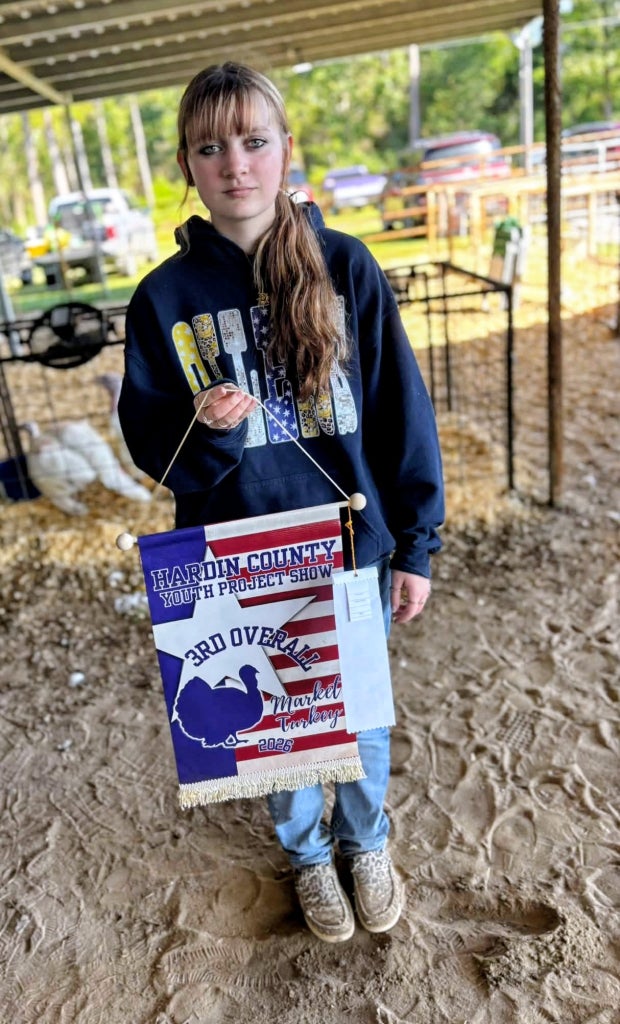
For West Hardin FFA ninth grader Lauralie Anderson, Thanksgiving turkey means more than a traditional holiday meal. It represents months of feeding, caring for and raising an animal that depends on someone else every single day.
Anderson experienced that responsibility firsthand through her FFA turkey project at the Hardin County Youth Project Show, where she earned third place and a spot in the auction. This sale allowed her to purchase poultry for her next show.
“What made me decide to raise turkeys for my FFA project was just watching them grow. I’ve always been fascinated with turkeys. After raising chickens for a while, I wanted to go up another level to bigger poultry. I love them,” Anderson said.
Her project is part of a much larger agriculture tradition. According to the U.S. Department of Agriculture’s Economic Research Service, approximately 193.5 million turkeys were raised in the United States in 2025, producing 4.84 billion pounds of turkey meat. The value of turkey production reached $5.58 billion that year.
Although turkey remains a holiday staple, the industry has experienced changes. USDA data show that the number of turkeys raised declined approximately 3% from 2024 to 2025. Per capita domestic turkey use also declined from 15.7 pounds in 2020 to 13.2 pounds in 2025.
While much of the nation’s turkey supply comes from large commercial operations, smaller farms and agricultural education programs also contribute to the industry.
Texas offers a particularly interesting example. According to Texas A&M University, the state does not have large-scale commercial turkey farms. Instead, 4-H and FFA youth produce most of the turkeys raised in Texas for major livestock shows and judging contests.
Local food production also remains part of the East Texas agriculture landscape. Farms such as Shady Grove Ranch and Applewood Grove raise and market pasture-raised or heritage turkeys for holiday customers. Applewood Grove, located near Ben Wheeler, Texas, describes its heritage turkeys as part of its annual holiday farm production. These farms demonstrate that consumers can find locally raised alternatives, even though national statistics do not establish a growing trend in locally sourced Thanksgiving turkeys.
For Anderson, raising turkeys required more attention than she initially expected. Her mornings began with feeding and watering the birds. On hot days, fans helped regulate their environment. After school, she returned to replace bedding, provide fresh feed and water, and encourage the turkeys to move around.
“One thing about raising turkeys that most people don’t realize is that they are a lot of work! They are not a simple project. They require more attention than chickens. They require different nutrients and space,” Anderson explained.
Her experience demonstrates why agricultural education extends beyond the classroom. FFA projects allow students to experience the responsibilities involved in animal production while developing skills in animal health, nutrition, management and recordkeeping.
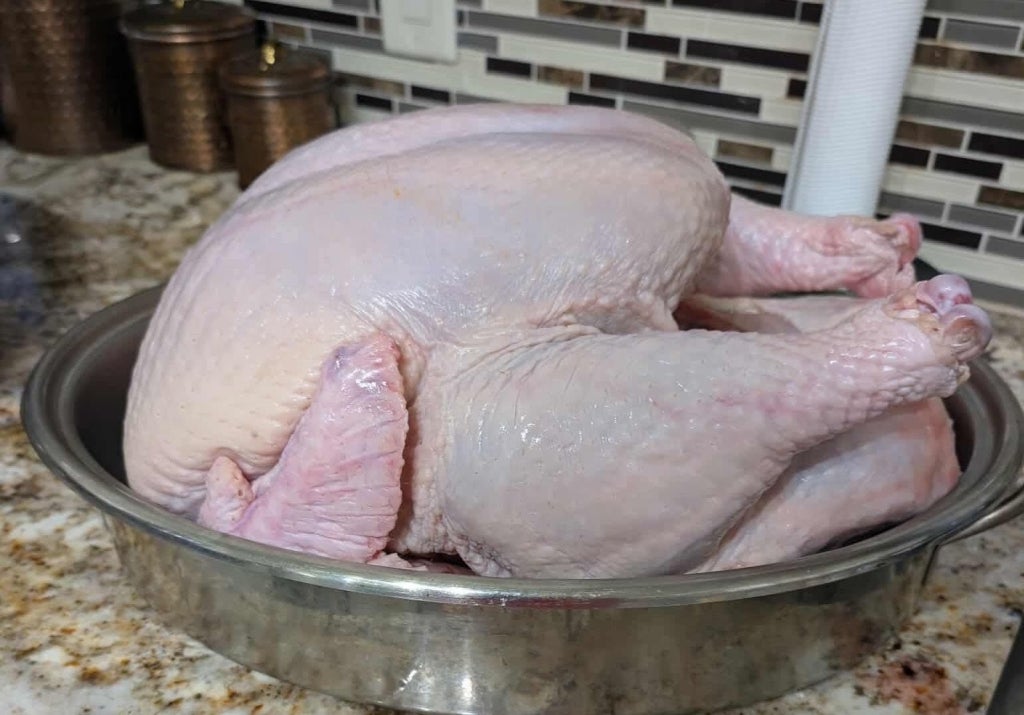
Home-raised Thanksgiving turkey. Photo by Renae Anderson.
For Anderson, the experience has also changed how she views the Thanksgiving meal.
“Raising turkeys changes the way I think about Thanksgiving dinner because I know how much effort that person put into that animal, and food tastes different when you helped raise that animal. I know how much turkeys mean to the Thanksgiving tradition,” she said.
As families gather around their tables this Thanksgiving, Anderson hopes people recognize the work behind the food they enjoy.
“The ag industry is very hard-working. When you put your mind to something, you have to do it because animals are depending on you,” Anderson said.
From commercial poultry farms to local youth livestock projects, agriculture plays an essential role in a holiday tradition shared by millions of Americans. For FFA members like Anderson, that appreciation is learned not just around the dinner table, but through the daily responsibility of raising the animals that help bring it there.