The Missing Chapters: FFA’s Place in Continuation Schools
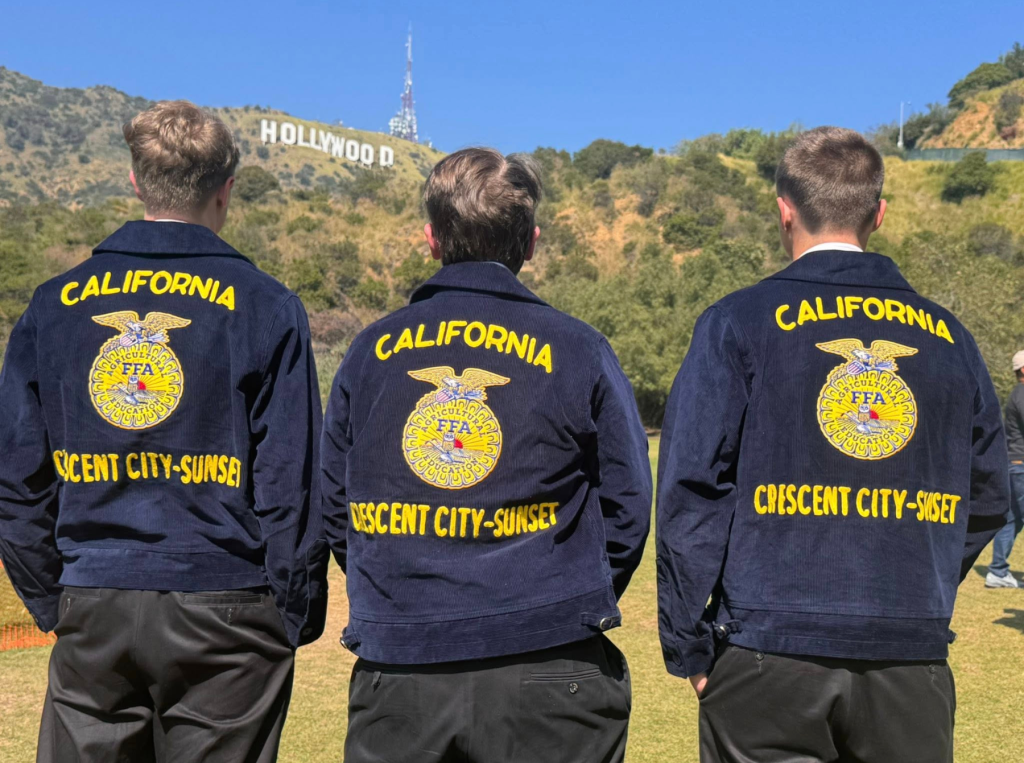
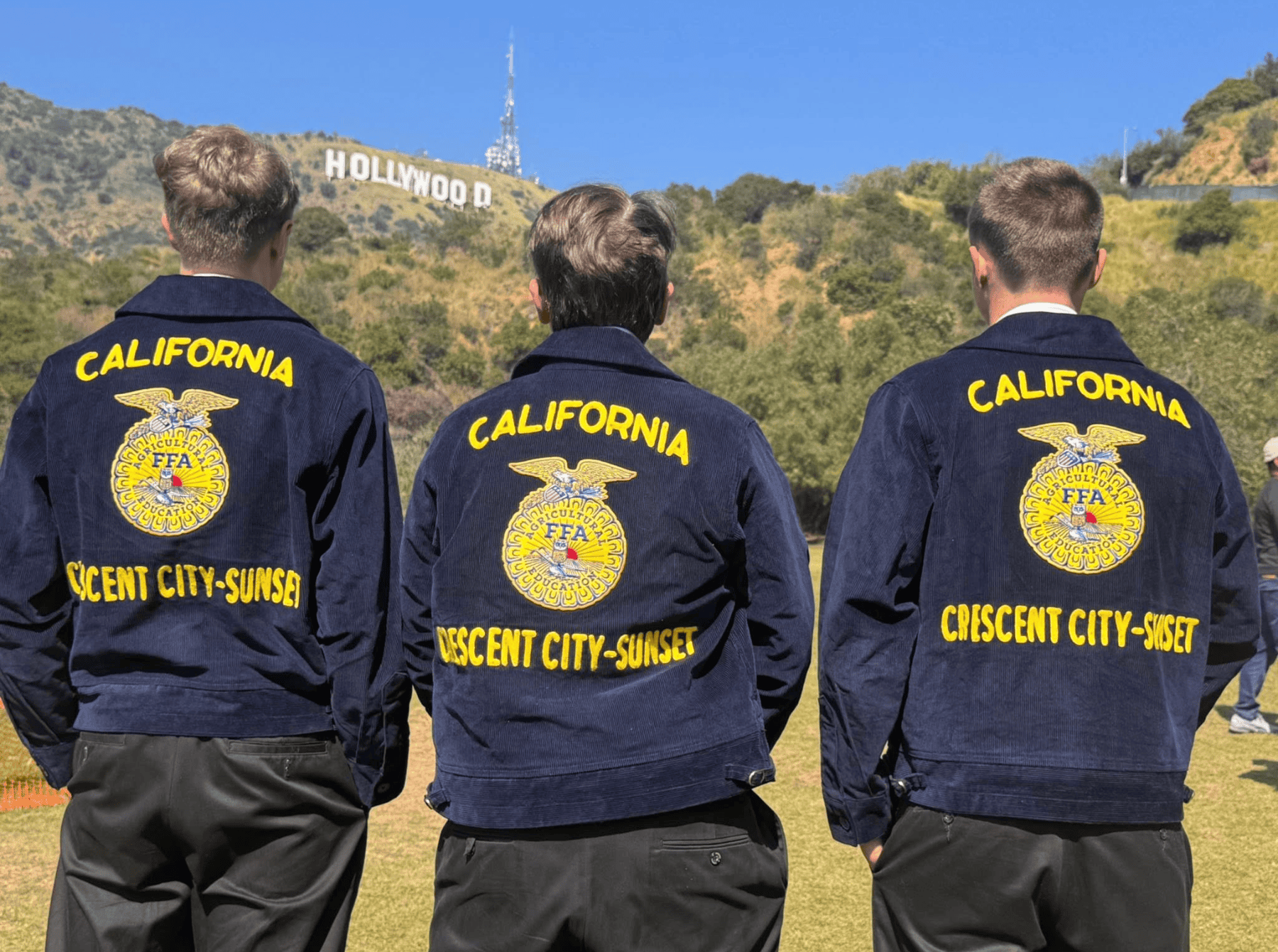
Crescent City-Sunset FFA members visiting the Hollywood sign during state conference.
FFA prides itself on the three-component model: FFA, Supervised Agricultural Experiences and classroom instruction. All FFA chapters implement this model in some way, but they’re not the only ones that do. Continuation schools across the nation are sites for students 16 years of age and older—unless extenuating circumstances place them there—focused solely on getting students at risk of not graduating to do so.
Their approach is hands-on learning: learning math by building geodesic dome chicken coops, utilizing pathways that connect students to local careers so they are employable directly after high school, and overall repairing kids’ relationships with schools so they are in a better position to be successful in the classroom are done by these schools across the nation to actively promote students’ learning long-term.
So why, if schools mirror the three-component model, does California FFA only have two active chapters from continuation schools out of the almost 430 sites across the state, those being Crescent-City Sunset FFA and Fresno-Pershing FFA? Robyn Payne, advisor of Sunset FFA, and FFA member Lillian Abuan answer, sharing both the challenges and successes that come with being from a chapter of a continuation school.
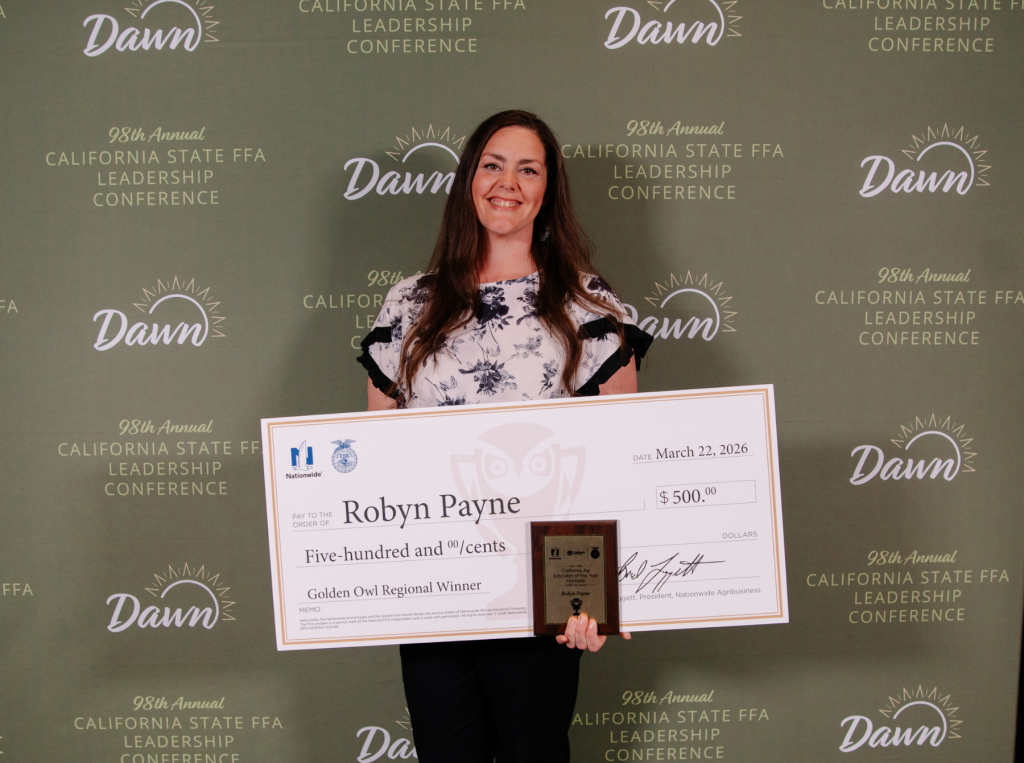
Crescent City-Sunset FFA Advisor Robyn Payne after being awarded the 2026 North Coast Region Golden Owl.
After being the advisor for Del Norte High School, Payne, the 2026 North Coast Region Golden Owl, switched to Sunset High in 2017 and began the Sunset FFA chapter in 2022. Despite mistakenly failing to ask her school district beforehand, she received instant support from her administration. Likewise, she had immense support from the Humboldt-Del Norte Section advisors, alongside North Coast Regional Advisor JessaLee Goehring. Nevertheless, challenges occur across the board with continuation FFA chapters, the largest meeting state grant requirements.
“Since we only get students once they’re 16, we never meet retention rates, and it’s even harder for them to get their state or American FFA Degrees,” Payne said. Similarly, agricultural proficiencies are rare for the chapter. With a year and a half of recordkeeping needed, many students graduate before they’re able to apply or don’t feel comfortable committing themselves to something they may be unable to fulfill. This never stopped her from implementing the chapter, however, and she pushed through, finding and still discovering ways to make a continuation high school chapter work in an organization built on a structure that makes it hard for them to be successful.
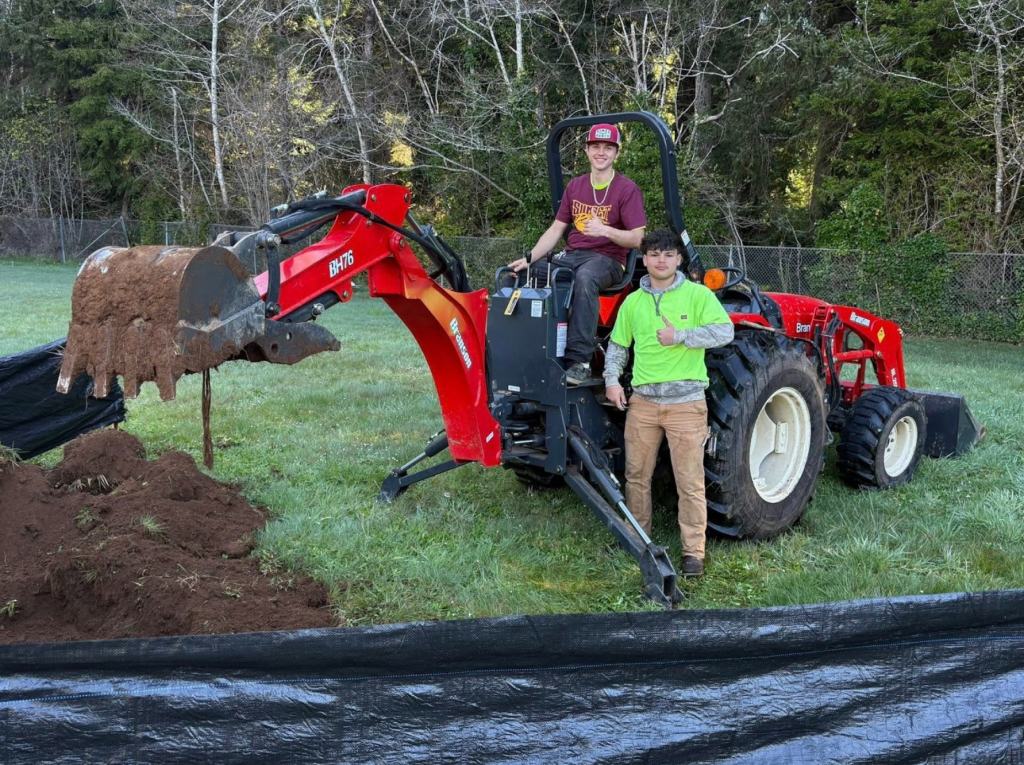
Students with their educational booth for a Friday Field Trip.
There has been immense success, however. Lillian Abuan, the 2024-25 Humboldt-Del Norte Section vice president, was one of the few students who’ve won a regional proficiency, winning the 2025 North Coast Regional Agricultural Education proficiency for her work in Sunset FFA Chapter’s Friday Field Trips. Each Friday during a 10-week period, third- and fifth-grade classes visit campus to learn about agriculture through student-selected stations, many of which showcase students’ SAEs and hands-on learning experiences.
Across the board, Abuan exemplifies that. “FFA shaped me into the person I am today, and without it I wouldn’t be the same,” she said. “It’s helped me grow into a better person, leader, worker, and student, and one day I hope to have half the impact on my students as my advisors had on me.”
Abuan added, “Coming from another chapter, this was the first time I actually wanted to do FFA activities that I previously never would, such as raising an animal and running for office. The reason why being the community that has been built by my advisors at Sunset FFA.”
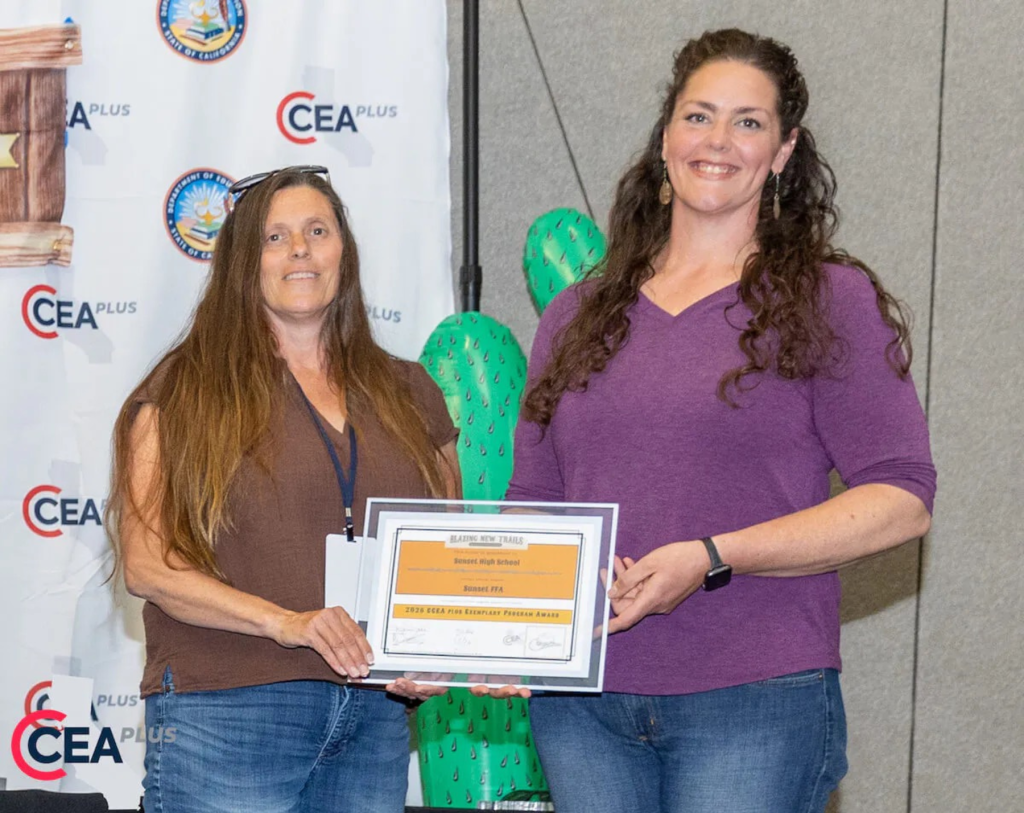
Phillips and Payne, after winning the Exemplary Program Award, awarded the California Continuation Education Association.
Payne and her teaching partner Jessica Phillips have seen both serious challenges and success as one of two continuation chapters in California, facing unique challenges unlike those of any other chapter across the state. Payne’s final words were full of hope, however: “I hope more and more every year that more continuation and alternative school sites enter the FFA realm; not every aspect works, but enough does that it’s worthwhile for students. Our students are perfect for the organization, and it shows in the amount that they grow personally and educationally from it.”
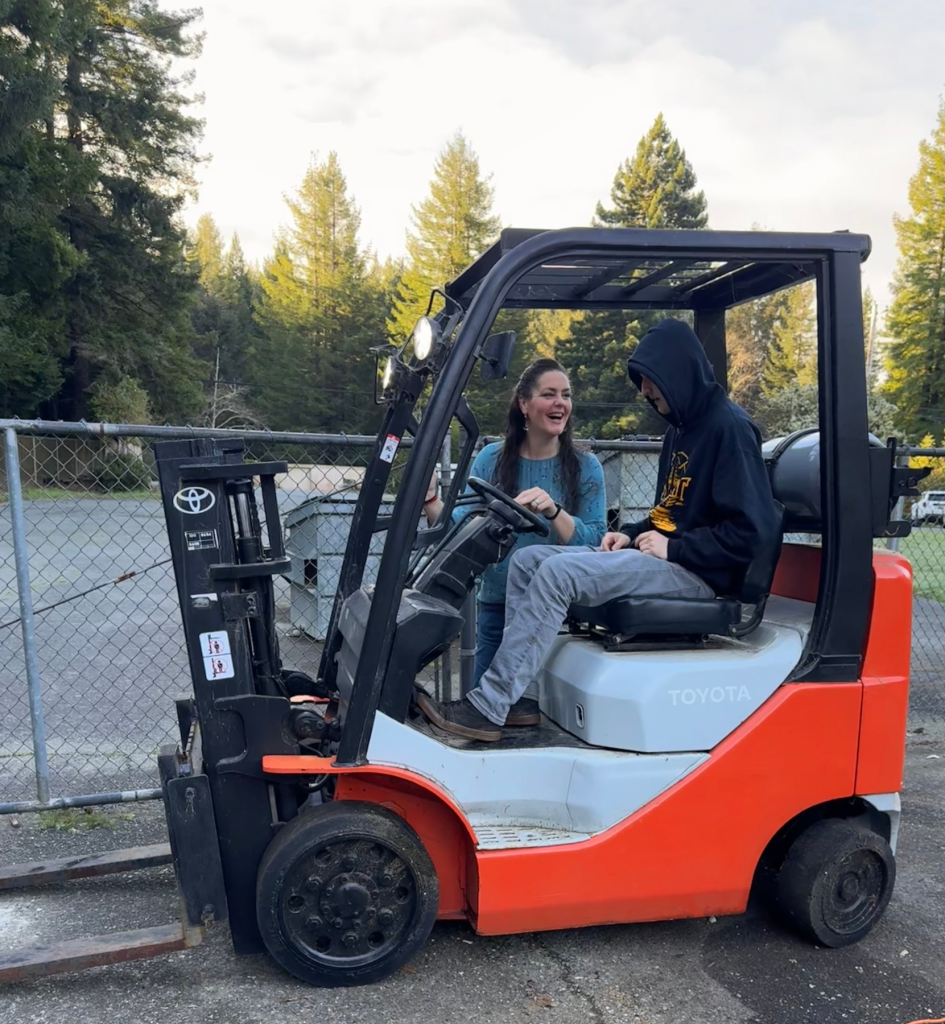
Payne teaches a student how to operate a forklift safely.