From Waste to Growth, and From Growth to Giving
My state imports 92% of its food, and 43% of families on Hawaii Island report being food insecure. Look around a supermarket and you will find the occasional “Made in Hawaii” sticker, but the majority of the time you will find that our food is from another place, such as the mainland or other countries. How can we provide for the future if we cannot sustain ourselves? My recent day of service that was sponsored by the Hawaii FFA Association showed me that there are farms looking to solve this problem.
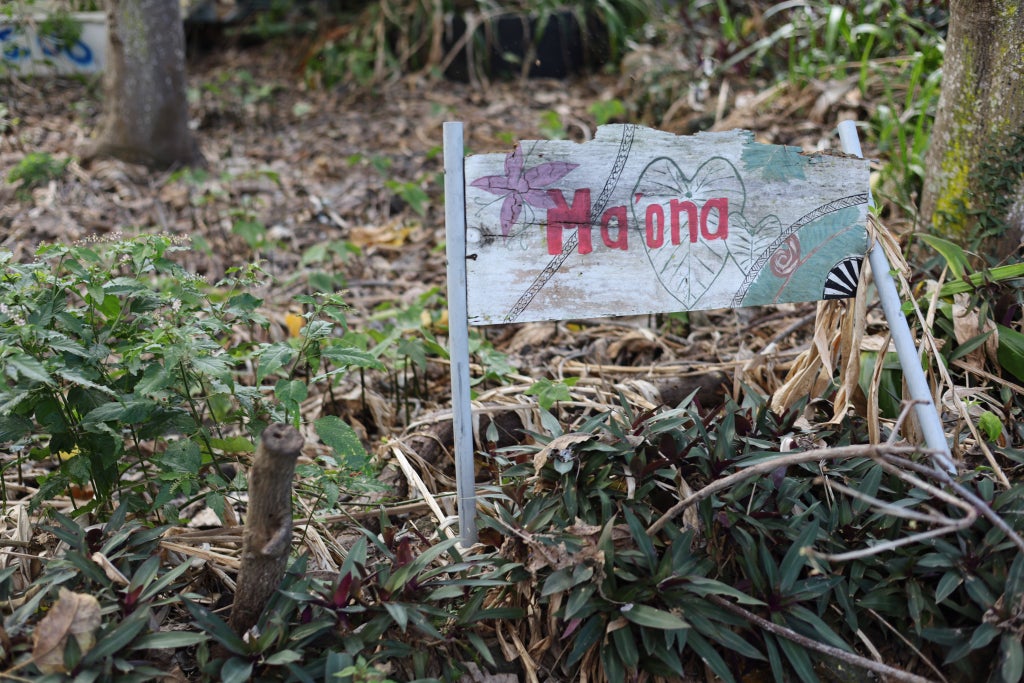
During our state-sponsored day of service, we had the amazing opportunity to visit Maʻona Community Garden, which is located in Honaunau Napoopoo on the Big Island of Hawaii. There, we got a tour of the farm, and I thought to myself, “Is this just another garden?” I found out quickly that this garden was a lot more special, as it showcases a fully circular regenerative food system. Instead of profit, Maʻona Community Garden focuses on feeding and helping the community.
Maʻona Community Garden was founded by several mothers who wanted to answer “How can we build a better future?” and “How can we build something that can benefit our children?” Maʻona Community Garden utilizes fully sustainable farming to achieve this mission in providing a good future for the decades to come.
The food system that is used starts with taking leftover waste from farmers, such as the remains from processing ulu (breadfruit), to make compost that is vermicompost or thermal compost that is given to farmers by donation. Cardboard donations from the community, sometimes up to a ton a month, are used for vermicompost production or are given back to local farmers after shredding for weed suppression. The produce is equitably distributed through community food programs and local partners, all of which are supporting locally grown farming and produce. This allows everyone to eat fresh, locally grown produce. After consumption, the waste can then be cycled back into compost, creating a fully sustainable process that provides fresh produce for everyone.
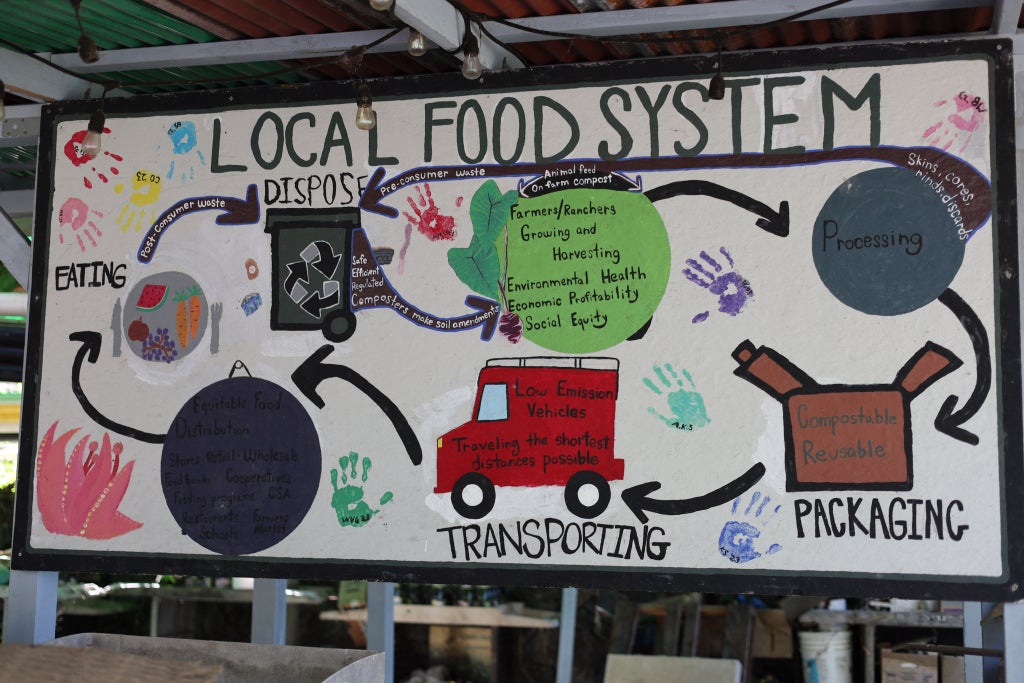
This image shows the local food system and how we can be fully sustainable.
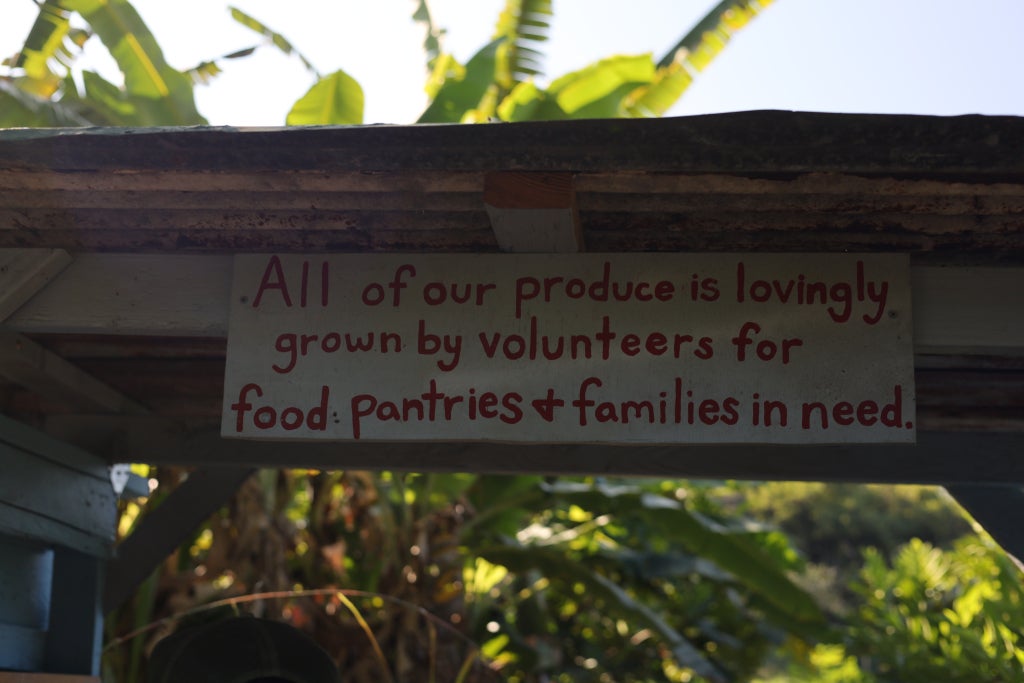
The Giving Garden grows vegetables with volunteers, and all of these vegetables are given to people in need for free. Imagine if we started reusing what ends up in our landfills for agricultural compost — we could decrease the number of people who are food insecure and increase the amount of locally grown produce.
I had the opportunity to talk to Chantal Chung, Maʻona Community Garden’s founder. When I asked her what she recommends for someone who wants to start being self-sustainable and provide for the community, she said, “Do your research and find what your community needs. Do not just start it to start it. Know what your community needs.”
Maʻona Community Garden shows that a sustainable and community-oriented food system is not only possible, but is already happening. If more communities follow the footsteps of Maʻona, Hawaii can move closer to feeding itself and reducing food insecurity and dumped waste that could be recycled. The future of our state depends on how we, as a community, care for the aʻina and each other. Maʻona proves that with care for our community and sustainable practices, we can move forward to food sovereignty in the future of our state.