Beyond the Blue Ribbon
The Story Behind the Results
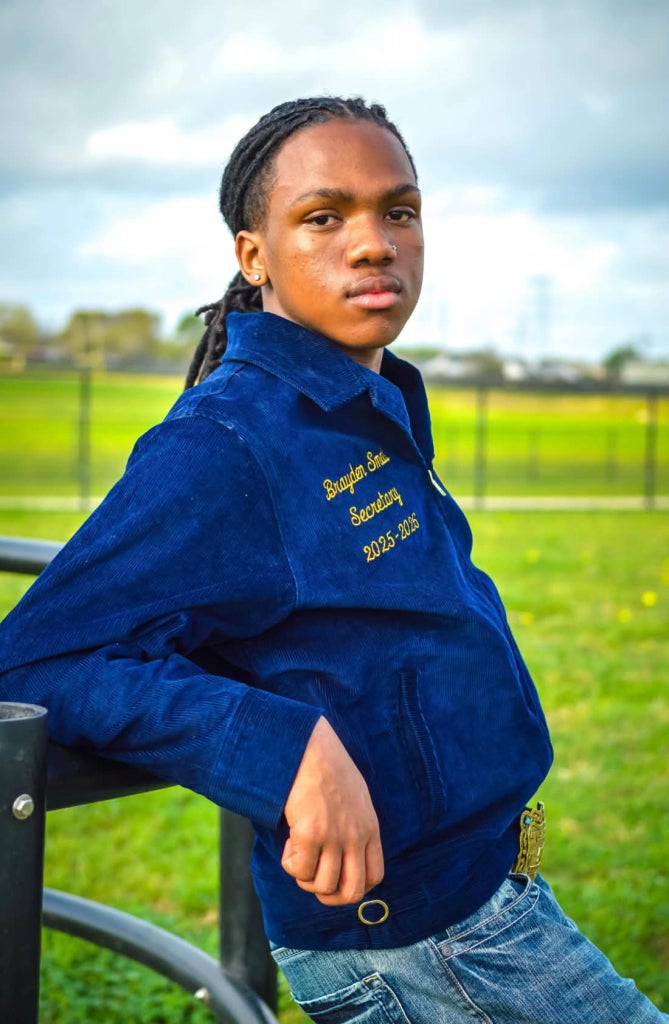
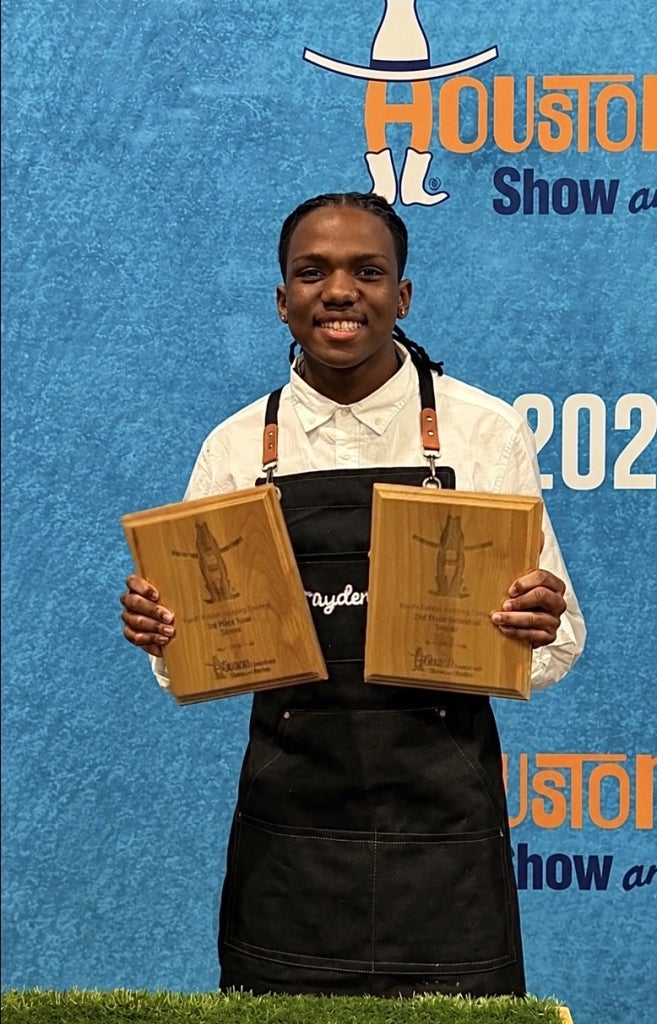
As a seasoned showman in the world of rabbits, Brayden Small has experienced both the grand champion titles and the quiet shortcomings that come with exhibiting livestock. Over the past four years, Small has represented the Elkins FFA Chapter in various rabbit shows in both breed and meat pen divisions, including those at the Fort Bend County Fair, Rodeo Houston, Dayton Livestock Show, and Galena Park. However, his journey has been about more than just physical placings in the show ring.
How Brayden Got Started
After his parents encouraged him to develop a reasonable foundation in raising livestock, Small purchased his first show rabbit as a freshman in high school. Butterscotch, Small’s Holland Lop, first encountered the show table at the 2024 Houston Livestock Show. After competing against a fairly large class, Butterscotch finished seventh. While the result of Small’s finish was an incredible feat in his FFA journey, he felt that showing wasn’t the biggest inspiration for him moving forward. Instead, he found it to be “all the people that he spoke to at [The] Houston [Livestock Show].” Getting the opportunity to learn from breeders and experienced raisers helped him grasp what truly goes into producing a show-quality rabbit.
As he deepened his involvement in agriculture, Small broadened his focus to include showmanship. Rabbit showmanship differs from cattle, swine, lamb and goat showmanship, as it involves knowledge-based questions along with a score for animal handling.
For the 2024 Fort Bend County Fair rabbit show, Small dedicated himself to learning showmanship, all while laboring to raise a difficult pen of three rabbits. His meat pen struggled to maintain weight as he prepared them for show. Nonetheless, he continued to work hard without letting this challenge discourage him. In the ring, his pen didn’t perform well in the meat category, yet he was able to secure his first grand champion title in showmanship. This event marked a milestone for Small, as his insight and show-ring presence have continued to grow.
Since then, he has branched out in his involvement within the livestock industry and now has five grand champion titles under his belt. His ongoing commitment to rabbits is evident, as he now takes part in judging, raising and teaching others about the species. All the while, he often revisits Butterscotch, who currently remains in his home, and his first show experience with gratitude for the opportunity he was provided to network.
The Work Behind the Results
Small spends at least one hour daily performing the tasks vital to the health and prosperity of his rabbits. From cleaning trays and providing food and water to checking for disqualifications, he makes sure each animal has the opportunity to reach prime condition. He is aware that there isn’t a “one-size-fits-all” approach to raising rabbits, however. Each animal requires different amounts of feed and individualized care to be ready for show. Small explains that in Texas, especially, there is unpredictability in how each rabbit reacts to weather conditions, so flexibility in the approach is common.
However, even with the keys to success, health issues and fluctuations can arise within a matter of days. From snuffles (an upper respiratory infection in rabbits) to skin infections, Small has confronted a multitude of ailments. Yet even with extraordinary knowledge, many ordinary challenges can persist until the show. As fryer rabbits have a short timeline from when they are bred or received until the day of the show, some illnesses may not be fully resolved before their time in the show ring arises. Genetics and pedigree also play a major role in the viability of a meat pen. The structural makeup of a rabbit and its susceptibility to health conditions can be influenced by these factors. As a result, some exhibitors have to grapple with the reality of a possible low placing while prioritizing the animal’s recovery.
Despite the unfavorable nature of these obstacles, Small has come to realize the importance of hard work in aspects that he can control and an understanding of the inevitability of challenges in the path to raising show rabbits. Through this, he continues to study the standards of each rabbit breed, work on showmanship, and discover new care practices for his animals to give them the best possible outlook. Small makes sure to always take note of each judge’s critiques so that he can continue to improve.
What Success Means Beyond a Blue Ribbon
No matter the outcome of the show, Small has, over time, developed a view on success that has become his unwavering motivation. When starting out, he set his sights only on the winning ribbons and buckles, but he soon discovered that this was a lifeless way of thinking about success. Through a range of experiences, he recognized his love for showing. Small highlights the necessity of finding purpose and passion in your actions to fully appreciate both accomplishments and hardships. “True success is in the eyes of the beholder,” he said.
Small values the voice that livestock showing has helped him discover, as well as the emotional regulation he has developed. Through verbalizing his understanding of rabbits in the ring and taking in the recommendations of industry professionals, he has found his path to growth. Today, when Small leaves the show ring, he understands that success is not just about his placing on the scorecard. Instead, he measures success by the expansion of his knowledge, the growth of his confidence, and his love for rabbits.