5 Takeaways From a Member-Led Mental Health Study
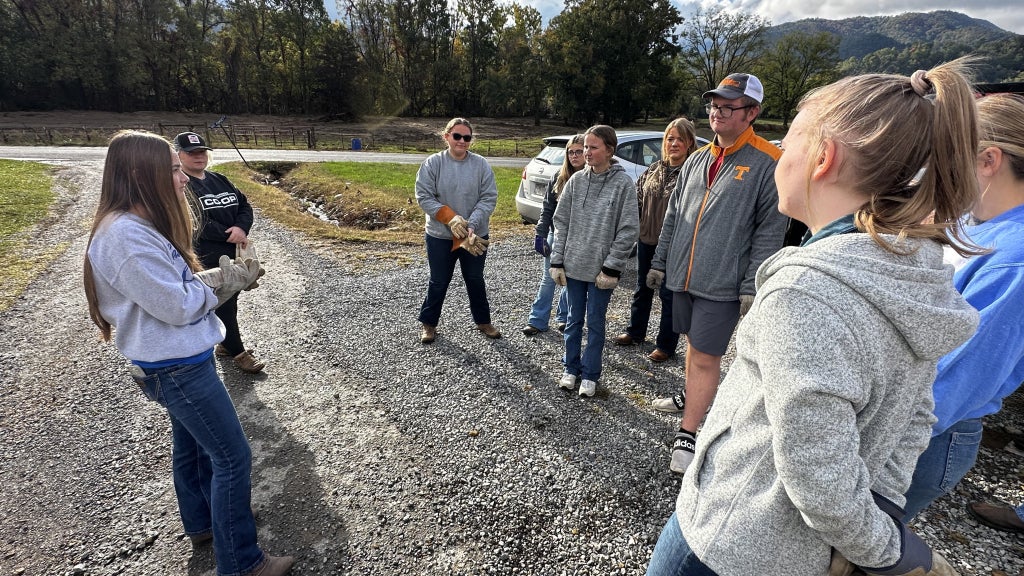
A week after catastrophic flooding from Hurricane Helene devastated Abigail Petterson’s community of Erwin, Tenn., in 2024, her FFA chapter sprung into action. During cleanup at area farms, Petterson noticed how overwhelmed the farmers seemed.
“It was just heartbreaking, talking to them,” recalls Petterson, who serves as the Erwin FFA Chapter vice president. “Just seeing that mental exhaustion made me want to do something.”
Petterson was already thinking about a career as a psychologist. Her advisor at Unicoi County High School, Ryan Arnett, suggested Petterson consider the National FFA Agriscience Fair competition, where FFA members develop projects about the scientific aspects of agriculture. “After I looked into that competition, I knew just what I wanted to do,” Petterson says. She developed and distributed a survey asking farmers about the flooding’s impact on their mental health.
Here, Petterson shares the key takeaways from her research.
1. Flooded farmers felt alone.
Almost half of the respondents said they were unaware of any mental health resources to help them.
“In the survey, I listed a number of mental health resources, including Rural Minds, Farm Bureau’s State of Mind, Telehealth and a mental health hotline,” Petterson says. “Almost half said they were not aware of these.”
Overall, respondents reported they felt alone with no help, she says. Petterson suggests providing a physical space after natural disasters, such as space inside a Farm Bureau office, where farmers can access mental health services.
2. Negative attitudes toward mental health help remain.
Respondents who reported challenges with their mental health after the flooding also said psychiatrists were an unhelpful resource. “I want to explore this further,” Petterson says. “Maybe these farmers aren’t fully aware of how important psychiatrists can be or maybe there is a financial issue. I want to investigate how they view psychiatrists and therapists, and if there are any barriers preventing them from reaching out to mental health professionals.”
3. Financial loss contributed significantly to mental health struggles.
More than half of respondents who reported a negative change in their mental health also associated a sense of financial insecurity as the cause, Petterson says. When a person’s livelihood has been destroyed, justifying spending scarce resources to pay for mental health help is a barrier, Petterson notes.
4. Community help — literal and figurative — matters.
Coming together as a community in the wake of disaster has a huge impact on everything from volunteer efforts to financial issues to mental health struggles, Petterson says. “Erwin will never be the same after Helene, but seeing how we came together as a community was truly incredible,” she says. “Having people to lean on can support you through tough times.”
5. FFA prepared her to meet new challenges.
Petterson’s confidence has soared from her three terms as a chapter officer. “I was a very shy kid,” says the senior, who plans to major in neuroscience at the University of Tennessee at Knoxville after high school. “I didn’t feel confident speaking in front of people, but through FFA, I’ve done a lot of prepared speaking contests, spoken as an officer and done interviews. I even attended my local Farm Bureau meeting to pass out paper copies of my survey. All these opportunities for public speaking have given me a lot of confidence.”
Help Is Available
If you or someone you know is struggling, opening a line of communication can be a helpful place to start. Consider these four strategies to get in tune with your thoughts, feelings and overall well-being. Additional resources include the National Alliance on Mental Illness (NAMI), the National Suicide Prevention Lifeline (dial 988) and the Substance Abuse and Mental Health Services Administration Helpline (1-800-662-HELP).