Better Ways, Former Years: The Agriculture Traditions of Indigenous Alaska
In Western Alaska, reindeer still roam across open tundra, while Alaska Native communities continue practices that connect food production, harvesting and cultural knowledge across generations. These practices show how agriculture in Alaska extends beyond the row crops and livestock operations often associated with American agriculture.
In a state where winter temperatures can drop to 60 degrees below zero Fahrenheit and growing seasons range from 50 days to 200 days, Alaskan traditional agriculturists truly live out the second paragraph of the FFA Creed.
“I believe that to live and work on a good farm, or to be engaged in other agricultural pursuits, is pleasant as well as challenging; for I know the joys and discomforts of agricultural life and hold an inborn fondness for those associations which, even in hours of discouragement, I cannot deny.” – E.M. Tiffany
For thousands of years before the colonization of Alaska by Russian explorers, Indigenous communities throughout the region practiced a lifestyle known as subsistence living. Subsistence living is a way of life in which people produce, gather or hunt nearly everything they need for survival.
Although subsistence living does not align with the modern definition of American agriculture, Alaska Native communities have long relied on traditional ecological knowledge, the study of relationships between living things and their environment, adapted to the state’s short growing seasons, extreme climate, and diverse environments.
Limited resources required these communities to pass down harvest and cultivation knowledge through generations to preserve their communities, cultures and the resources being harvested. One such plant cultivated by Indigenous communities in the region was Hedysarum alpinum, also called wild potato or Indian potato. The Athabascan people cultivated wild potato for centuries, and the plant served as a key subsistence food for many communities in the Interior Region of Alaska.
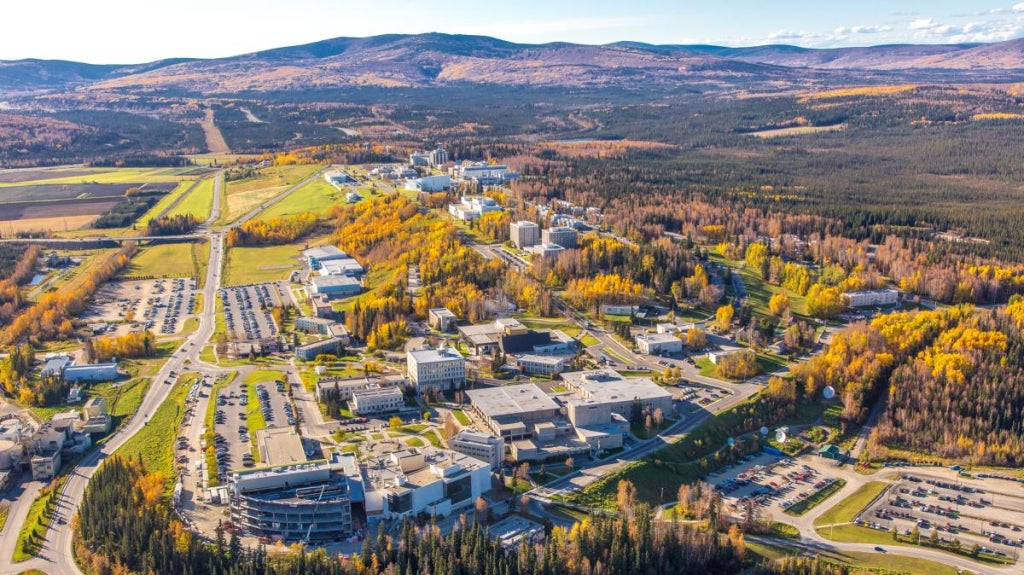
The University of Alaska Fairbanks (UAF) “Troth Yeddha” Campus, which means “place where we harvest wild potatoes,” sits on a traditional ridge used for thousands of years by Indigenous communities to gather food. Photo courtesy of University of Alaska Fairbanks (UAF).
Salmon provided another important example of traditional food production and resource management. The Yup’ik, Cup’ik, Unangax̂, Alutiiq, Dena’ina and many other Alaska Native communities have relied on salmon for generations. Communities developed detailed knowledge of salmon runs, rivers, seasons and harvesting practices. Salmon were harvested during seasonal runs and preserved through methods such as drying and smoking, providing food throughout the winter. Like the cultivation of wild potato, knowledge surrounding salmon harvest and preservation was passed from generation to generation, allowing communities to make use of Alaska’s seasonal resources while maintaining practices closely connected to their environment and culture.
These practices existed for thousands of years before Russian colonization and the later transfer of Alaska to the United States. Prior to 1867, Russia had laid claim to the region before selling 586,412 square miles of land to the United States for $7.2 million.
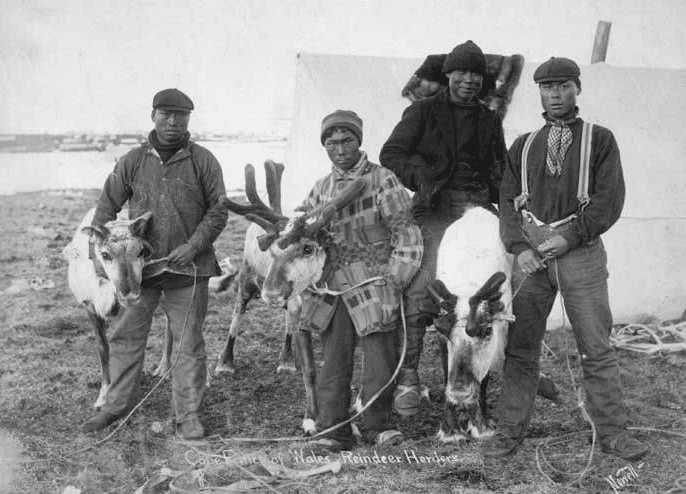
In the 1890s, the U.S. government believed the hunting of seals, walrus and whales for consumption by Alaska Native Communities was unsustainable. The government tasked Captain Michael A. Healy (ship captain and the first man of African-American descent to command a ship of the United States Government) and Sheldon Jackson (Alaska’s first commissioner of education and a Presbyterian minister) with purchasing and transporting reindeer from Northern Europe to Alaska. Reindeer husbandry was a traditional practice among the Sami people of Norway, and Healy and Jackson viewed the introduction of reindeer husbandry as a way to introduce a new form of agriculture to Alaska Native communities. The first shipment included 16 reindeer and several Sami families.
Cape Prince of Wales reindeer herders, ca. 1908. Photo courtesy of University of Alaska Fairbanks (UAF).
By 1900, the size of the herds was estimated to be just above 4,000, reaching a peak in the 1930s with an estimate of more than 600,000 head.
Today, reindeer husbandry remains an ongoing agricultural pursuit, mainly in Western Alaska. Reindeer are free to roam across tundra ranges rather than remaining in fenced pastures. Herders gather the herds twice a year for counting, tagging, health treatments, antler harvest and the selection of animals for meat. The University of Alaska Fairbanks recognizes roughly 20 herders and about 20,000 reindeer in Western Alaska alone.
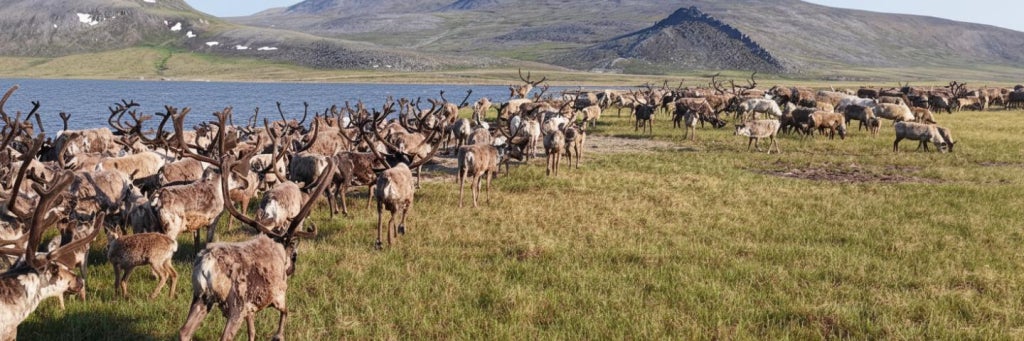
Reindeer waiting to go in the corral in Wales, Alaska. Photo courtesy of Natural Resources Conservation Service.
Much like the use of traditional ecological knowledge in the cultivation of wild plants, herding and harvest knowledge is passed down through Indigenous communities. Many existing herds have been inherited and maintained across multiple generations and are regarded as family property. Young herders rely on experienced Elders to teach them how to track animals, recognize signs of health and illness, handle gathers and manage grazing areas.
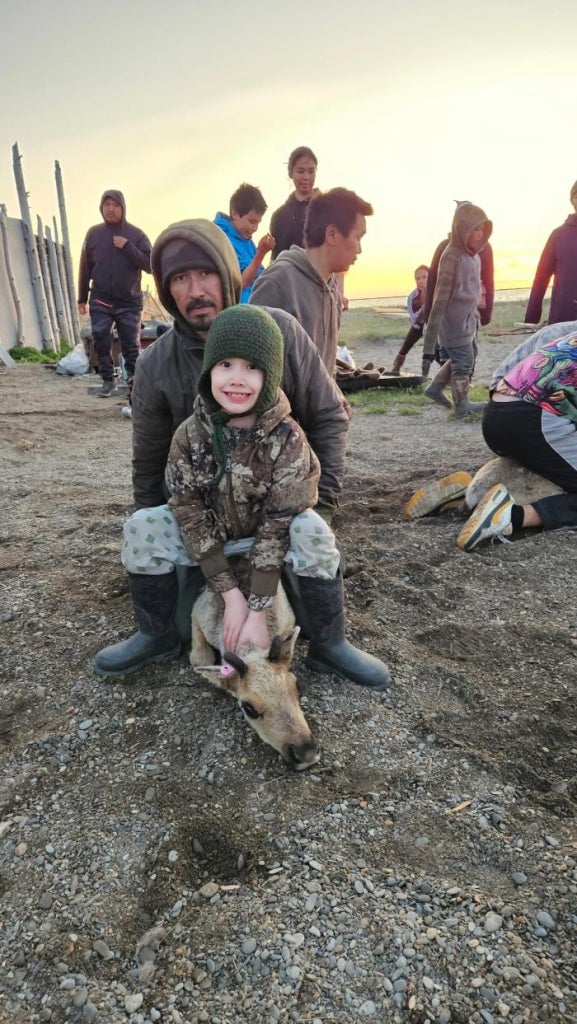
Young child learning with his father how to wrestle a reindeer fawn. Photo courtesy of Natural Resources Conservation Service.
When thinking about agriculture, it is important to consider methods that would not typically come to mind, including methods outside of row crops or feedlots. Many important aspects of agriculture come from examining the traditional values and practices of those who came before us, even when those values or practices seem unconventional.
2026-27 Alaska FFA State Treasurer Layla Harrison is a part of the Ahtna Dene people. Harrison recounts how heavily colonization impacted Native communities around the state and their ability to practice subsistence harvest, as many of their traditional lands have been restricted in their access as the land has been transferred to state or federal ownership. Despite this roadblock, Harrison said many groups have adapted, particularly within her own community.
“We now use some of the agriculture practices brought to us from colonization, such as a village greenhouse or gardens, which do help feed a population quicker than traveling for berry or plant harvesting, and fishing or even hunting,” Harrison said.
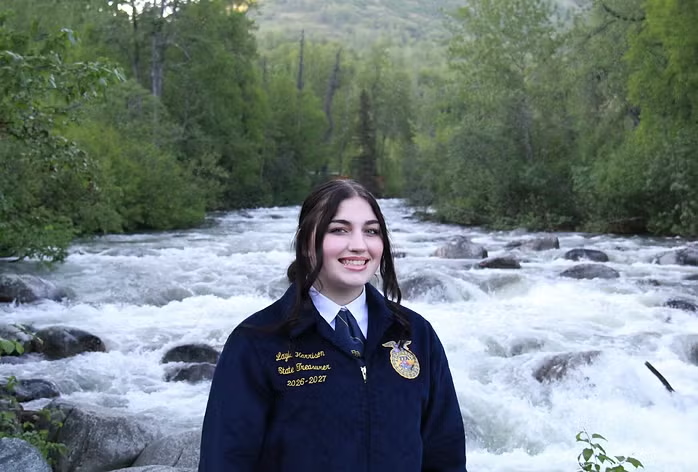
Layla Harrison is the 2026-27 Alaska FFA State Treasurer and a member of the Ahtna Dene People. Photo Courtesy of Alaska FFA.
Despite the quick and harsh changes that resulted from colonization, Harrison said modern tools have not replaced traditional practices. Harrison said the Ahtna Dene people now have access to firearms and other modern tools, but it isn’t uncommon to see the use of traditional tool use, such as bone tools to skin and scrape hides, spears for stream fishing, and birch baskets traditionally used for harvesting plants, berries, or small edible roots. These tools, while they might seem inefficient or unconventional, hold a special place in the culture of the Ahtna Dene people. According to Harrison, these tools are taught to the youth of the village early on to form an appreciation and understanding of the tools, culture, and process.
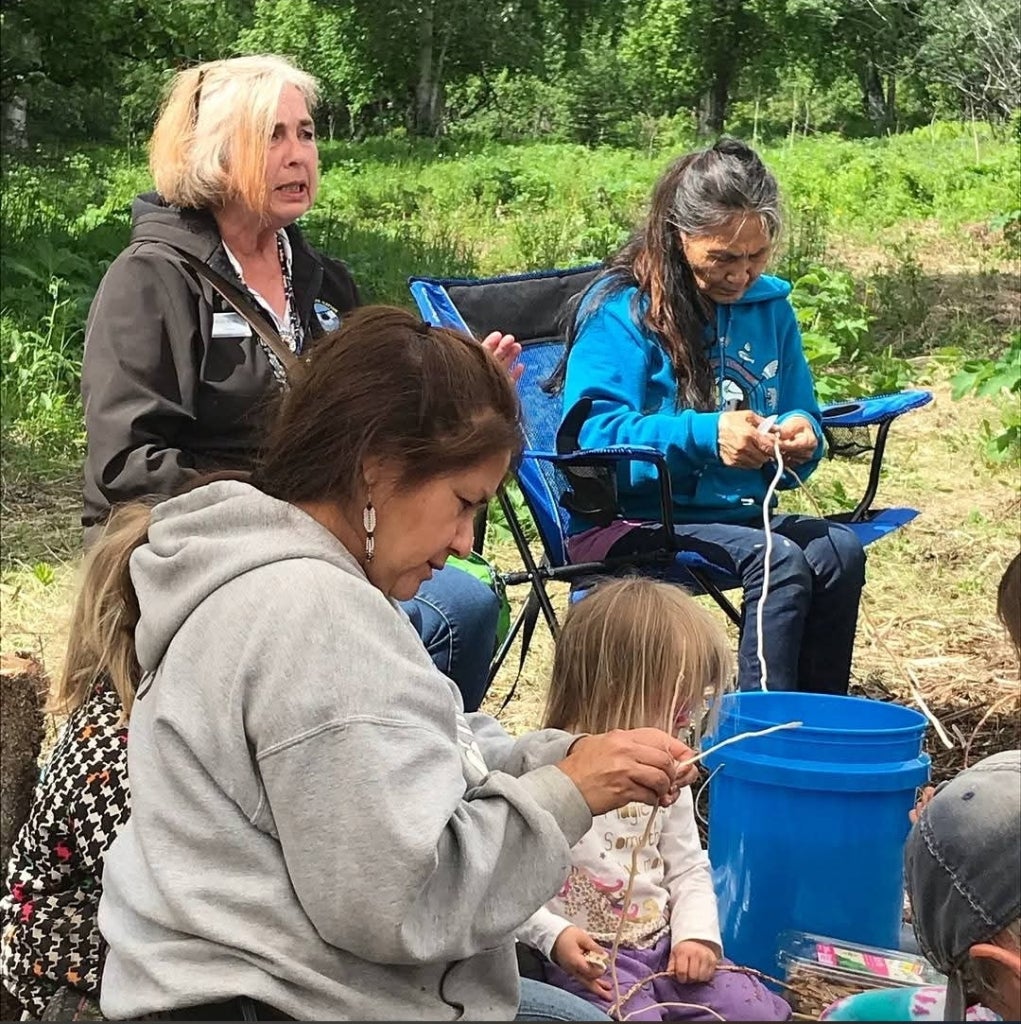
Chickaloon Village Elders teaching children (or “Sna’kaey” in the Ahtna language) to make birch bark baskets at an annual culture camp. Photo courtesy of Layla Harrison.
Harrison hopes that her community can learn more about modern agricultural methods while maintaining their connection to their traditional practices. She believes that Indigenous agriculture should be better represented in Alaskan agriculture.
“Alaska is incredibly food insecure when you look at the general percentage of agriculture, but Alaska’s land and woods hold more food than anyone could ever realize,” Harrison said.
For Harrison and other Alaska Native communities, agriculture does not have to mean leaving traditional practices behind. Modern greenhouses and gardens exist alongside traditional tools, harvesting methods and knowledge passed down through generations.
Alaskan agriculture shows how agricultural knowledge adapts to the environment. From cultivating wild plants to managing reindeer across thousands of acres of tundra, these practices demonstrate how communities have continued to produce food despite short growing seasons, extreme temperatures and limited resources.
As the FFA Creed says, as FFA members, we “believe in the future of agriculture and in the promise of better days through better ways, even as the better things we now enjoy have come to us from the struggles of former years” — even when these struggles might not align with our traditional idea of what agriculture is.
To hear elders and other members from these Indigenous communities speak about traditional ecological knowledge, visit the University of Alaska Fairbanks Project Jukebox and listen to their interviews, click here.