FFA Chapters Find Common Ground Through Differences
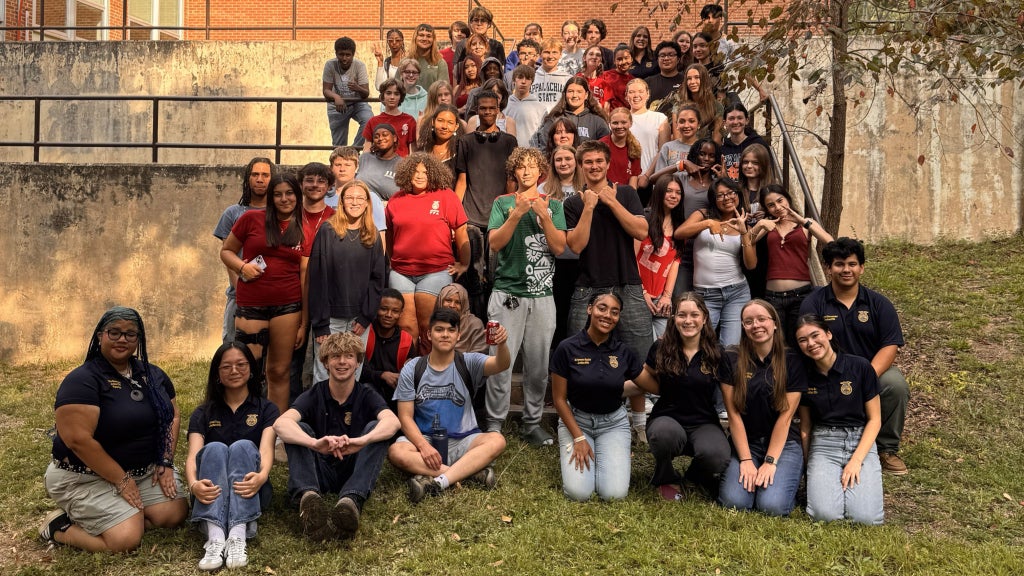
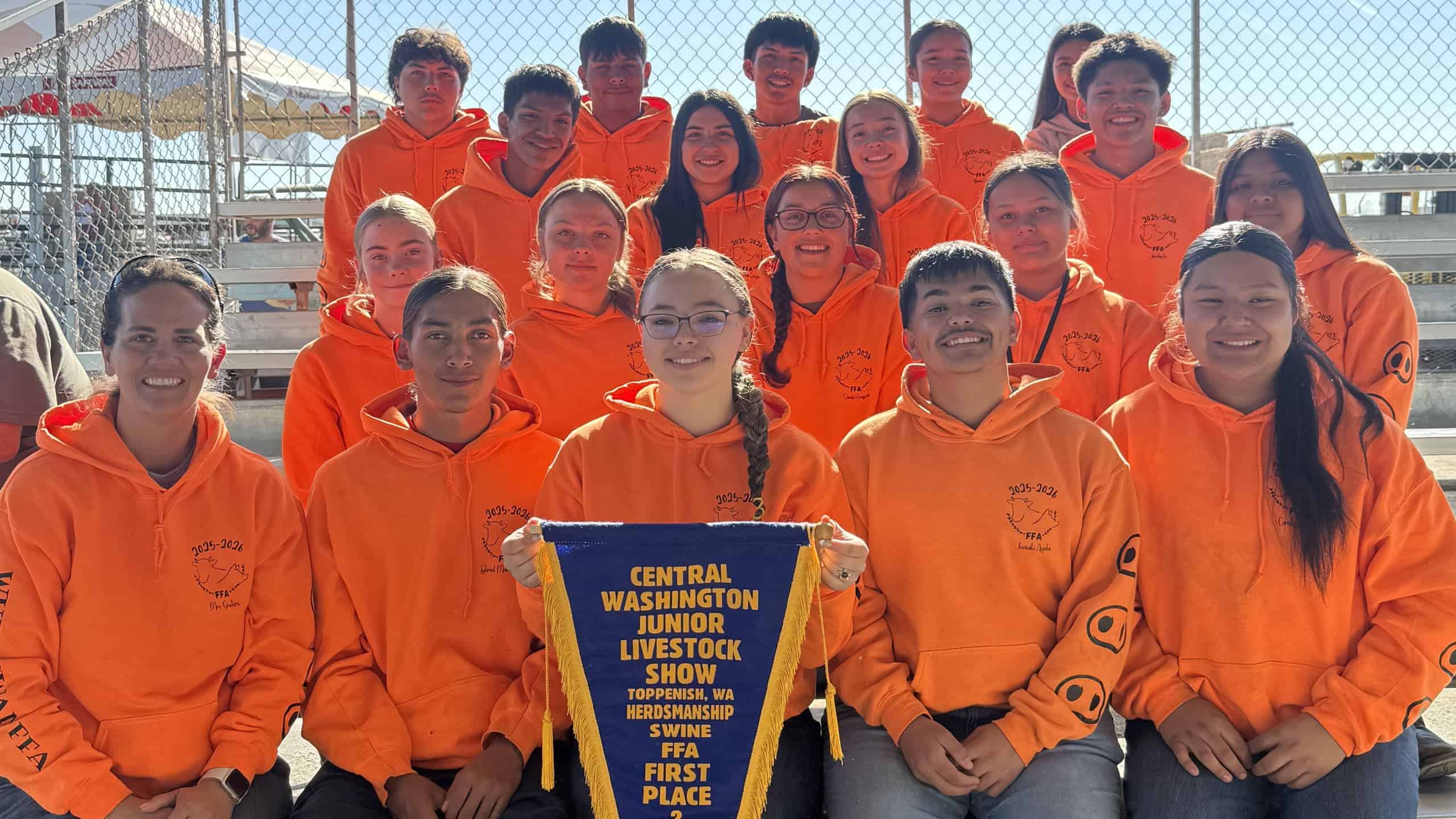 The FFA chapters at Jordan High School in North Carolina (pictured below) and White Swan High School in Washington state (pictured above) are nearly polar opposites. With 130 members, Jordan has the largest agriculture program in Durham County, an urban area with only about 16,000 acres of farmland remaining. In contrast, rural White Swan is located on the Yakama Indian Reservation, with many of its 27 members having direct connections to agriculture with real-world experience in livestock care, plant science and natural resource management.
You might wonder what these two chapters have to offer to each other, and the simple answer is: everything.
Both chapters are part of this year’s Chapter Connect program. Now in its second year, Chapter Connect pairs 32 FFA chapters from 25 states and Washington, D.C. The chapters have different backgrounds, sizes and demographics. The program’s goal is to foster empathy, leadership and cross-cultural understanding as part of student learning.
At the core of the Chapter Connect program is the development of a collaborative project. Through online meetings and group chats, White Swan advisor A.J. Grooters says the two chapters have discovered they each have some dedicated, engaged core members who show up for everything, yet both groups, “are looking for ways to get more people involved in what we do,” she says. Thus, the chapters are looking at developing a project that will engage members from all walks of life and with vastly different backgrounds, says Tyler D’Angelo, one of the four advisors guiding Jordan’s FFA chapter.
One of the highlights of the Chapter Connect program is the opportunity for participating chapters to meet face-to-face at the National FFA Convention & Expo. Each chapter in the program received travel stipends to attend the convention. “This will pay for our hotel rooms,” Grooters says. “It would be possible for us to travel to convention without the stipend, but it would be much harder for us to get there.”
Solid Support
Partners such as CoBank provide financial support for the program. “CoBank is proud to support the communities where our customers and CoBank associates live and work,” says Brian Cavey, senior vice president of government affairs at CoBank. “FFA plays an important role for youth interested in agriculture — in rural, suburban and urban places. When we learned about this program just over a year ago, we thought it would be a great way to help students from different backgrounds and communities get even more out of the national convention — and it delivered.”
Chapter members say they’re excited to learn from peers living in vastly different regions and settings. “It’s been great for us to learn what agriculture and FFA is like for people who don’t live in an urban setting. It’s helpful to exchange ideas between chapters and really understand what FFA is like for everyone, not just for those who have the same background,” says Olivia Ko, Jordan FFA Chapter president. And as she navigates her senior year of high school and thinks about future career paths, Ko says the Chapter Connect experience is helping her gain a new perspective on the ag industry.
Cavey says CoBank and all of the U.S. Farm Credit System, like every sector in agriculture, will depend on the next generation to fill key roles in feeding the world. “Programs like Chapter Connect can help expand FFA members’ horizons and help them find their way into careers in agriculture,” he says.
Learning Across Differences
White Swan FFA Chapter President Cadence Wiltse says members are excited to learn new ideas from the much larger Jordan FFA. The White Swan FFA is hopeful it might be able to take some of the ways Jordan FFA fundraises or participates in community outreach and adapt those ideas for its own community.
“One of the best parts of this program is that it brings together students from very different chapters and communities,” Cavey says. “They get to make connections, learn from each other and see parts of agriculture they may not have been exposed to before. It also gives advisors a new way to keep students engaged and motivated, carrying the spark and excitement of the convention throughout the rest of the year.”
D’Angelo thinks the Chapter Connect program is long overdue. “As FFA continues to grow and we see record membership, I think it’s even more important to highlight the diversity within FFA and what makes it unique,” he says. “I’m so glad National FFA is providing the opportunity through the Chapter Connect program for these students to meet one another and have an opportunity to develop what I consider to be really solid, formative relationships amongst members from different walks of life.”