5 Ways I Grew as a Reporter
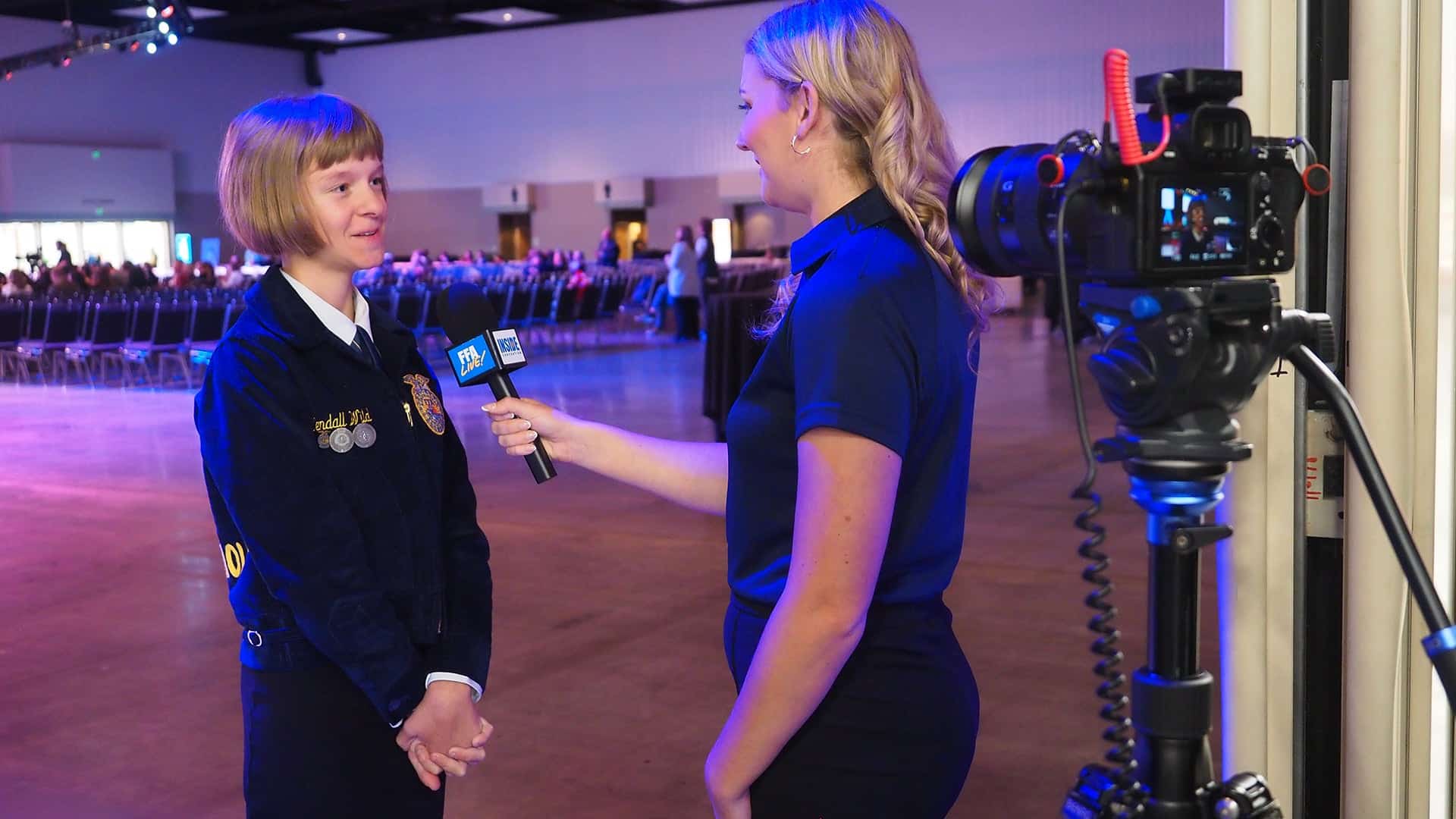 Have you ever wondered what it would be like to work as a reporter? The FFA in the USA Reporter program has concluded its second year, helping a massive cohort of 250 member-reporters to sharpen their journalism skills by contributing articles, videos, photo slideshows and other content to FFA.org. We asked five 2025-26 FFA in the USA Reporters to share their testimonials about how the program helped them grow.
1. I learned to build better connections.
Cyrus Bivens, 18, of the LaRue County FFA in Kentucky, says the FFA in the USA Reporter program greatly improved his writing, as well as his ability to connect with others.
“I built connections with other FFA members from across the nation as well as across the state of Kentucky,” he says. ‘I wasn’t very social when meeting new people at FFA events, but as I asked people if I could spotlight them or showcase their stories, it became more natural to be social and talk to people I had never met before. The FFA in the USA program will definitely be my top activity I have done in FFA, hands down.”
Bivens shared that over the last two years, he has watched his personal network grow along with the number of his Instagram followers — from 300 to 1,200 people.
“I know almost all of the people who follow me, which seems insane. If you really want to see where agriculture can take you, become a reporter,” he says. “The people, places and stories will help you just as much as they will help others.”
2. I learned to ask better questions.
Beau Newport, 16, of the Meeker FFA in Oklahoma, says participating in the FFA in the USA Reporter program enhanced both his writing and communication skills.
“I got better about knowing what questions to ask to get quotes that would fit into the story,” Newport says. “When I began, it would take me four to six hours to work on one story. I was able to get that down to one to two hours once I figured out how to ask better questions.”
Not only did Newport connect with members from other chapters, he also grew closer with members from his own chapter while working on writing articles.
“It was a really great experience to get to know other advocates for the agriculture industry,” he says. “Because each FFA chapter is so unique, it gave me the opportunity to see different takes on service and unique SAE projects, and get to know fellow members. I love getting to see what goes on in each individual chapter.”
3. I learned to see the beauty in the small things.
Neha Deepthy Clement, 16, of the Hanford FFA in California, says the FFA in the USA Reporter program taught her two things every reporter should know. First, not all stories have a happy ending, and second, there is beauty in the small things.
“We tend to cover positive aspects of our industry and celebrate our strengths. These are uplifting, but we also need to take into account the needs of our nation and agriculture and highlight areas of improvement,” Clement says. “Only by speaking up about these issues will a reporter create change. That took me a while to learn, but it finally clicked.”
Recognizing that not every good story will be about a major event or include an interview with a VIP was another important lesson.
“As I received feedback from other reporters and editors, I realized it’s often the small things that matter,” Clement says. “I don’t need to wait for a huge story, but rather take time to highlight the advisor working behind the scenes or a meaningful community event held by a chapter. It’s the small experiences and efforts that keep the agriculture industry afloat, and our writing should reflect this.”
4. I learned to be a good listener.
Bristol Rives, 16, of the Clewiston Christian School FFA in Florida, says the FFA in the USA Reporter program helped her learn to share other people’s voices.
“Reporting on local events and peers taught me that being a good journalist starts with being an empathetic listener,” Rives says. “I learned how to build a genuine connection with the people I interviewed, which allowed me to look past the surface of an event or competition. Instead of just focusing on the results, I was able to capture the deeper life skills, dedication and personal growth behind their achievements.”
The program also pushed Rives to expand her research skills to tackle more complex stories.
“Beyond just reporting the basic ‘who, what, when and where’ of an event, I learned how to dig into the background of a story to show its broader impact,” she says. “Overall, this program allowed me to experience the multi-faceted duties of a journalist, helping me grow into a more versatile and well-rounded storyteller.”
5. I became more outgoing and found my voice.
Jillian McLaughlin, 19, of the Lincoln Academy FFA in Maine, says the FFA in the USA Reporter program helped sharpen her skills in writing, professional interviewing and design.
“It not only provided me with a space to grow my skill set, but also to grow as person,” McLaughlin says. “Learning from skilled FFA staff via Zoom meeting seminars and hearing real stories from accomplished media personalities has allowed me to become more outgoing and find my voice beyond my writing.”
McLaughlin’s favorite part of the experience was giving a voice to the members of Maine FFA.
“Although we are one of the smallest state associations with only approximately 400 members, our members are passionate beyond belief,” she says. “By using my platform as both a 2025-26 Maine FFA State Reporter and an FFA in the USA Reporter, I was able to shed light on our members at the national level, helping provide them with recognition they deserve. Their joy and excitement with every publication made the experience so rewarding.”
Hone Your Craft
One of the best ways to grow is surrounding yourself with talented, passionate people. Read more FFA in the USA content, then consider applying for this hands-on program in the future.