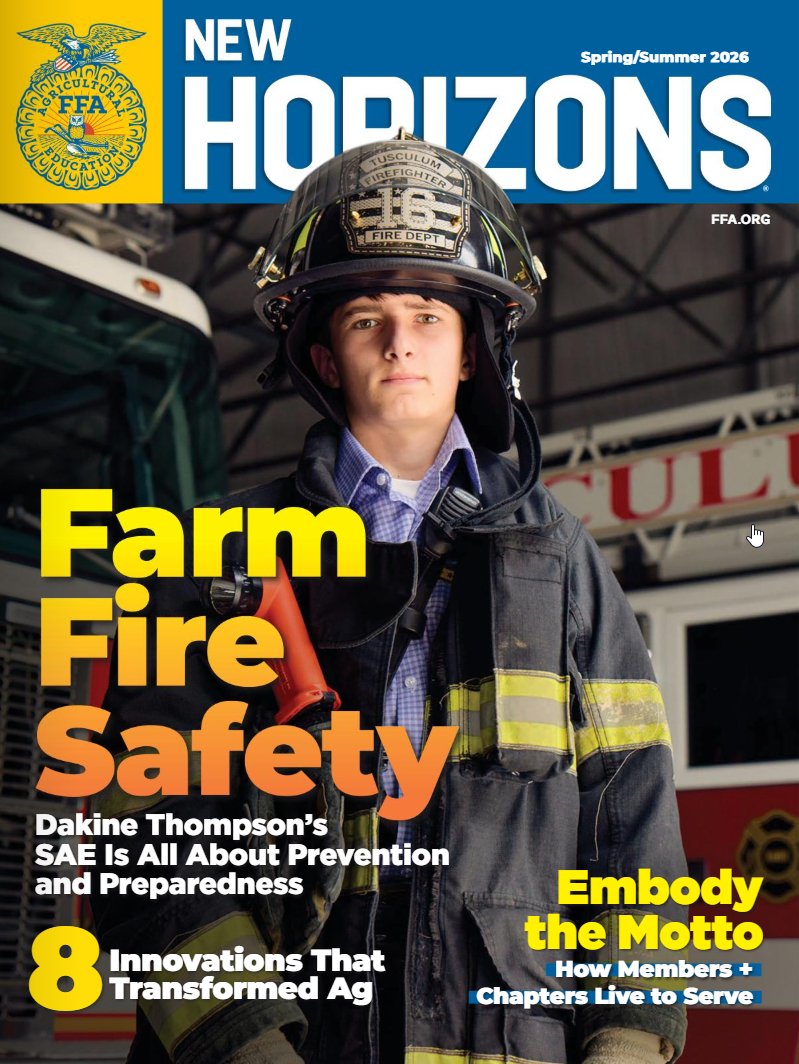
On the Front Lines of Farm Fire Prevention
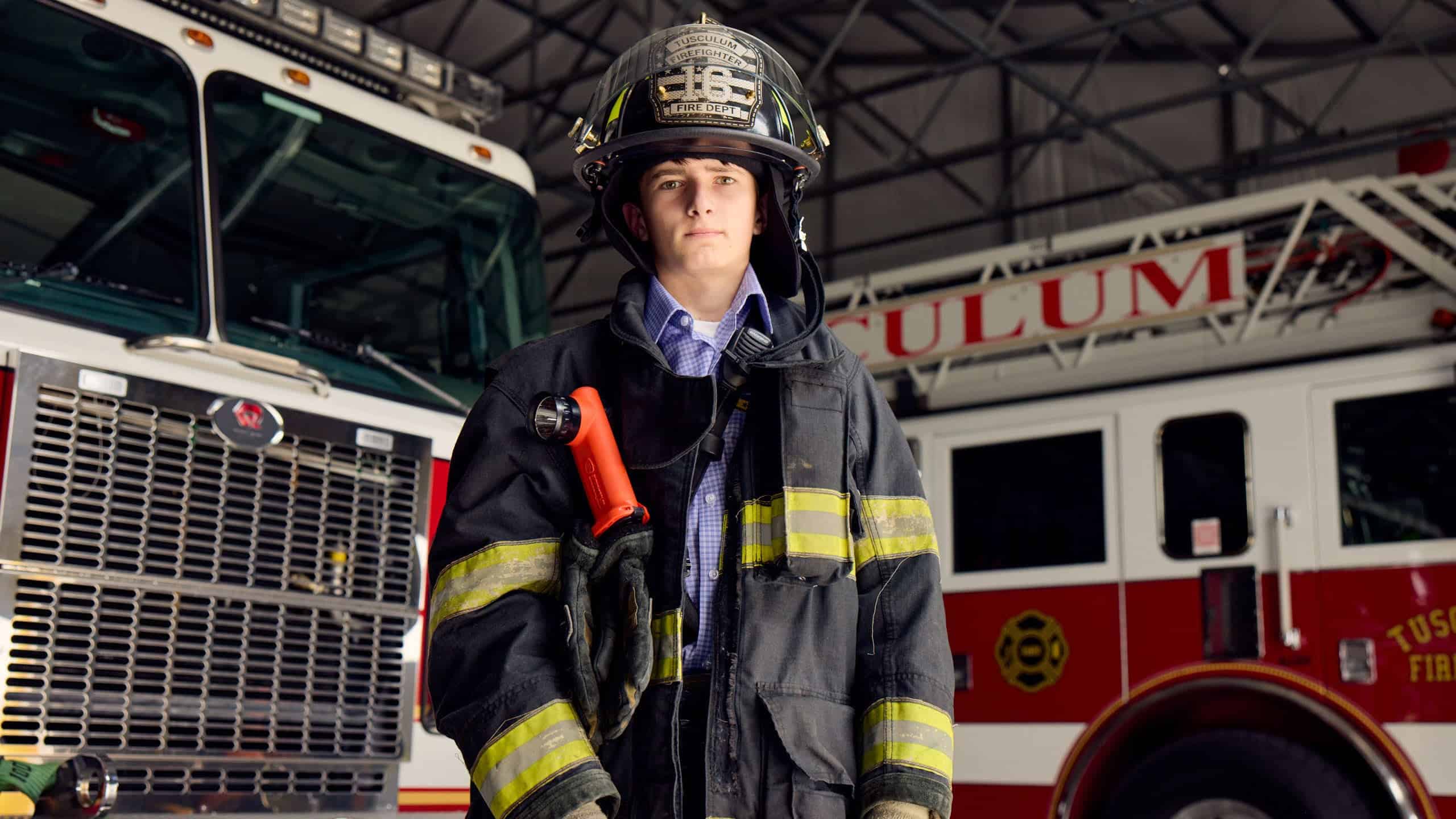
At 15 years old, Dakine Thompson has logged more than 300 hours toward his Supervised Agricultural Experience (SAE) and community service.
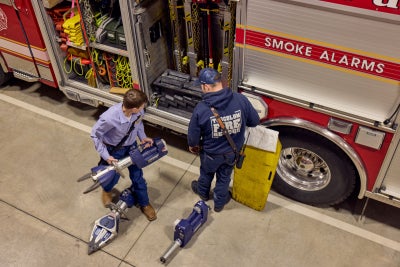
Thompson comes from a family of firefighters, and he trains alongside seasoned firefighters at the Tusculum Volunteer Fire Department in Tennessee, learning skills such as fire suppression, vehicle extractions and repelling from windows. He’s also traveled to neighboring states to participate in disaster relief efforts.
As part of his training, Thompson has learned about agricultural fire safety; it’s essential knowledge for a volunteer crew that fights fires in a rural area where there are a lot of grain bins and hay fields that pose significant fire risks. The experiences inspired Thompson to focus his SAE on agricultural fire prevention and safety.
“I’m trying to educate as many people as possible on the topic,” he says.
The Chuckey-Doak FFA sophomore talks to farmers about wildfire risk, equipment safety management and emergency preparations. As Thompson started visiting local farms, he realized just how unprepared many operations were.
“Most of the information I provided them was surprising because most of them don’t have evacuation plans for people or livestock on their farms,” he says.
Thompson created those resources. He provides emergency contact lists, farm evacuation plans and fire preparedness checklists using templates that can be customized to fit individual farms.
 Risk Assessment
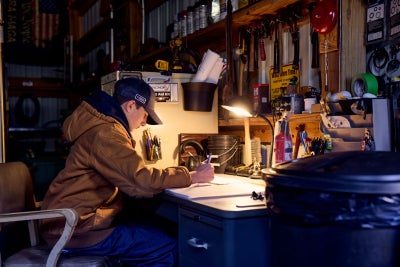
As part of his SAE, Thompson has identified farmers in his hometown of Chuckey, Tenn., who need help creating fire prevention and safety plans. He travels to the farms and walks the property with his fire risk assessment, checking for hazards.
“I evaluate what they need and what they’re missing so I can help correct that,” he says.
The SAE is an ambitious project, and Thompson plans to continue working on it until his high school graduation in 2028. Chuckey-Doak FFA advisor and agriculture education teacher Larkin Clemmer calls it an “out-of-the-box idea.”
When Clemmer learned that Thompson wanted to focus his SAE on farm fire safety, he thought it was the perfect fit.
“One of the most important things is for an SAE to actually match the student,” Clemmer says. “His SAE comes from his background and his passion, and he’s been able to develop a risk assessment and start planning. It’s something that greatly benefits the producers that he goes and sees.”
On his visits to local farms, Thompson has noticed some recurring (and serious) fire safety risks.
“Some of the things that are surprising [to farmers] is the risk of dust, debris and buildup because that dust is really flammable,” Thompson says. “The other common things on farms that cause fires are motors, electrical equipment and heating and air [equipment].”
Thompson has worked with a local poultry farm to create a comprehensive risk assessment, and dreams of reaching at least 10 farms with his prevention plans. To make the projects affordable, he donates a lot of fire safety equipment, including fire extinguishers, to farmers. An FFA Living to Serve Grant has helped Thompson provide lifesaving supplies to farmers and support his SAE. He’s committed to preventing farm fires because the stakes are high.
“When you lose a piece of land [because] your fields or your buildings burned, that’s money you’re losing,” Thompson says.
 Beyond the Farm
Thompson’s commitment to community service doesn’t stop at fire prevention. He’s also passionate about supporting veterans and preserving their stories by creating honor displays, restoring a local memorial and recruiting volunteers to distribute pins and other memorial items to honor local veterans.
Thompson also started a Facebook page and YouTube channel called “The Blue Jacket Way” that features SAE demonstrations and educational resources. He has highlighted his participation in events including Hurricane Helene Remembrance, Kids Day at the Farm and FFA Farm Wars. He hopes the content will encourage other FFA members to pursue ambitious SAE projects.
Clemmer appreciates how Thompson uses his platform to showcase the positive aspects of SAEs.
“As an agriculture educator, the goal is to get all students involved in an SAE, and a big part of that is helping to prepare [them] for the future,” Clemmer says. “It really helps to push and motivate them; they gain skills, networking and resources. Overall, it helps develop them and build a foundation to move forward to the next level, whether that’s higher education, a career or simply a hobby.”
When Thompson isn’t training to fight fires, evaluating farms for his SAE or volunteering with veterans memorial projects, he’s in the shop restoring farm equipment. He just completed a full mechanical rebuild on his school’s 1970 Ford 2000 tractor and restored a 1954 Ford sickle mower; he also participated in the Greene County Fair Antique Farm and Auto Show, where he won a blue ribbon.
Thompson has also stayed busy raising a flock of laying hens. His hens just started laying eggs that he plans to sell to the community. He also participates in agricultural competitions and events, including the Greene County 4-H poultry show and auction and the fire department’s 9/11 walk, and is a member of the Chuckey-Doak FFA soil judging team.
“If I could offer advice to other FFA members, I would tell them to be prepared to put in the work,” Thompson says. “Be focused, and take it one step at a time so you don’t get overwhelmed and overstimulated.”
Firefighting remains his true passion, though. Thompson plans to continue as a volunteer firefighter after high school, and what motivates him most is the thought of protecting his community.
“It’s helping me keep everyone safe,” he says. “And teaching them about the risk of fire, how dangerous it is and how to prevent that.”
10 Safety Tips
No matter the season, it’s important to be prepared. Thompson recommends taking these steps to reduce the risk of farm-related fires.
- Develop a comprehensive farm fire safety plan.
- Take a class through a local fire department or fire prevention nonprofit to learn more about proper fire suppression methods.
- Keep machinery free of grease and buildup.
- Allow hot engines to cool before storing farm trucks, tractors and other equipment.
- Safely store fuel and other flammables.
- Perform welding or grinding in safe areas, away from flammable materials.
- Keep emergency contact numbers for the fire department, emergency medical services, ambulance, police department, fuel supplier and veterinarian updated and posted.
- Establish evacuation routes and safe assembly points.
- Trim brush and create wide borders around farm fields and buildings to reduce fire risk.
- Post evacuation plans and make sure farmworkers know how to escape in case of emergencies.