Was Your Turkey Missing At Thanksgiving?
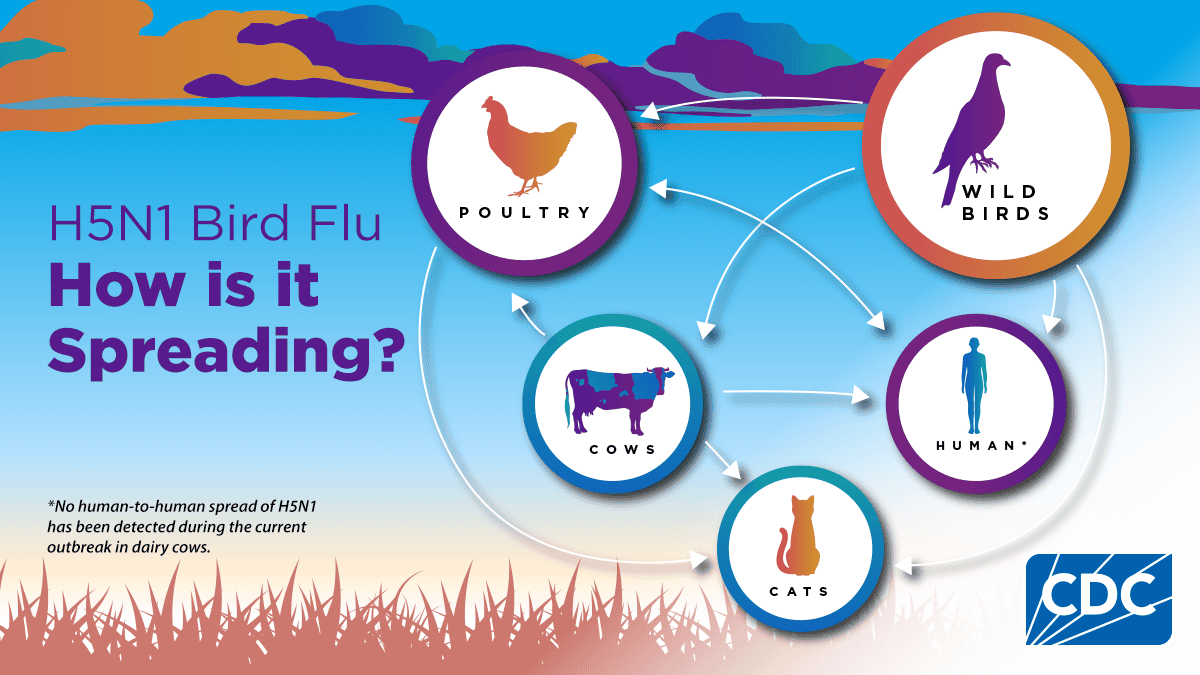
A picture from the CDC website depicting the spread of bird flu.
Across the United States, families preparing for holiday meals are asking the same surprising question: “Where are all the turkeys?” While it may sound like the plot of a cartoon mystery, the answer is very real, and it’s all thanks to the 2025 outbreak of Highly Pathogenic Avian Influenza, better known as bird flu.
This year’s strain of bird flu hit turkey farms harder than usual. Since late August, over 2 million turkeys in the U.S. have been lost to the virus or culled to stop outbreaks from spreading. In one Utah facility alone, nearly 35,000 turkeys were removed in a single incident. With numbers like that, it’s no surprise that this year’s turkey supply is the smallest it has been in four decades.
The main problem is how quickly bird flu spreads. Wild migrating birds, especially ducks and geese, carry the virus without looking sick. When they pass over farms, the virus can spread to commercial flocks through feathers, water, or even contaminated dust. Once one turkey tests positive, the entire flock, sometimes tens of thousands of birds, must be depopulated. It’s an emotional and financial blow to farmers who’ve spent months raising them.
The result? Grocery store shelves that look like someone hit “vanish” on the turkey section. In some areas, finding a turkey feels like winning a prize on a holiday scavenger hunt. Fresh turkeys are the hardest to get, and shoppers have reported everything from limited sizes to stores setting purchase limits. One customer described it as “Black Friday, but for poultry.”
Prices have reflected the shortages, too. Some wholesale turkey prices were reported to be up to 40% higher than last year. Luckily, many stores buy their turkeys early or use holiday birds as “loss leaders,” meaning shoppers aren’t always hit with the full price jump. Still, families may notice that their usual turkey seems a bit smaller, or not available at all.
Even with the shortages, experts want people to know one thing: cooked turkey is completely safe to eat. The virus cannot survive normal cooking temperatures, so the main issue this year is availability, not safety.
Farmers, meanwhile, have done everything they can to fight the outbreak. They’ve tightened biosecurity rules, improved cleaning routines, and added extra monitoring to protect healthy flocks. Agriculture students and FFA chapters have also used the outbreak as a real-world example in their show poultry, biosecurity lessons in the classroom, and helping the next generation understand how diseases spread and how the industry of agriculture responds to a crisis.
Currently, an outbreak has been confirmed in Galveston County, where 27 birds have been reported deceased, and 6 of the tests came back positive for avian influenza. Health officials are warning the public not to touch any sick or deceased birds and to report them immediately to the Galveston County Animal Resource Center.
While the turkey hunt of 2025 has brought its share of frustration, it has also shown how strong and adaptable the agriculture community can be. And even if some holiday tables look a little different this year, whether with a smaller turkey, a frozen bird, or even a ham standing in as the understudy, families can still gather, laugh, and enjoy a meal together.