The Future of FFA
The National FFA Organization was founded in 1928, with only 33 members at the first convention. Today, student membership exceeds 1 million.
There are approximately 350+ agriculture-related paths identified for FFA members after high school graduation, yet labor shortages continue in agriculture. Advances in artificial intelligence (AI), robotics and drones might be the key to addressing these shortages. The usage of technology in this area is referred to as “AgTech.” It will be up to future FFA members to develop these skills to meet the demands and the changing culture of farming and ranching.
So, how is FFA pivoting to meet these advancements in agriculture technology?
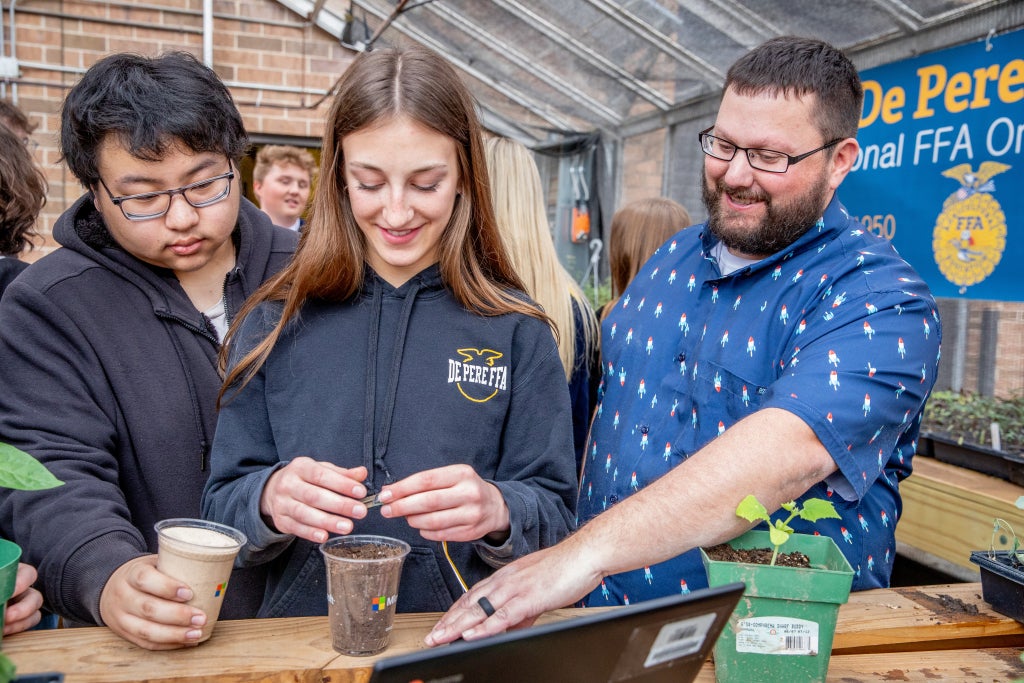
The National FFA Organization recently announced its partnership with Microsoft Corp. to expand a program called FarmBeats. According to microsoft.com, FarmBeats is an educational program that integrates smart sensors, data science and AI to teach precision agriculture in the classroom. In May 2025, the program was rolled out to 185 middle and high school FFA chapters.
Another way FFA introduces its members to AgTech is through its career development events (CDEs), which now include technical/mechanical/AgTech training and competitions. According to the Texas FFA Association, students learn skills in machinery, electronics and environmental systems — all of which are relevant to modern agriculture.
The National FFA Agriscience Fair is another way to engage students in science-led research in modern agricultural technology. Members are encouraged to use emerging technologies in their investigations and research. Projects cover a wide range of areas, including agriculture, food science and natural resource systems.
The future is bright for FFA programming, and its role is to address labor shortages in agriculture. Introducing AgTech to students can prepare them for roles in agriculture that reshape farming and ranching operations by utilizing technology, requiring less manual labor and helping to bridge the labor gap.
Sources:
The Agriculture Labor Shortage: Challenges and Solutions Through Automation (agritechtomorrow.com)
Technology Turns Farming Into a Career Young Workers Like, The Washington Post (washingtonpost.com)