Roots and Representation: How One Student’s Vision Connected Durham’s Black Farmers With the Next Generation
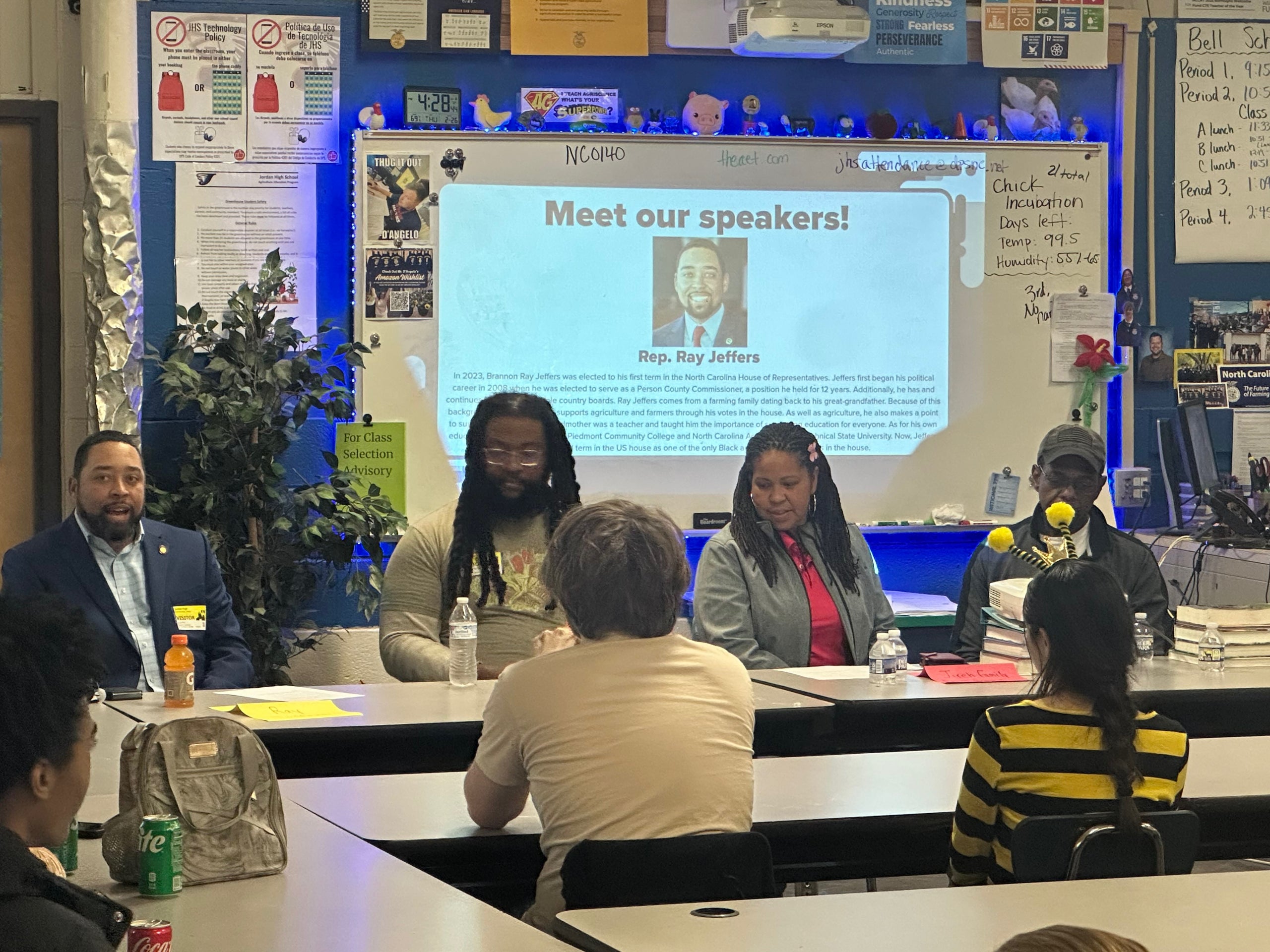
Panelists speaking to students about their agriculture experiences.
In 1947, National FFA Delegates voted to establish the first National FFA Week, and the organization began to celebrate in 1948. FFA Week symbolizes a week in February of celebration for members and a way to recognize the hard work of agriculturists everywhere.
Similarly, also set in February, Black History Month honors the culture, history and achievements of African Americans. The month officially gained recognition from President Gerald Ford in 1976.
Due to the overlap between FFA Week and Black History Month, the Jordan FFA chapter in Durham, N.C., decided to host a farmer panel to highlight Black agriculturists in the Durham area.
The idea came from Zie Hatley, a junior in Jordan FFA. Hatley shared that she has always had an interest in Black history and becoming involved in FFA. She learned about the New Farmers of America (NFA), an organization similar to FFA for Black agriculture students that merged with FFA in 1965. The knowledge helped her “realize even further how deep the connection between agriculture and the Black community goes,” she said.
Learning about the history of NFA and making connections with people of color in agriculture inspired Hatley to find a way to “highlight the excellence that African Americans bring to agriculture that can often be overlooked,” she said.
That dream of highlighting African Americans in agriculture came to fruition through a panel of four Black agriculturists who visited Jordan FFA on Thursday, Feb. 26, of FFA Week.
The panel consisted of North Carolina state representative Ray Jeffers, whose family has been farming for three generations; botanist Derek Haynes, who shares his knowledge online through his Instagram account @thechocolatebotanist; and the owners of Jireh Family Farms, Immanuel and Valarie Jarvis.
Each panelist shared their unique experience in agriculture, the moment they discovered their passion for it, and advice for young people interested in agriculture.
The speakers also voiced insights into what it is like to be a Black farmer. Haynes reflected on his time at a biotech company where his ideas were often overlooked and urged students to keep advocating for themselves and “being amazing.”
Jeffers spoke about his time as a policymaker and how many of the programs that support farmers do not include smaller farmers, a category Black farmers often fall into. He urged, “If you’re not at the table, you could be on the menu,” underscoring the importance of representation in all areas of agriculture.
Immanuel Jarvis ended the event on an optimistically determined note, reminding members that, no matter how others see them, they can prove themselves through their actions. “I just have to make sure I do my best and … regardless of who is against me … I can rise past whatever complication I have.”
Black farmers only represent 1.5% of farmers, but Immanuel Jarvis doesn’t think this discourages people of color from agriculture. He believes it drives them. Hatley hopes that the panel reminds all FFA members that they are an important part of the organization and their voices and experiences matter.