Proving We Belong
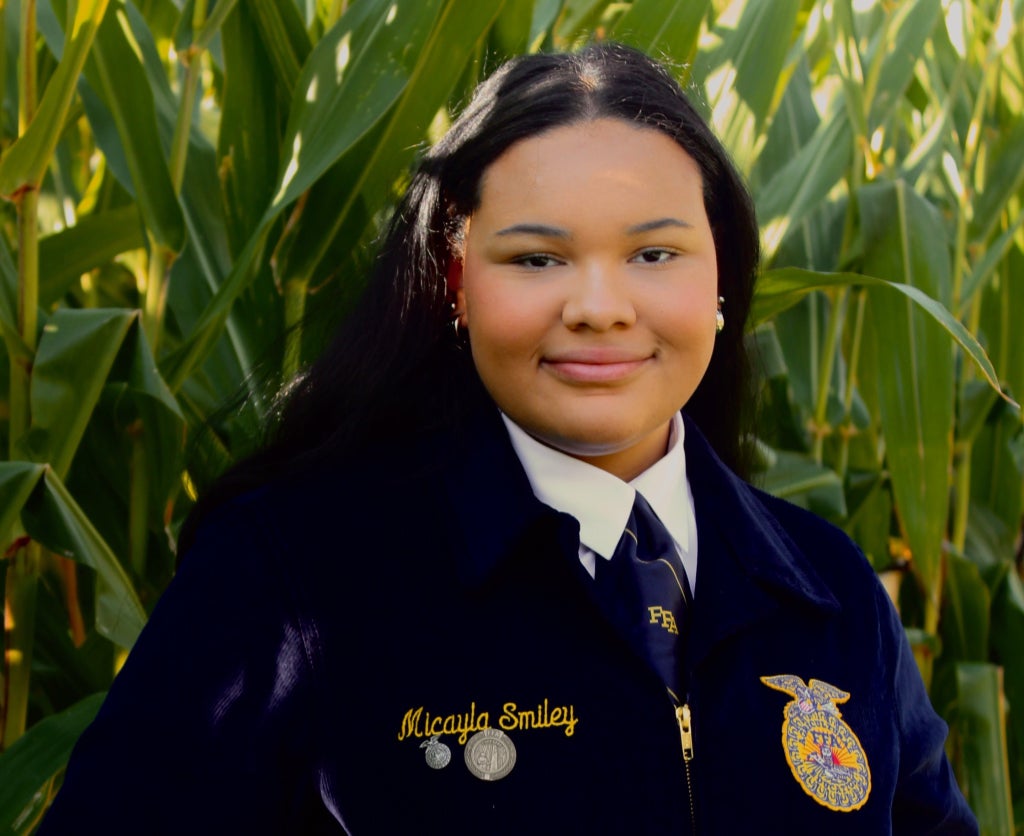
FFA has given me opportunities I never imagined possible. It has helped me grow as a leader, communicator, and person. Through competitions, conferences, speaking events, and leadership opportunities, and meeting members from across the country, I’ve discovered a passion for agriculture and advocacy that continues to shape who I am every single day. The blue jacket has become more than just a uniform to me; it represents growth, hard work, and the lessons that helped me find my voice.
But as a minority member in FFA, I’ve also learned that sometimes the hardest challenges are the ones people cannot see.
When many people picture FFA, they often imagine one specific type of student. For those of us who come from different racial, ethnic, or cultural backgrounds, it can sometimes feel like we have to work harder just to prove we belong in the room. As a multiracial member, I’ve experienced moments where I felt underestimated before I even had the chance to speak. I know many other minority members, whether they are Hispanic, Asian, indigenous, Black, or from other underrepresented communities, have felt similar pressures in agricultural spaces.
There is often an unspoken feeling that we have to do more to earn the same level of recognition. We feel pressure to represent ourselves well at all times because when you are one of the only minority students in the room, every success and mistake can suddenly feel magnified. Those experiences may seem small to others, but over time, they become difficult to ignore.
Sometimes it’s the surprised looks when you succeed in a competition. Sometimes it’s feeling like people assume you know less about agriculture before you even introduce yourself. Sometimes it’s sitting in a crowded room and realizing nobody looks like you. Those moments stay with you longer than people realize.
There have been times when I questioned whether I truly fit into agriculture at all. Not because I lacked passion or ability, but because constantly feeling different can become exhausting. It can make you wonder if you have to shrink parts of yourself just to feel accepted. It can make you feel like you are carrying the responsibility of proving stereotypes wrong every time you walk into a contest room, step onto a stage, or put on that blue jacket.
But despite those feelings, I stayed.
I stayed because agriculture matters to me. I stayed because FFA gave me opportunities to grow into someone stronger than I ever thought I could become. And I stayed because I know younger students are watching, kids that look like me, trying to decide if there is a place for them here too.
Agriculture has always been diverse, even if that diversity is not always recognized. Minority communities have contributed to farming, ranching, agricultural education, and innovation for generations. Black Farmers, Hispanic agricultural workers, Indigenous agricultural traditions, and countless other minority voices have helped shape the industry into what it is today. Yet many students still grow up believing agriculture is not a place for them simply because they rarely see themselves represented within it.
This is why representation matters.
Sometimes, all it takes is seeing someone who looks like you wearing the blue jacket to make you believe you can wear it too. Sometimes, seeing a minority member speak on stage, win an award, or serve in a leadership position can completely change how a younger student views themselves and their future.
Minority members in FFA aren’t asking for special treatment; we simply want the same opportunity to feel welcomed, respected, and valued for our contributions. We want people to understand that agriculture belongs to everyone, not just one background or community.
Despite the challenges, FFA has still become one of the most important parts of my life. It has introduced me to people from all walks of life and shown me how powerful different perspectives can be. Opportunities like FFA in the USA Reporter program allowed me to connect with members from chapters across the nation and hear stories that reminded me I’m not alone in my experiences. I’ve met students who understand what it feels like to walk into a room and feel invisible. I’ve met students who felt pressure to prove themselves constantly. And I’ve met students who continue showing up anyway because they love agriculture too much to walk away from it.
Those conversations reminded me that even though our backgrounds may differ, many of us share the same goal: to leave agriculture better than we found it.
Being a minority in FFA has taught me resilience in ways I never expected. It has taught me how to walk confidently into spaces where I may not always feel expected. It has taught me how to speak up for myself and others, even when my voice shakes. It has taught me that leadership does not belong to one race, one culture, or one type of person.
Most importantly, it has shown me that agriculture grows stronger when more voices are included. Different backgrounds bring different experiences, ideas, and perspectives that can improve the future of the industry. Leadership does not have one appearance, one accent, one upbringing, or one story. The future of agriculture depends on students from every community feeling like they have a place within it.
I am proud to wear the blue jacket, not only for myself, but for every student who has ever questioned whether they belong in FFA.
Because they do.
And as FFA continues to grow, I hope more minority members will feel empowered to step into leadership roles, share their voices, and take up space without apology. I hope future members walk into contest rooms and convention halls without feeling like they have to prove they deserve to be there. I hope that one day diversity in agriculture is seen as normal rather than surprising.
Most of all, I hope younger minority students see people who look like them in FFA and realize they do not have to change who they are to belong here.
They already belong.