Raising the Future: Presque Isle FFA Members Support Salmon Conservation Efforts
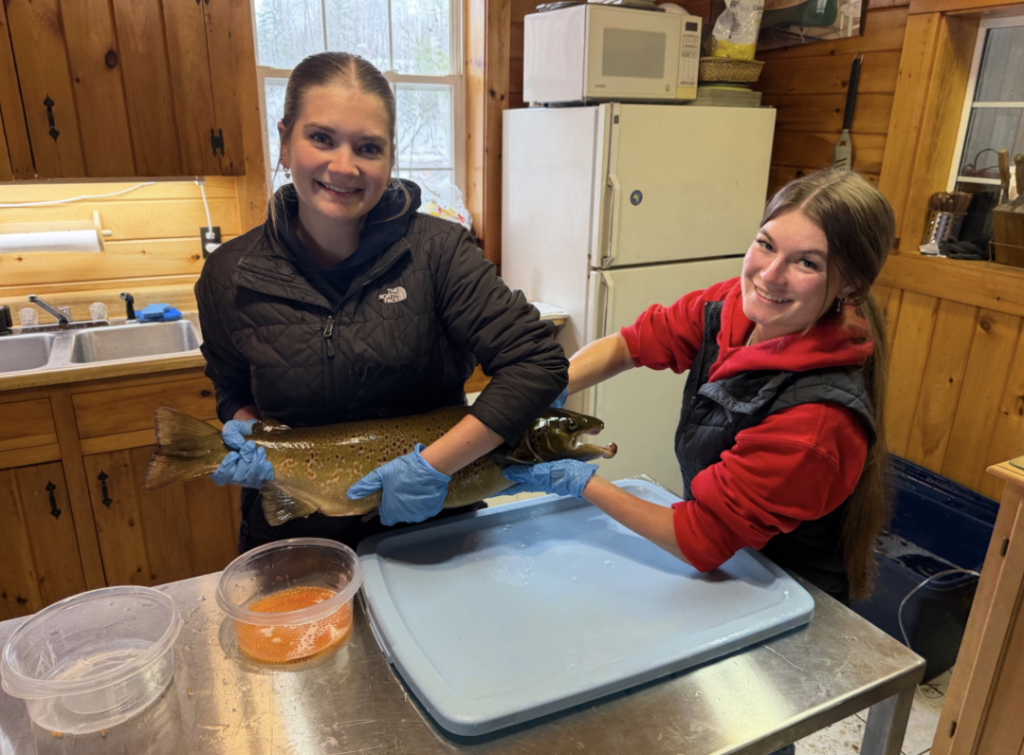
Peyton McKinley (left) and Madeline Patterson (right).
In the state of Maine, agriculture takes on many different forms. While the state produces many traditional crops, including corn, apples, potatoes and dairy products, the state has a unique industry that is often overlooked.
Maine’s aquaculture industry plays an essential role in the economic success of the state. The industry has been experiencing rapid growth over the last two decades, generating more than $100 million annually, according to data published by the Bangor Daily News. Along the 3,500 miles of coastline, you can find over 200 licensed farms producing agricultural commodities, such as oysters, lobster, kelp, scallops, haddock and seaweed. However, Maine’s aquaculture industry expands far beyond just the coast.
Up in the northern Maine woods, you can find the Atlantic Salmon for Northern Maine based out of Dug Brook. Atlantic Salmon has had a longstanding partnership with Presque Isle Tech Center, allowing students with interests in aquaculture and wildlife management to gain hands-on experience working with salmon. This is an opportunity two Presque Isle FFA members decided to take on as part of their Supervised Agricultural Experiences.
Peyton McKinley and Madeline Patterson are current seniors at Presque Isle High School. Both take part in Presque Isle’s extended learning opportunity program, allowing them to work under the supervision of Dave Putnam and Steve Barker. At the facility, common tasks for McKinley and Patterson include releasing both fry and mature salmon into local bodies of water, collecting eggs and fertilizing eggs for population preservation. This process is highly detail-oriented, requiring McKinley and Patterson to work together as they monitor groups of three to four fish, which they slightly sedate to ensure the fish remain calm during observation.
When asked what she has learned throughout the process, McKinley said, “This opportunity has helped me not only grow to be a better person, but become better at the things I wish to achieve.” Similarly, when asked to reflect on her time spent at the Dug Brook Institution, Patterson said, “While Peyton and I have learned and gained so much throughout our time at the hatchery, we’ve grown to truly love the environment we work in.”
Extended learning opportunities are rising in popularity throughout Maine schools for precisely this reason. Allowing students to engage with others they share a common interest with not only allows them to grow individually, but become better educated on the world around them. Thank you to the Dug Brook Institute for providing FFA members with this incredible opportunity to learn about Maine’s aquaculture industry.