Kettle Run FFA’s Ag Exploration Day Brings Agriculture Alive
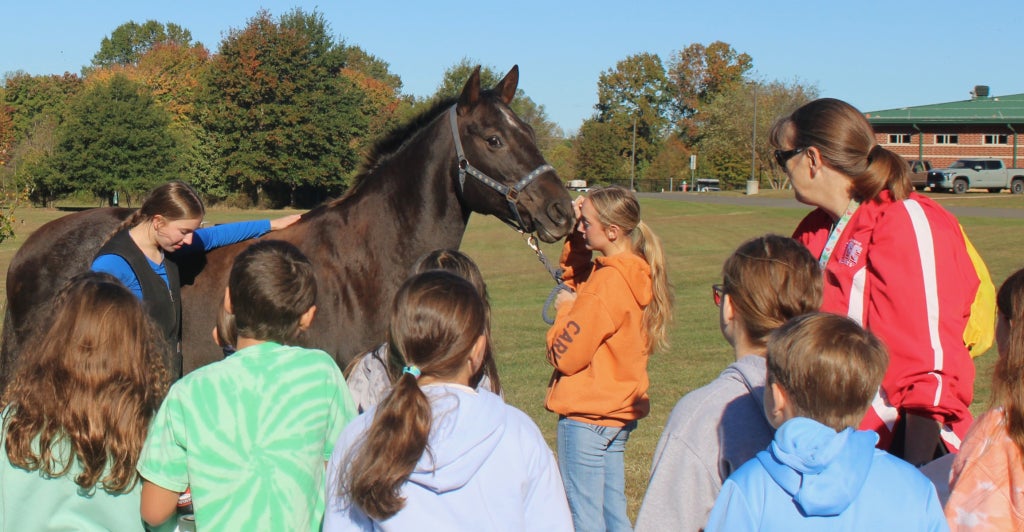
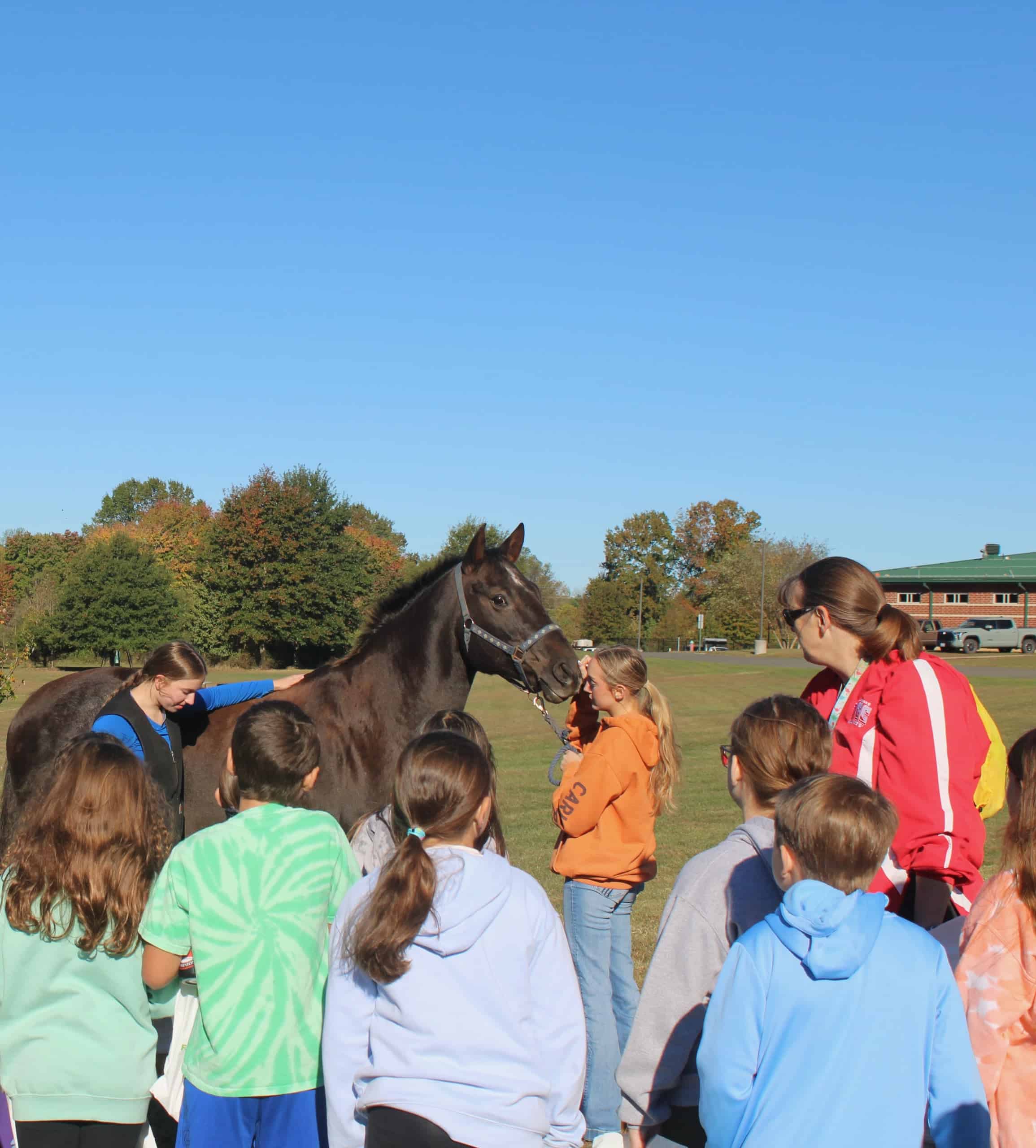
Kettle Run FFA chapter members teach 4th-grade students from surrounding elementary schools about horse husbandry, safety, and more.
A tractor tire nearly the size of a fourth grader, the sound of excited chatter moving from station to station, and a chicken calmly perched in the arms of a Kettle Run FFA member. This is not an ordinary school day in Fauquier County, Virginia – it is Agricultural Exploration Day, where agriculture is not just taught, but experienced.
Each year, Kettle Run FFA opens its campus to approximately 275 elementary students from three surrounding schools, turning the high school into a rotating series of hands-on learning stations designed to introduce young learners to the world of agriculture. For members Camryn Scott and Addyson Pechie, and advisor Tonja Romero, the event is one of the chapter’s most meaningful traditions.
Now in its ninth year, Agricultural Exploration Day, often referred to as AED, has grown into a large-scale outreach effort hosted on the Kettle Run High School campus. What began as a smaller initiative has expanded into a coordinated experience led by 31 FFA members, each taking on roles as station leaders, presenters, or group guides.
Across the campus, students cycle through interactive stations that highlight the diversity of agriculture. This year’s offerings included miniature horses, equine science, chickens, reptiles, horticulture, dairy, forestry, welding, and a grain education station led in partnership with the Oak Springs Garden Foundation. The Virginia Department of Forestry also contributed, bringing professional expertise that connected classroom concepts to real-world natural resource management.
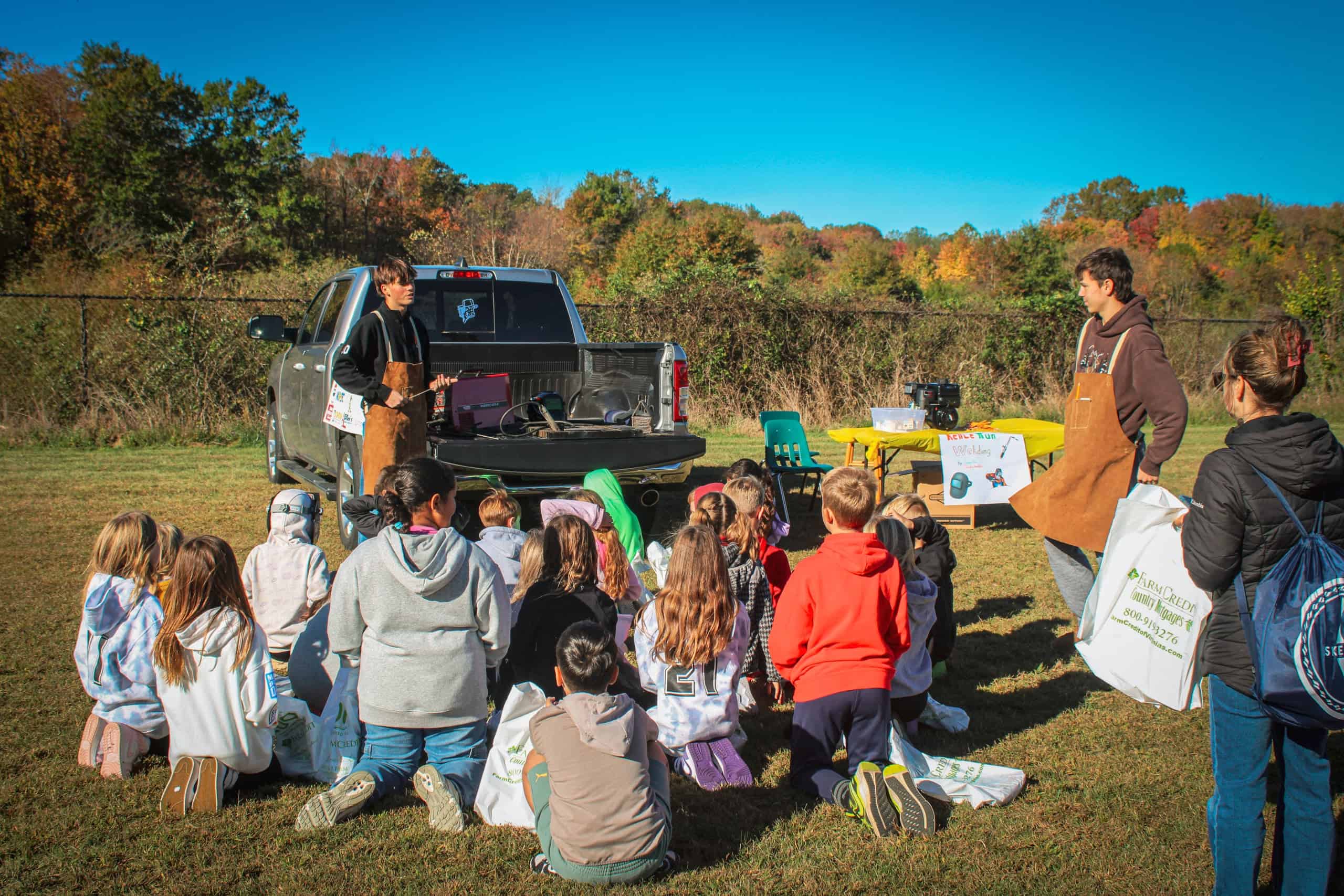
Kettle Run FFA members present on welding, fabrication, and more.
The format is intentionally hands-on. Fourth graders don’t just hear about agriculture – they see it, touch it, and ask questions directly to the people working in the field. Whether it’s brushing a horse, observing reptiles up close, or learning how grain is processed, each station is designed to make agriculture tangible.
Behind the structure of the day is a clear goal: agricultural literacy. “Our overall goal is opening the eyes of fourth graders to a wide variety of agricultural topics,” Chapter Advisor Tonja Romero says. “It’s about showing them that agriculture is more than farming; it’s science, animals, plants, technology, and so many different careers.”
The impact of the event is felt on both sides of the experience. For visiting students, it is often their first real exposure to agriculture beyond the classroom. For FFA members, it is an opportunity to develop leadership, communication, and public speaking skills in a real-world setting.
The event also reflects the chapter’s strong ties to its community. Partnerships with local organizations and agricultural groups make AED possible, strengthening the connection between Kettle Run FFA and the broader agricultural industry. Each station is carefully designed to connect students not only to animals and plants, but to the systems and careers that support agriculture as a whole.
Looking ahead, Kettle Run FFA hopes to expand its outreach even further. One of the chapter’s primary goals is to reach students earlier by engaging surrounding middle schools, particularly eighth graders, and encouraging them to explore agricultural education before entering high school.
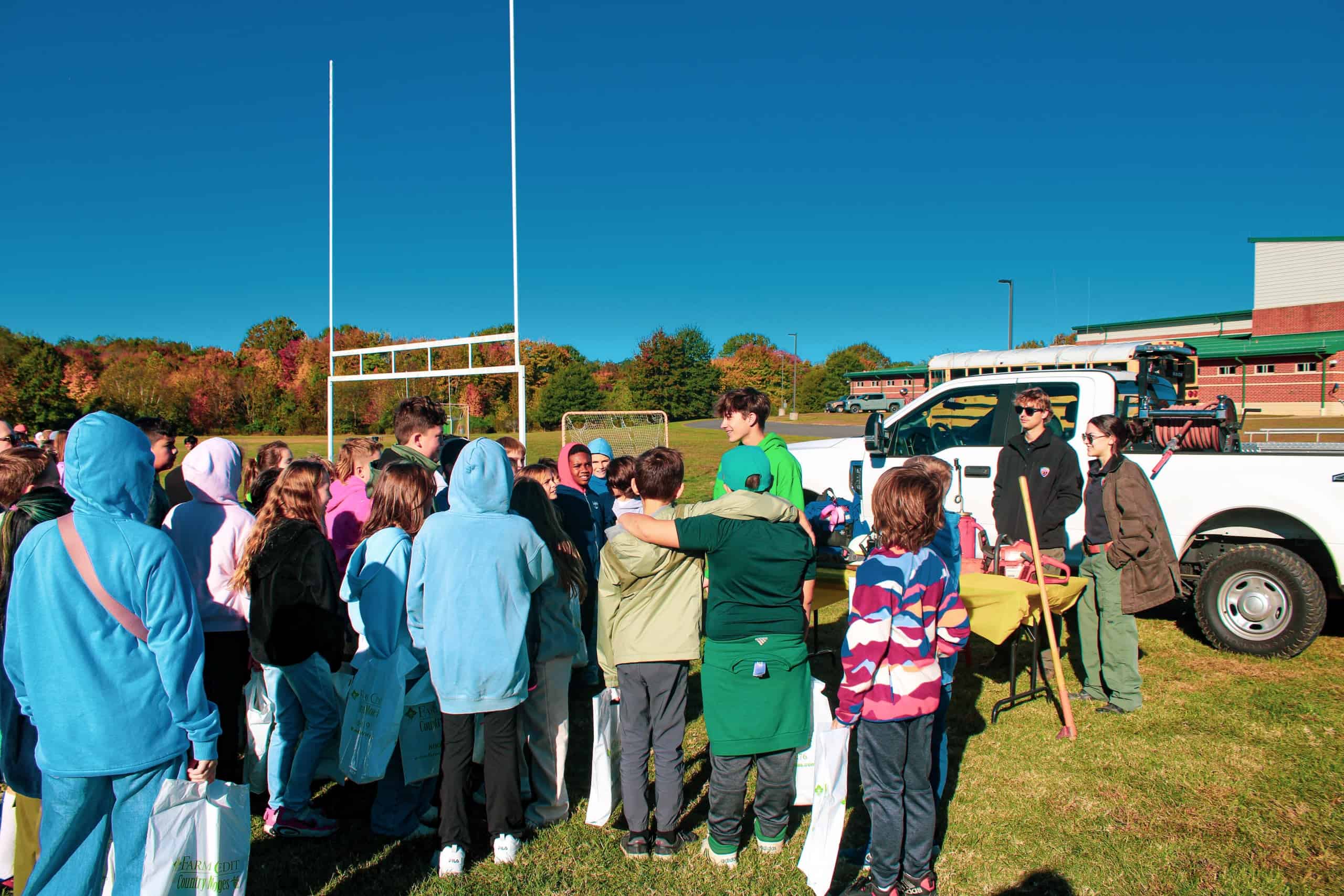
Fourth-grade students from around Fauquier County at one of the many stations hosted by community partners.
As the final groups rotate through the last stations and the campus settles back into its usual rhythm, the impact of the day lingers. For many fourth graders, it is a first glimpse into a world they may not have understood before. For the FFA members, guiding them, it is a reminder of why agricultural education matters and how a single day can plant the seed for a future in agriculture.