From Show Ring to Fire Line: Woodward District FFA Members Rise in the Face of Wildfires
What began as a typical week at the Woodward District Livestock Show quickly turned into a test of resilience, leadership and the true meaning of the last line of the FFA motto, “living to serve.”
Exhibitors from across northwest Oklahoma gathered to compete with their swine, sheep and goat projects, some traveling from surrounding communities and others as far as Boise City. The week started as expected: long days in the barn, final preparations and the excitement of competition.
That all changed in a matter of minutes.
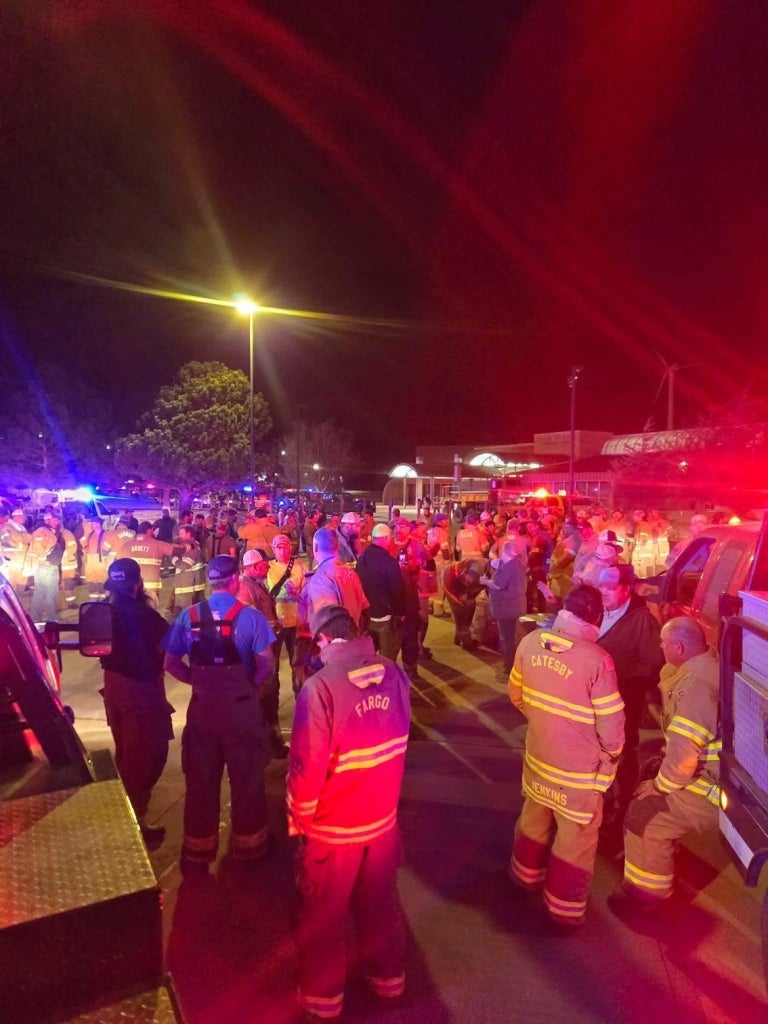
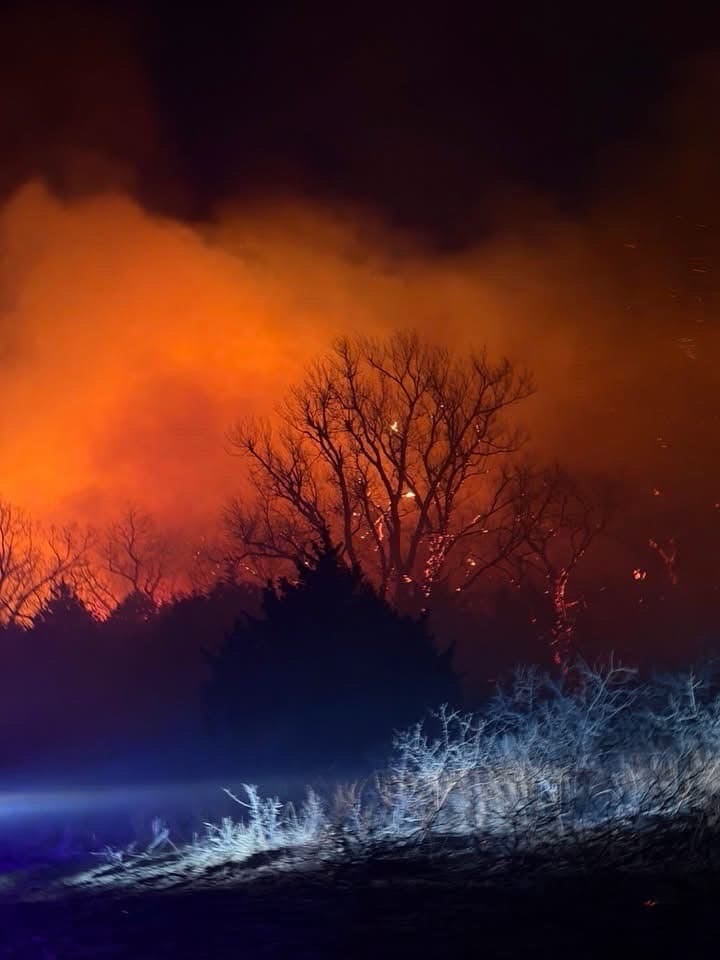
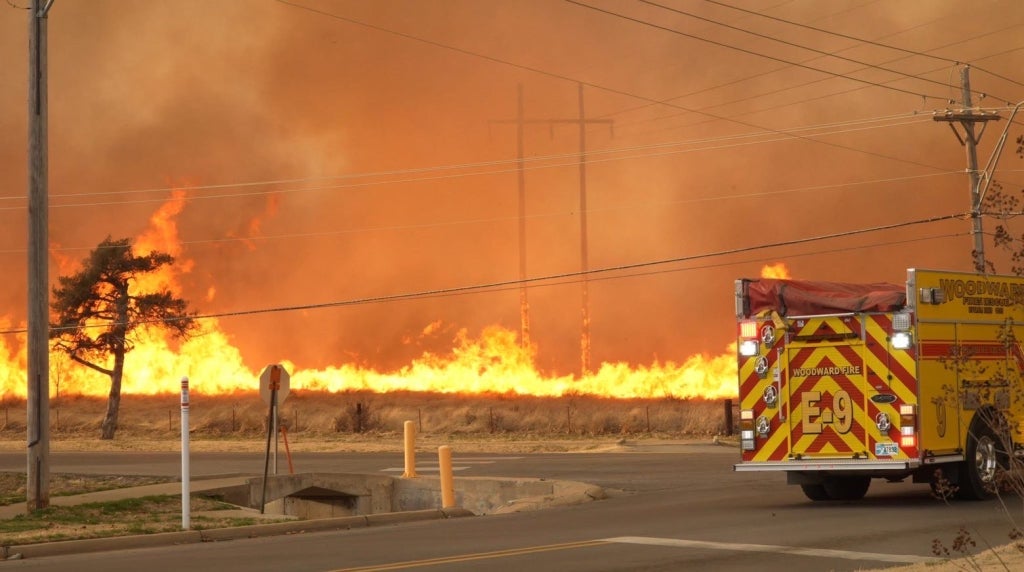
A wildfire ignited just miles west of the Woodward Event Center, triggering a mandatory evacuation and forcing hundreds of exhibitors to quickly remove their livestock from the barns. Mooreland FFA member Rylan Compston described how quickly the situation escalated.
“While the first fire southwest of Woodward didn’t immediately threaten the event center, everything changed when a second fire started just three miles west,” Compston says. “An emergency evacuation was ordered, and exhibitors were told to move east of town. Roadblocks went up, and livestock trailers quickly filled the parking lots of Mooreland.”
As trailers lined the streets and uncertainty grew, Mooreland FFA stepped in without hesitation.
“Mooreland FFA had an empty show barn at the school,” Compston says. “Our advisor, Ms. Focht, offered the facility to anyone who needed a place to keep their animals overnight. Members and families met at the barn and started building pens immediately.”
With support from the community, including donated woodchips from Bull Creek Ag, the barn was quickly transformed into a safe haven.
“Seeing families crowded in town with their livestock, we knew how stressful that situation was,” Compston says. “Having a safe place for those animals to be bedded down brought relief. That’s what FFA is about: stepping up when others need you.”
As animals arrived, the response became a true community effort.
“Families and FFA members worked side by side unloading livestock, setting up pens and helping however they could,” Compston says. “It reflected exactly what FFA teaches: leadership, service and citizenship.”
For Compston, the experience left a lasting impression.
“I learned that true leadership shows up in times of crisis,” he says. “Seeing the relief on families’ faces and watching our community come together showed me how powerful servant leadership really is. It made me proud to be part of agriculture and FFA.”
For many exhibitors, the evacuation was a moment of chaos. For others, it was a moment of emotional whiplash. Presley Johnson’s goat had just been named Grand Champion Wether when the evacuation was announced.
“Winning grand champion felt unreal, like all the hard work paid off in one moment,” Johnson says. “But when the evacuation was announced, that excitement turned into concern almost instantly. It felt like emotional whiplash. One minute I was celebrating, and the next, I was focused on getting my animals out safely.”
With the help of her family and advisors, she quickly shifted into action.
“They stayed calm and went straight into ‘get it handled’ mode,” Johnson says. “Seeing them stay steady helped me stay calm, too.”
Looking back, Johnson says the experience changed her perspective on showing livestock.
“It reminded me that this is about more than banners and buckles,” she says. “Being an exhibitor means being responsible for your animals at all times, and being prepared for the unexpected. What I’ll remember most is how everyone came together to help each other.”
While some exhibitors were in the barn, others were miles away when the evacuation began. Camdyn Kolbe was three hours away at a basketball game when she received the news, while her animals remained at the fairgrounds and her family rushed home.
“You know, getting the text that the barns were being evacuated was one thing,” Kolbe says. “But when my mom called asking what I needed from the house, everything just dropped in my gut. I was three hours away and couldn’t do anything. I just had to pray and trust that everything would be okay.”
As she made her way back, others stepped in to help.
“I really couldn’t have done it without the people around me,” Kolbe says. “My friends took care of my animals while I was on the bus, and my mom rushed home to get what was important. It was a team effort; everyone helped each other out.”
The emotional toll of the situation was overwhelming.
“I remember walking out of the locker room after getting the call and just bursting into tears,” she says. “I hardly slept that night because I was so worried. You just have to pray and trust that everything will be okay.”
For Kolbe, the experience reinforced what agriculture truly means.
“Agriculture means everything to me, especially when it feels like it could all be taken away,” she says. “It’s not just animals or land; it’s early mornings, hard work and responsibility. It’s a big part of who I am. It’s family.”
She also saw the strength of the FFA community firsthand.
“My FFA family showed up for me,” Kolbe says. “They checked on me, prayed for us and reminded me we weren’t alone. That meant everything.”
Through it all, she found a deeper sense of resilience.
“This experience taught me that resilience isn’t about not being scared; it’s about doing what needs to be done, even when you are,” she says. “Agriculture teaches us to rebuild, keep going and rely on each other.”
Despite the disruption to the show, exhibitors continued forward, balancing competition with something much bigger. Jacee Maness experienced the evacuation firsthand while preparing her animals.
“I was in the middle of getting my sheep ready when the evacuation order went out,” Maness says. “We quickly got everything loaded and headed to Mooreland, where we waited for updates. Later, some incredibly kind people let us keep our animals at their place. I’ll never forget their generosity.”
The next morning, she returned to the fairgrounds and continued showing.
“We unloaded and showed like nothing had happened,” she says. “But the transition from the show ring to chaos is something I’ll never forget.”
After the fires, Maness chose to help those affected.
“The decision was simple,” she says. “I couldn’t stop thinking about families who had lost everything. If I had the ability to help, even in a small way, I was going to do it.”
She joined other FFA members in hauling hay to fire-stricken areas, facing a long and challenging night.
“We left around 4:00 p.m. and didn’t get back until nearly 1:00 a.m., after blowing two tires,” she says. “When we got there, everything was burned. The grass was black, and you could smell the fire in the air. It was something I’ll never forget.”
For Maness, the experience defined what FFA truly stands for.
“It showed me that FFA is about leadership, service and community,” she says. “It’s not just about showing livestock; it’s about stepping up when people need help.”
What she will remember most is the shift in perspective.
“One moment, we’re competitors, and the next, we’re neighbors helping neighbors,” she says. “It reminded me that success isn’t measured by banners, but by how you show up for others.”
In a week meant for competition, FFA members across northwest Oklahoma were reminded of something far greater.
They loaded trailers. They opened barns. They hauled hay. They supported one another.
In the face of uncertainty and loss, the agricultural community didn’t hesitate — it responded.
In doing so, it proved that the true strength of FFA isn’t found in the show ring, but in the character, compassion and leadership of its members when it matters most.