Claire Tian’s Journey in the World of Veterinary Science
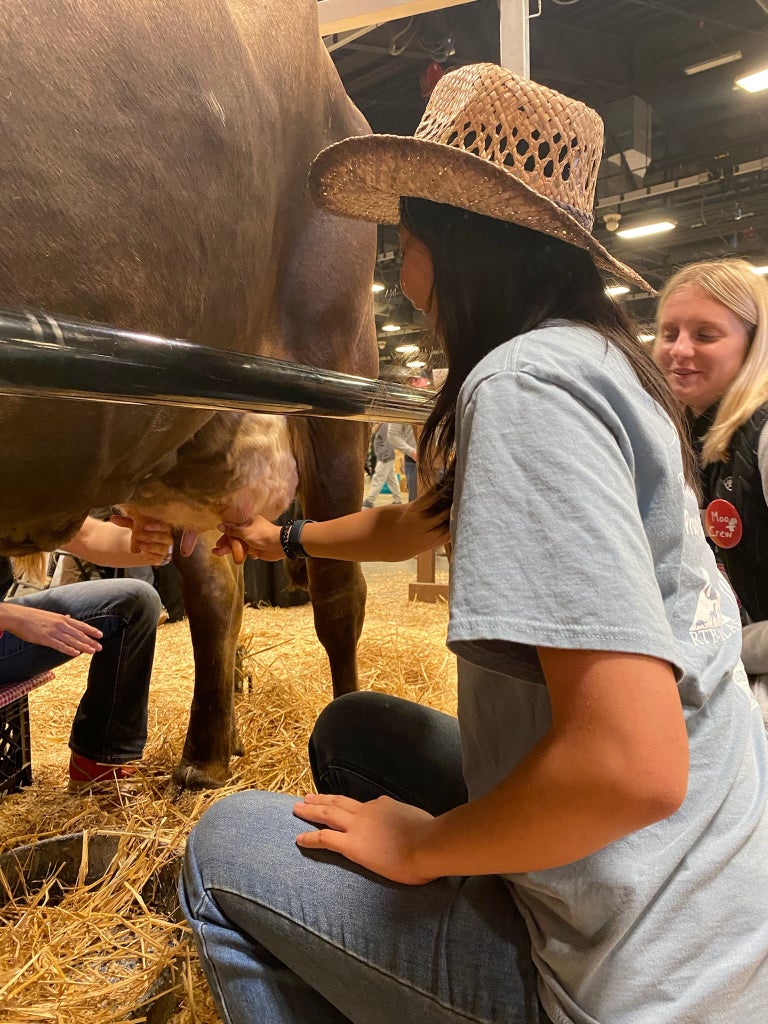
Claire Tian is a senior at Apex Friendship High School in Apex, N.C. She served as the 2025-26 Apex Friendship FFA Chapter president. She also competed in many competitions, including dairy evaluation, milk quality, livestock judging, quiz bowl, parliamentary procedure, employability skills and vet science. Tian joined FFA during her freshman year of high school when she took an animal science class. Ever since then, she has been involved in the leadership of her FFA chapter.
“FFA has allowed me to come out of my shell and explore new opportunities that I never thought I would be able to,” she says. “By being a part of FFA, my future career path has been solidified, and I feel much more confident in my technical and soft skills.”
The vet science career development event (CDE) is an FFA competition that prepares students interested in the veterinary industry. It is a unique blend of learning animal breeds, clinical procedures, terminology, medical math, tools and parasites.
“I have competed in the competition three years in a row, and each year is fairly similar to the previous,” Tian says. “We all work as a team of four to try and score the highest number of points. The only difference between each year is the species of animals that we are trying to memorize breeds for. For example, last year it was dogs, and the previous year it was small animal breeds.”
Each year, competitors are also given two random clinical procedures that they have to memorize, such as prepping an animal for surgery or restraining for a blood draw. They also have to take a written and medical math test. In the vet assisting class offered at her high school, Tian learned new medical terminology and basic clinical protocols. The goal of the class was to prepare the students in the class for the certified veterinary assistant (CVA) certification and give the necessary skills for future veterinary assisting positions at clinics. Another big aspect of the class was learning about the human side of the industry.
“Many people aren’t aware that interacting with people is also a huge part of the job,” Tian says. “Through this class, I was able to connect with real ‘clients’ and start building the communication flow.
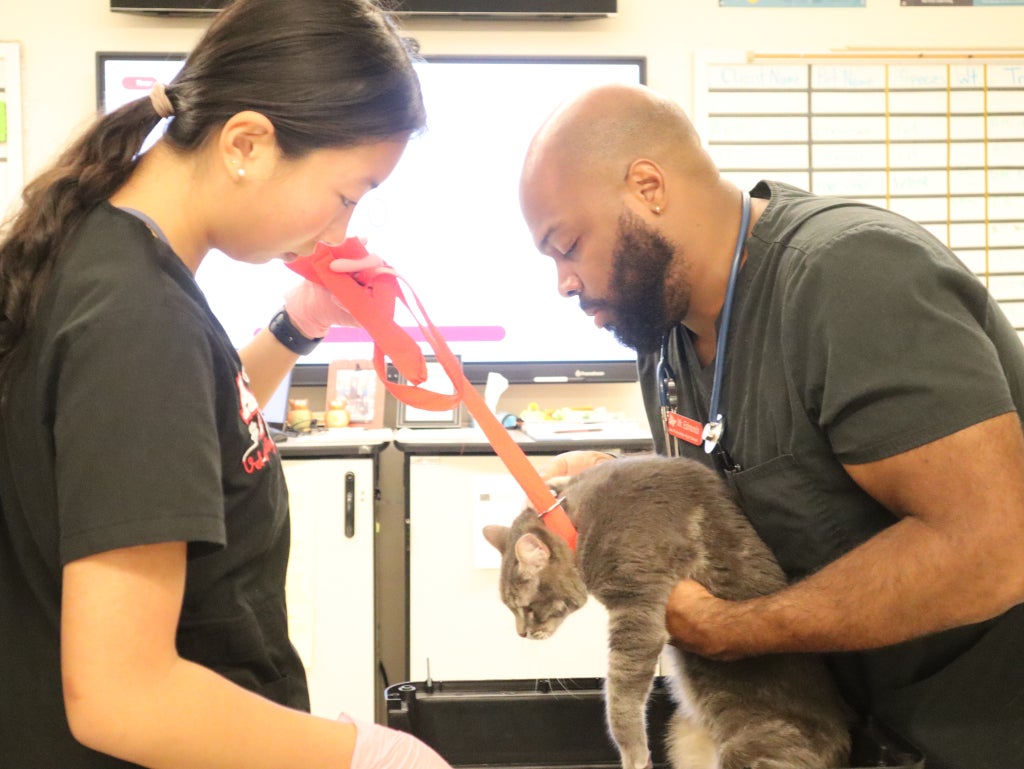
“I have shadowed at two vet offices these past four years, and gained over 200 hours of clinical experience. I learned about the management side of vet clinics, especially with both clinics being private practices. Through these experiences, I was able to come across unique scenarios, such as surgeries, ear cytology, fecal testing and surprise diagnostics. This definitely helped me prepare for the vet science CDE because I got real-life experience in many of the procedures that I had to memorize for the competition. Being able to see them through in a concrete veterinary clinic made it so much easier to understand. Working with the veterinarians also opened a gateway to asking questions and getting clarification on anything I wasn’t sure about.”
Tian also applied for a proficiency in vet science. “It was definitely a challenge because I had to go through and update all my AET records in extreme detail,” she says. “I hadn’t planned on applying when I started my Supervised Agricultural Experience project, but having a diverse set of experiences with both small and large animals made it easy to set goals, measure my growth and fill out most of the application. I felt that having an abundance of experience also made my answers more authentic, and I truly was able to answer the questions with confidence.”
Tian placed first in the region in her proficiency area, and her application will be moving on to state convention in June. Looking ahead, she is planning to major in biology, while making sure to fulfill the prerequisites for vet school.
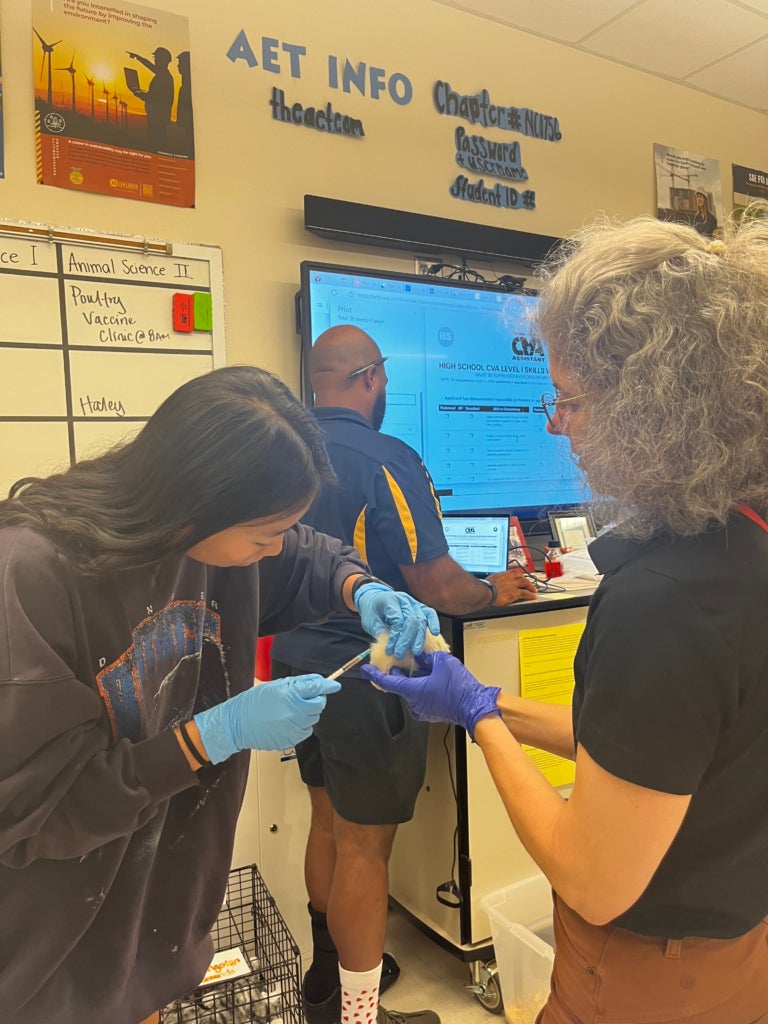
“My long-term goal is to attend veterinary school, get my Doctor of Veterinary Medicine (DVM) and hopefully open my own private practice for small animals, or focus on conservation veterinary medicine,” Tian says.
Competing in the vet science CDE bridges the gap between a love for animals and the technical reality of the profession by introducing competitors to clinical skills and diagnostic logic. It also builds muscle memory for surgical prep and medical math, while highlighting the critical importance of professional client communication and teamwork. Ultimately, the competition broadens perspectives beyond domestic pets, exposing competitors like Tian to the diverse world of large animal medicine, public health and industry-standard pharmacology.
Some tips Tian has for FFA members competing in vet science is to “make Quizlets for memorization, since that is a big part of the competition,” she says. “You usually have to memorize breeds, common terms, parasites and tools, so a Quizlet will be your best friend.
“Another big thing is to ask questions! Sometimes, new information can be a lot, and asking your team members or advisors can help clear up any confusion. As for members going into the vet med field, I would advise them to gain experience as early as possible, because you never know if you truly want to go into the field unless you see firsthand what the career is like. It is important to get these experiences not just for fulfilling vet school hours, but also just to gain exposure to different things, such as surgery or communication with patients.
“The last tip is to start looking at vet school credit prerequisites because each school is different. When I was looking at some schools, I wished I had taken more classes in high school to start checking off those boxes.”