Blood of Blue: The Hidden Value of Horseshoe Crabs

Students engage in hands-on learning and exploration inside the Bristol County Natural History Museum.
On a calm summer evening along the Northeastern coastline, a dark shape emerges from the waves. Ten legs gently press into the sand beneath its rounded shell as the full moon reflects off its surface. It pauses, ancient, quiet and steady. This is the horseshoe crab, a living fossil that has existed for over 400 million years — long before the dinosaurs ever roamed the Earth.
Native to the East Coast, the horseshoe crab (Limulus polyphemus) is one of nature’s most fascinating survivors. Reaching lengths of up to 24 inches, these unique invertebrates play a crucial role in coastal ecosystems (National Wildlife Federation, n.d.; U.S. Fish & Wildlife Service, 2024). Despite their intimidating tails, known as telsons, horseshoe crabs are harmless. They use their tails to flip themselves upright when overturned, a clever adaptation for life along the shifting shoreline.
Their most extraordinary feature lies within their bright blue blood. This blood contains a special protein called Limulus Amebocyte Lysate (LAL), which is used by scientists and doctors worldwide to test vaccines, surgical implants and medical equipment for the presence of dangerous bacteria. Thanks to this natural compound, millions of lives have been protected through safe medical advancements.
However, the increasing demand for LAL has led to a decline in horseshoe crab populations. Overharvesting, habitat loss and the continued use of horseshoe crabs as bait have all taken a toll on this ancient species. The process of collecting their blood involves extracting it near the heart, and although many crabs are returned to the ocean, not all survive the procedure. Conservationists and students alike are working to change that.
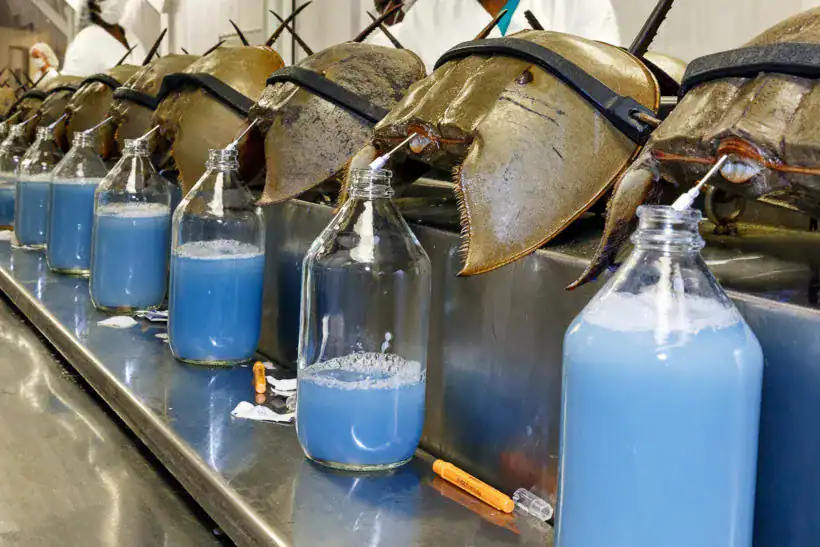
A company harvesting blue horseshoe crab blood for vital biomedical testing. Picture by Cool Green Science
At Bristol County Agricultural High School in Dighton, Mass., students are taking the initiative to make a difference. In partnership with the Marine Biological Laboratory in Woods Hole, the school has launched a horseshoe crab head-start program.
“We will raise juvenile horseshoe crabs in our laboratory until they pass their most vulnerable stages and are ready to be released,” says William O’Keefe, a senior in the environmental engineering program. This student-led project not only supports conservation efforts, but also empowers young agricultural leaders to take active roles in protecting marine ecosystems.
Envision a scenario in which the horseshoe crab is on the brink of extinction. You could be a cattle rancher facing a virus that you need to vaccinate your herd for prior to slaughter. The costs of medication are soaring, as the demand for LAL surpasses the existing supply. The postponement of vaccination increases expenses for cattle upkeep and heightens the risk of the virus spreading to humans. In the absence of the essential protein present in that corduroy blue blood, our capacity to safeguard ourselves and our means of living will be profoundly affected.
As FFA members, we understand the value of agricultural and environmental conservation. Protecting species like the horseshoe crab ensures a healthier future for our planet and for future generations. Through education, research and compassion, we can continue to make a lasting impact one small step at a time — just like the careful movements of the horseshoe crab along the shore.
Congratulations to Bristol FFA Vice President William O’Keefe, who competed in the National FFA Prepared Public Speaking Leadership Development Event this October during the 98th National FFA Convention & Expo. His topic, “Why Horseshoe Crabs Are so Important,” served as inspiration for this article.