A Hidden Crisis in Agriculture: Farmer’s Mental Health
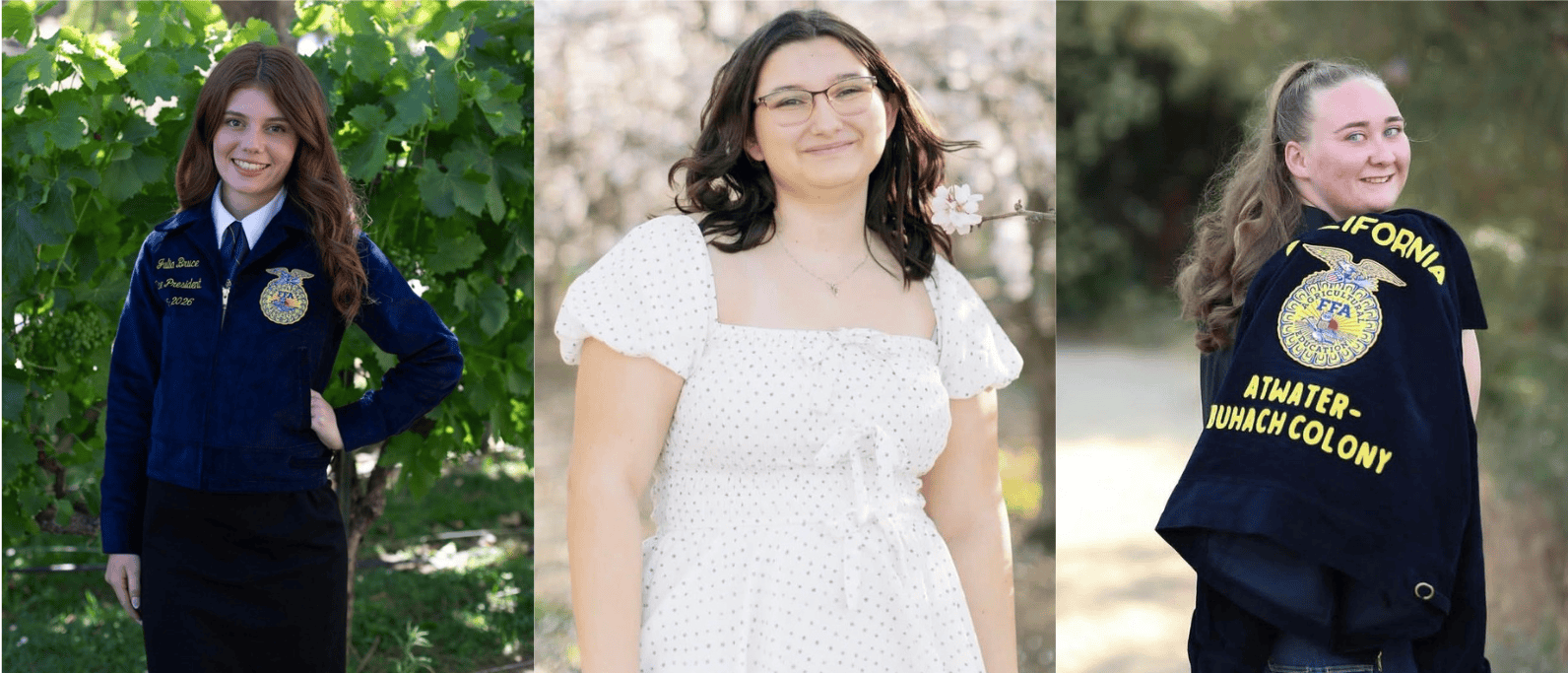
Julia Bruce Sammi Sellers Alley Long
There’s something invisible impacting the industry of agriculture, and yet it remains one of the most devastating impactful problems affecting the United States. Farmers across the U.S. have a suicide rate that is more than 50% higher than the suicide rates in any other industry. Many farmers and ranchers do not have access to resources that relieve detrimental mental health symptoms, and there is a stigma in today’s and in older generations about admitting having mental health struggles. Mental health struggles are often viewed as a weakness. Farmers tend to struggle alone. Most live in places with very limited access to health care and resources, including online resources, due to a lack of WI-FI and mobile data.
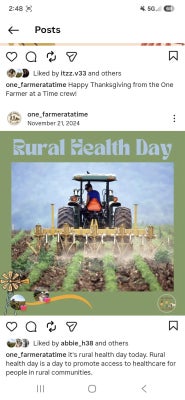
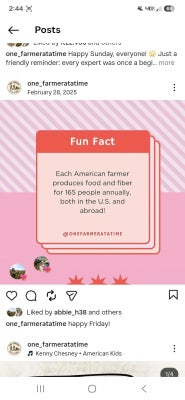
An informational post from One Farmer at a Time
Many farmers have been swallowed by debt and struggle to make a profit from the yield of their commodities. The current farm sector debt is forecast to reach a record $542.5 billion, a number so large it becomes hard to even imagine. This means that the farm sector debt per person in the United States is nearly $1,700. Financial pressures such as these worsen the already stressful and physically demanding situations farmers face every day. All of these factors contribute to the statistic that 13 farmers commit suicide every single day. That is 13 communities, 13 families, 13 lives completely and utterly altered. How do we fix it? Well, there are some FFA members who have begun to turn to social media as a way to combat these pressures. 2 alumni and 1 current FFA member, Sammi Sellers, Alley Long, and Julia Bruce, have created an online platform under the name of One Farmer at a Time on Instagram.
The Instagram account that Sammi Seller, Julia Bruce, and Alley Long Run.
The account focuses on promoting the importance of mental health, mentioning statistics about the average farmer in the U.S., and increasing awareness and support of resources and programs that help people combat mental health deterioration. All three of these students work tirelessly to provide encouragement and hope to those of us who may be struggling. All three girls are dedicated to making farmers and producers feel seen and heard every day. These students have tackled an issue that largely goes unnoticed, providing our caretakers and stewards of the land with hope, kindness, and reasons to stay. Ultimately, farmers and ranchers found our communities, give us hope, and nourishment. Now it is our turn to do the same for them, to give them a reason to keep going, to make them feel valued, and ok with being vulnerable. Vulnerability is not weakness and should not be viewed as such. Today, we have the opportunity to make a difference, to push for platforms that foster growth, provide resources, and help those we notice are struggling in our own communities. Together, we can make a difference in the lives of farmers and ranchers, together we can begin to take that number 13, and help it decrease until it eventually reaches zero. If you or someone you know needs help, don’t hesitate to call or text the suicide & crisis lifeline at 988, use the crisis text line by texting BRAVE to 741-741, or call the Trevor Project by calling 1-866-488-7386 or texting START to the number 678-678. Know that you are not alone; your struggle does not define you.