Agriculture Doesn’t Stop
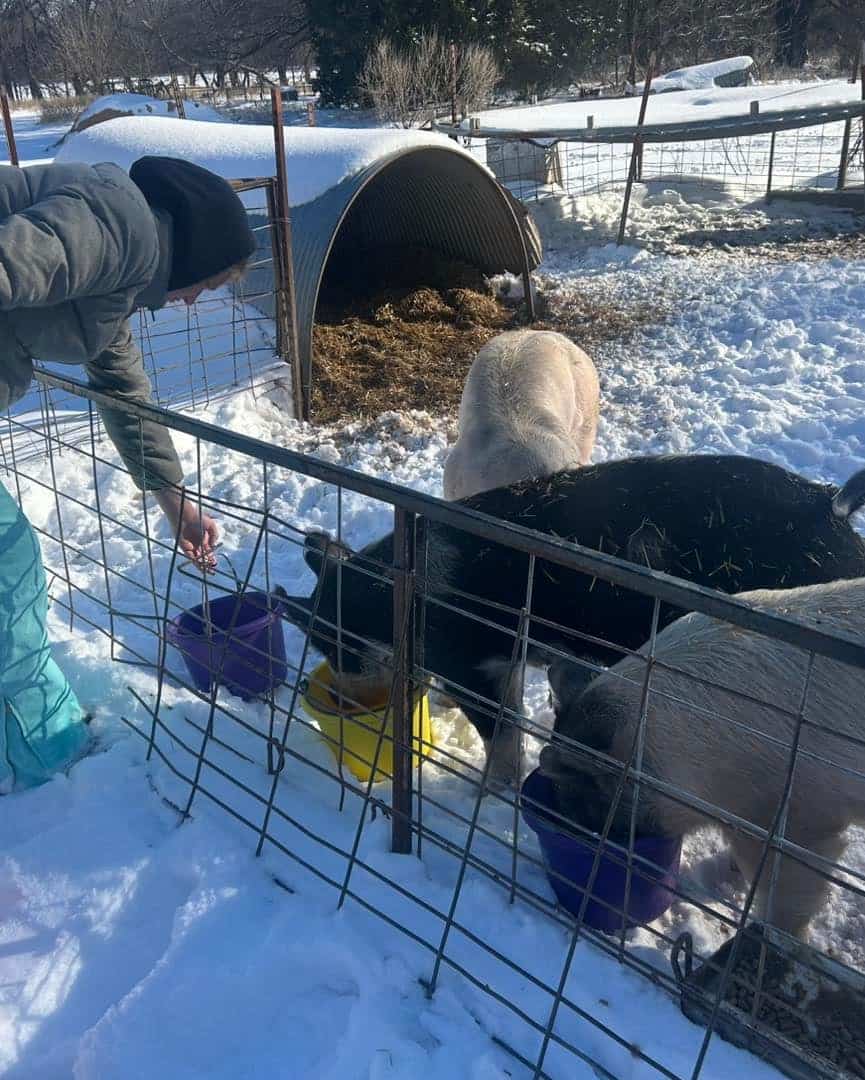
Baylee Weeks feeds and waters her show pigs, making sure they have the proper nutrition in the cold temperatures.
As a winter snowstorm swept across the United States — bringing freezing temperatures, heavy snowfall and harsh conditions — livestock owners proved once again that dedication to agriculture doesn’t stop when winter weather arrives.
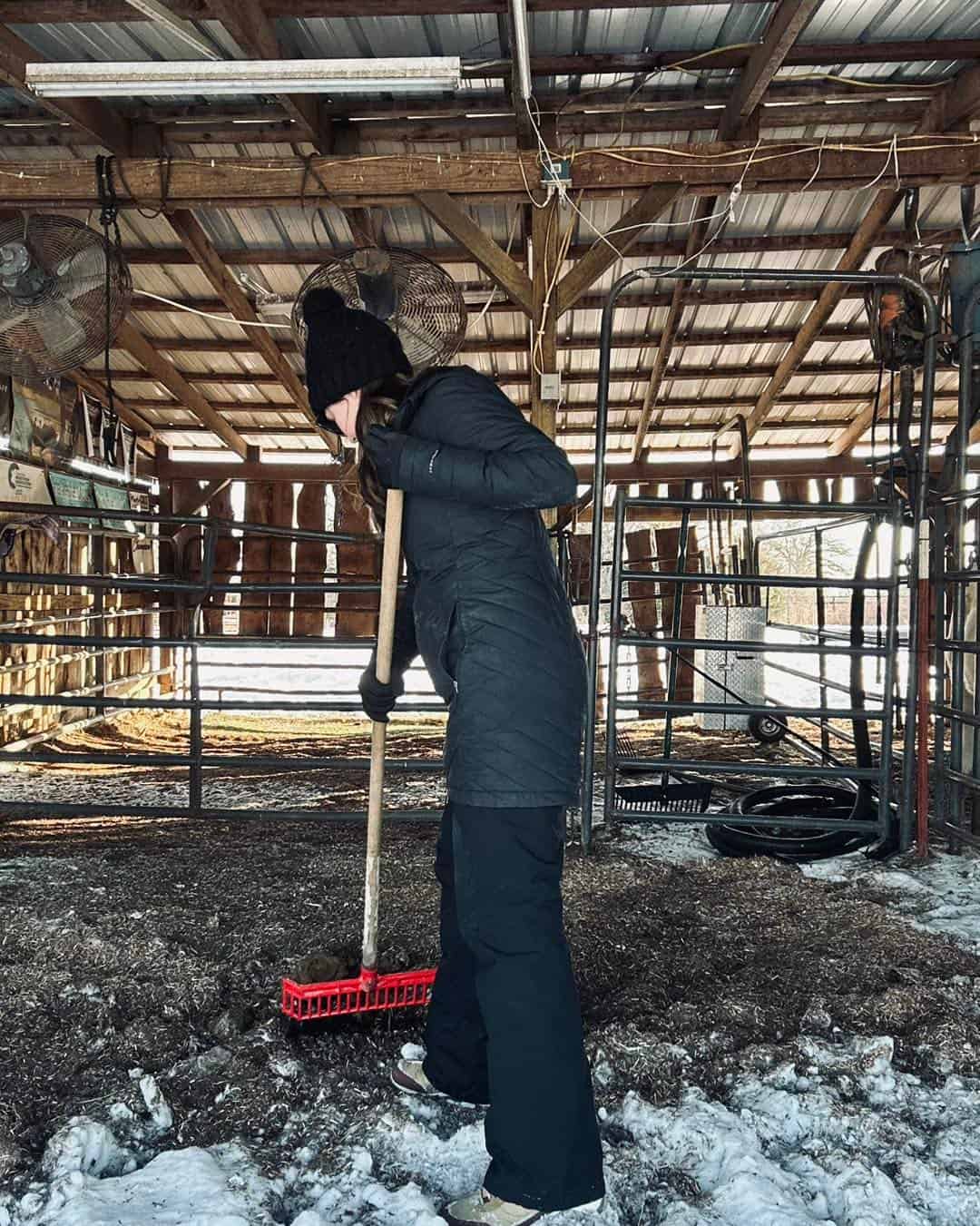
Devyn Frazier cleans the barn for her show cattle.
While many stayed indoors to keep warm, farmers across the plains were checking cattle, feeding livestock, breaking ice on water tanks, and making sure animals stayed safe and healthy. Despite frozen hands and snow-covered boots, these FFA members understood that livestock depend on them, no matter the conditions.
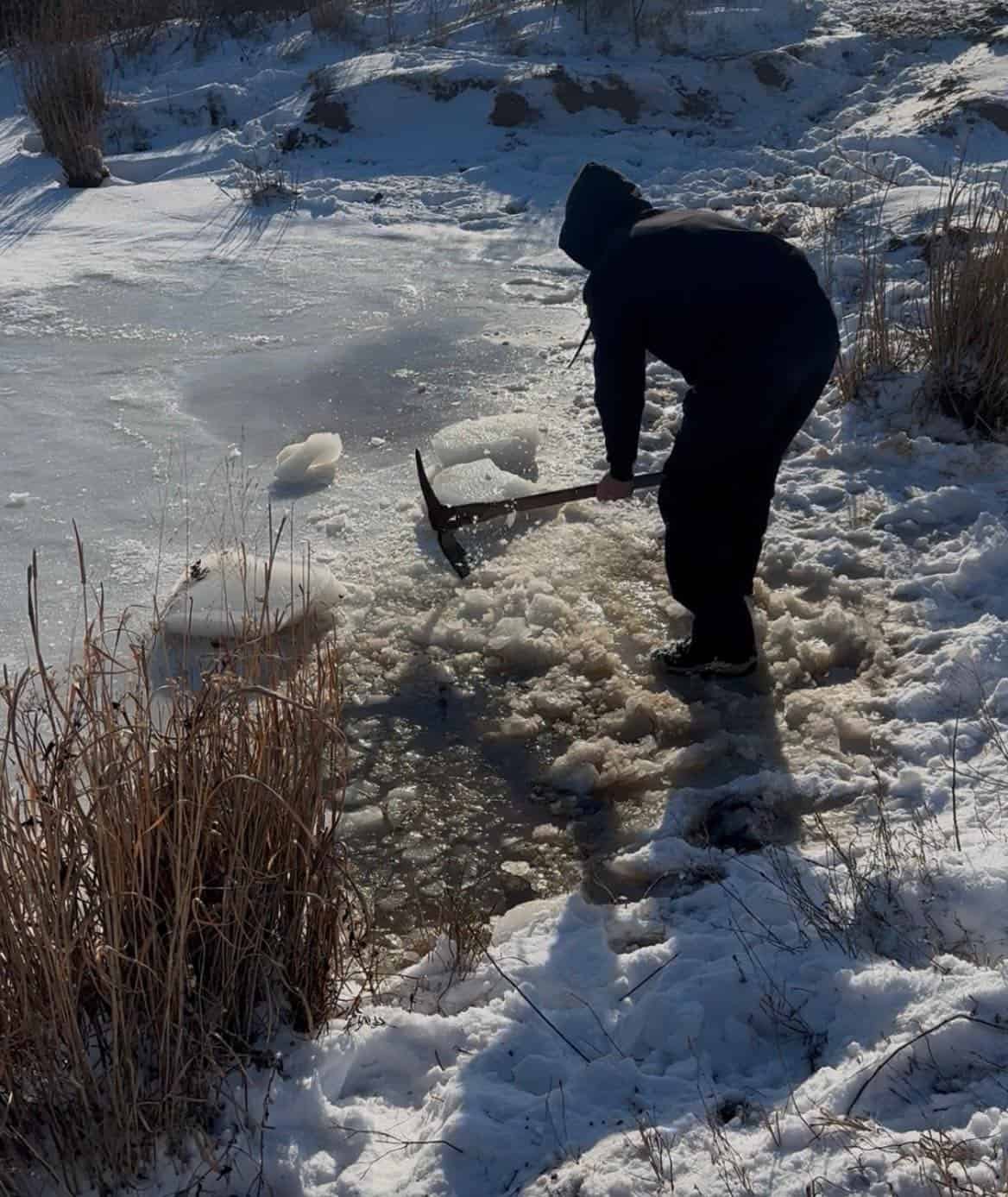
Michael Pritchard breaks ice to ensure his livestock have fresh water.
Michael Pritchard, a Meeker FFA freshman in Oklahoma, said, “Cold weather and especially cold and wet weather increase the energy needs of animals. FFA members with livestock projects need to provide extra shelter, feed and care when these conditions occur. This also increases the expense of caring for a livestock SAE [Supervised Agricultural Experience] project.”
Pritchard’s dedication to his livestock and show projects has been proven and rewarded through success at livestock shows. Projects like his cannot achieve national recognition without year-round care.
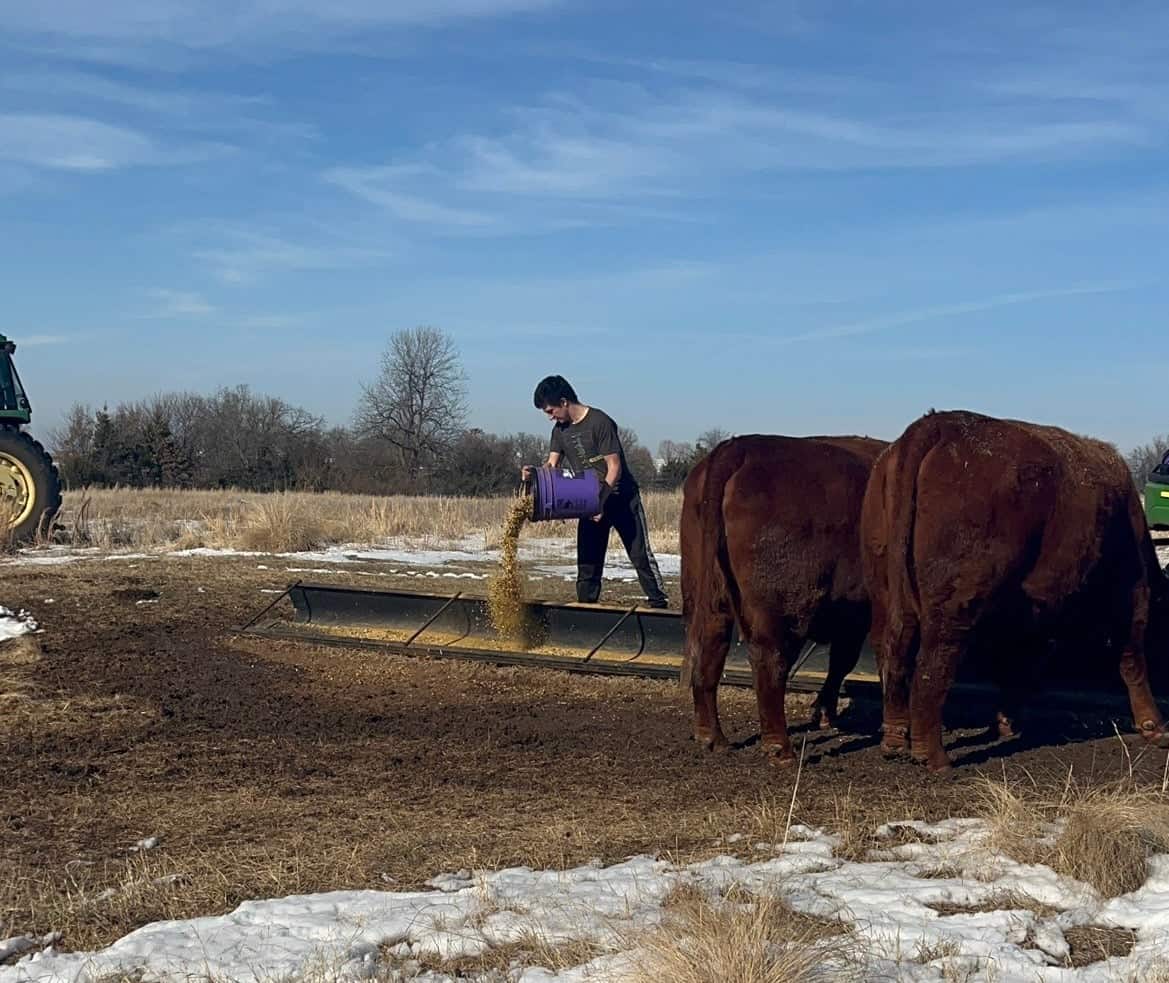
Pritchard braves the snow to get dry feed to his cattle.
Pritchard says his extra chores include putting out extra hay for the cattle, increasing supplemental feed and cutting ice on the ponds. If the wind is going to be strong, he makes sure that his cattle have a windbreak and puts hay near the trees or creates a windbreak with round bales of hay. It is also necessary to clean snow out of feed troughs and to put eyes on every head of cattle, especially calves and expectant cows, to check for illness and signs of stress. Cattle in lots need shelter and heating elements in the tanks and ice cut if necessary. All animals need clean, fresh water, so any hoses used must be drained and removed from the faucets after every use to reduce the risk of freezing.
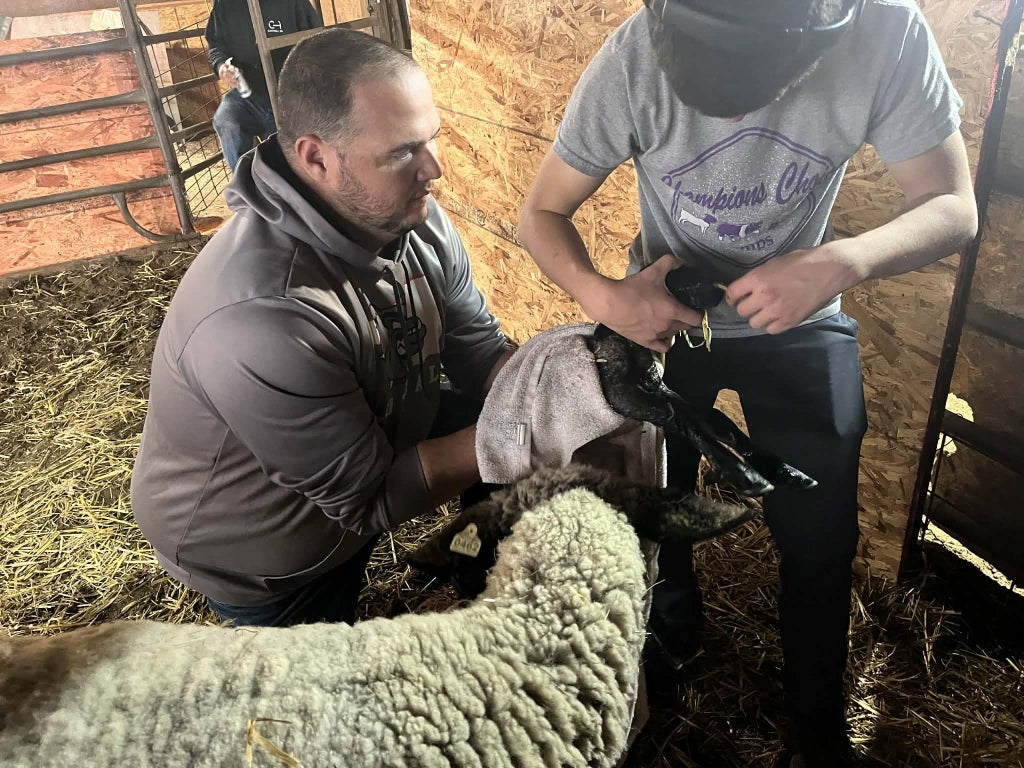
Pritchard and his uncle, Alan Potts, care for a newborn lamb.
Meeker sophomore Stevie Buoy said, “It’s important to shovel snow out of cattle feed troughs after a big snowstorm so the animals can actually reach and eat their feed. When snow packs into the troughs, it can block access, dilute or spoil the feed as it melts, and reduce how much nutrition the cattle get.”
By clearing the snow, she can keep the feed clean and dry during the storm. This encourages consistent eating and supports the cattle’s health and energy levels in cold weather when they need more calories to stay warm.
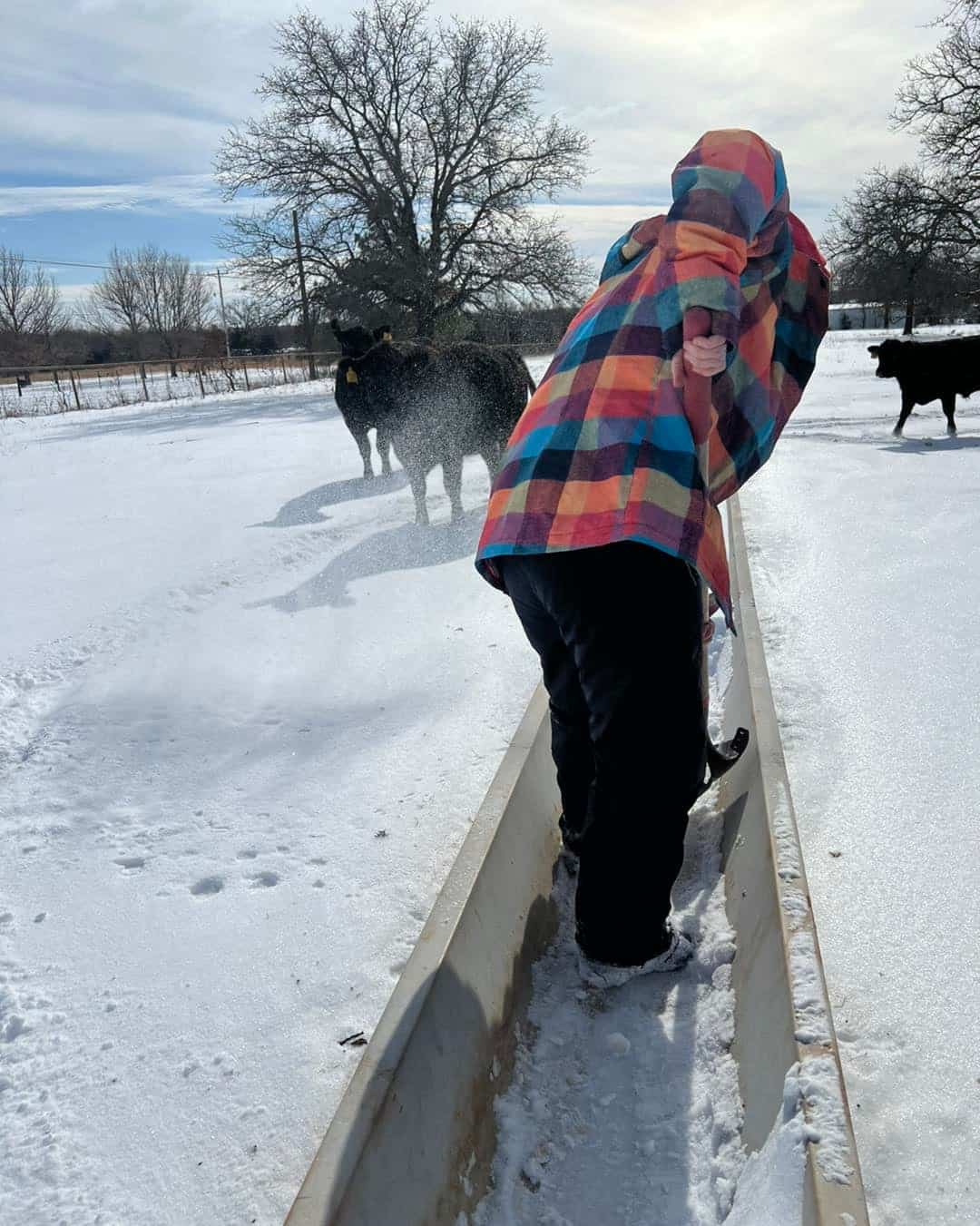
Stevie Buoy clears the troughs to keep feed dry in winter.
The effort that livestock owners continue to show during harsh winter conditions reflects their commitment, responsibility and passion for agriculture. It is true — agriculture never stops.