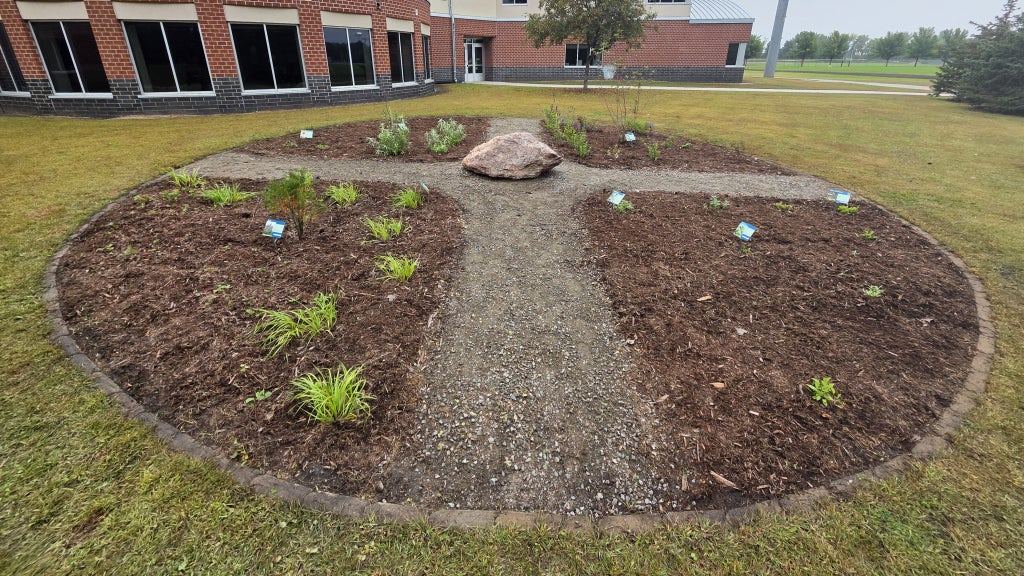
At Redwood Valley High School in Redwood Falls, Minn., agricultural education is about more than crops and livestock; culture, history and belonging are also incorporated into the curriculum. The Redwood Valley FFA Chapter created a medicine wheel garden to showcase the sacred and medicinal plants that are common in Native American cultures.
Making a Medicine Wheel
Making a Medicine Wheel
A medicine wheel is a sacred circular symbol that represents the four cardinal directions and the relationships between people, land and medicine. In the Lower Sioux Indian Community in Minnesota, each of the four quadrants is associated with a corresponding color: North is red, east is yellow, west is black and south is white. The structure of the medicine wheel was the inspiration for the garden design.
Bringing Symbolism to Life
Bringing Symbolism to Life
The Redwood Valley FFA Chapter allocated funds from the department budget along with donations from local community members and businesses to create the garden. FFA Alumni Ella O’Keefe was eager to help.
“As a Native American youth, this was a project that was important to me,” O’Keefe says.
Picking the Right Plants
Picking the Right Plants
The medicine wheel garden includes tobacco, sweetgrass, cedar and sage that provide sacred medicines to Native American tribes, along with other plants that are native to Minnesota that can be used in food, teas and ointments or are known for their medicinal or ceremonial importance.
“A lot of symbolism went into the design,” says agricultural education teacher and FFA advisor Lisa Orren.
Learning by Doing
Learning by Doing
A diverse group of students helped build the garden. For non-Native students like Redwood Valley FFA Chapter officer Poppy Riggie and program of activities director Grace Blare, the project offered meaningful cultural education alongside hands-on landscaping experience.
“I’m from the Redwood area but was not at all familiar with the Native culture,” Riggie says. “I loved getting to learn about it.”
Respecting the Space
Respecting the Space
Before the students broke ground on the medicine wheel garden, a tribal elder visited the site.
“We had to get an elder from the tribe to come and teach us about what area we were going to be working in,” O’Keefe says.
When the garden was completed, the elder returned to offer prayers and songs.
Recognition and Belonging
Recognition and Belonging
The chapter was a finalist for the 2025 Premier Chapter: Building Communities award, but the impact of the project extended beyond national recognition. “The garden is a way for us to showcase the cultural uses of these plants,” Orren says, “along with showcasing to our Native American students that they have a place in FFA and the agriculture program.”