Willing to Serve: The State Officer Journey
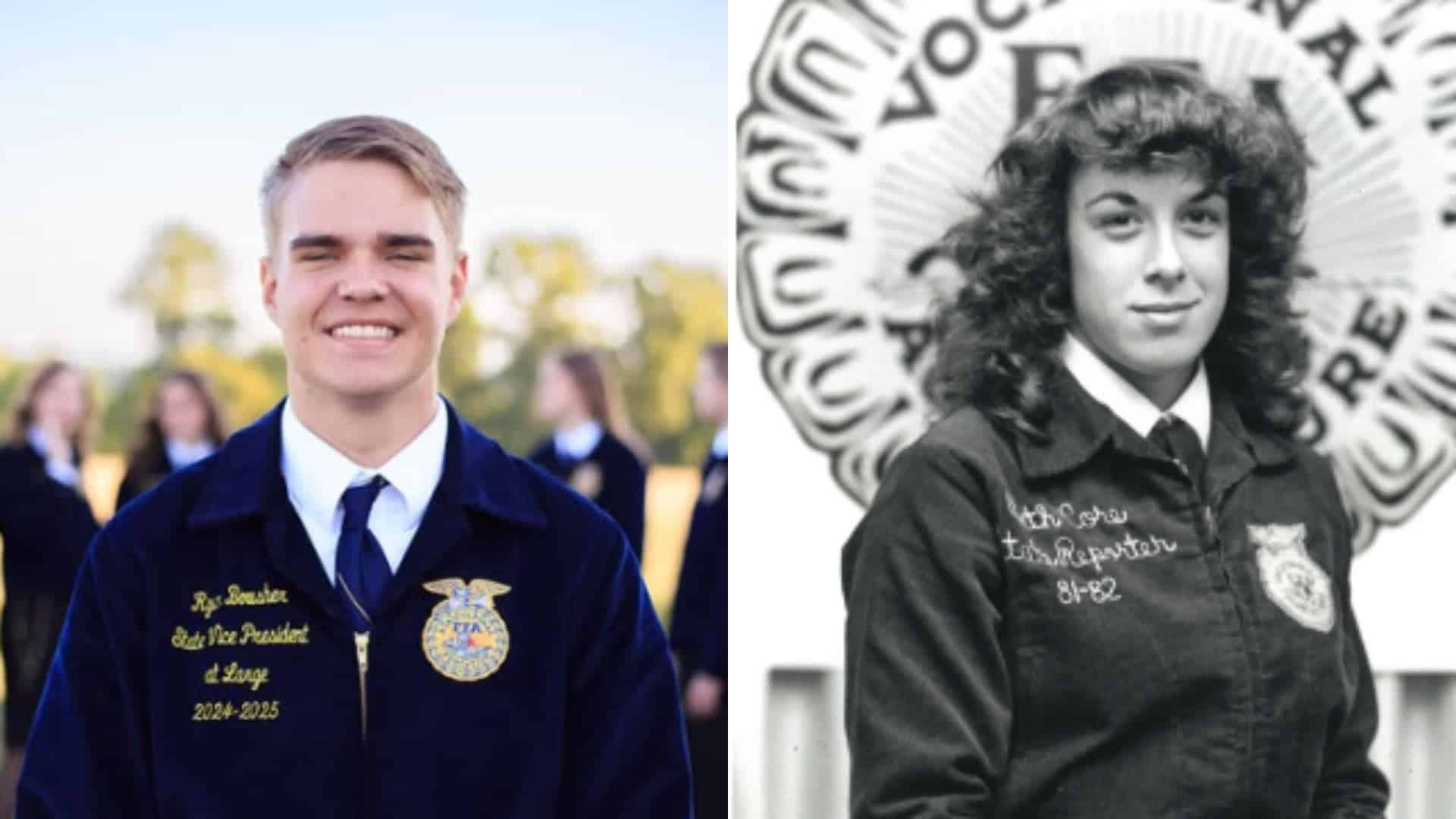
Left: 2024-25 Ohio FFA Vice President at Large Ryan Bowsher. Right: 1981-82 Ohio FFA Reporter Beth Seibert.
State FFA conventions are beginning across the United States for the 2025-26 year, and with them comes the start of state officer candidacy. Running for state office brings a mix of emotions — nervousness, excitement, tears of joy and determination — all grounded in the belief that everything happens for a reason.
I had the pleasure of interviewing two former Ohio state FFA officers: 2024–25 Vice President at Large Ryan Bowsher, and 1981–82 Reporter Beth Seibert. Through these conversations, I gained insight into what it means to serve FFA members and how the role has evolved over the past 40 years.
A typical week for a state officer varies depending on the season. Bowsher and Seibert shared that summer is filled with training, FFA camp and traveling to events like the Washington Leadership Conference. As fall begins, officers focus on chapter visits, leadership nights and Greenhand Degree ceremonies.
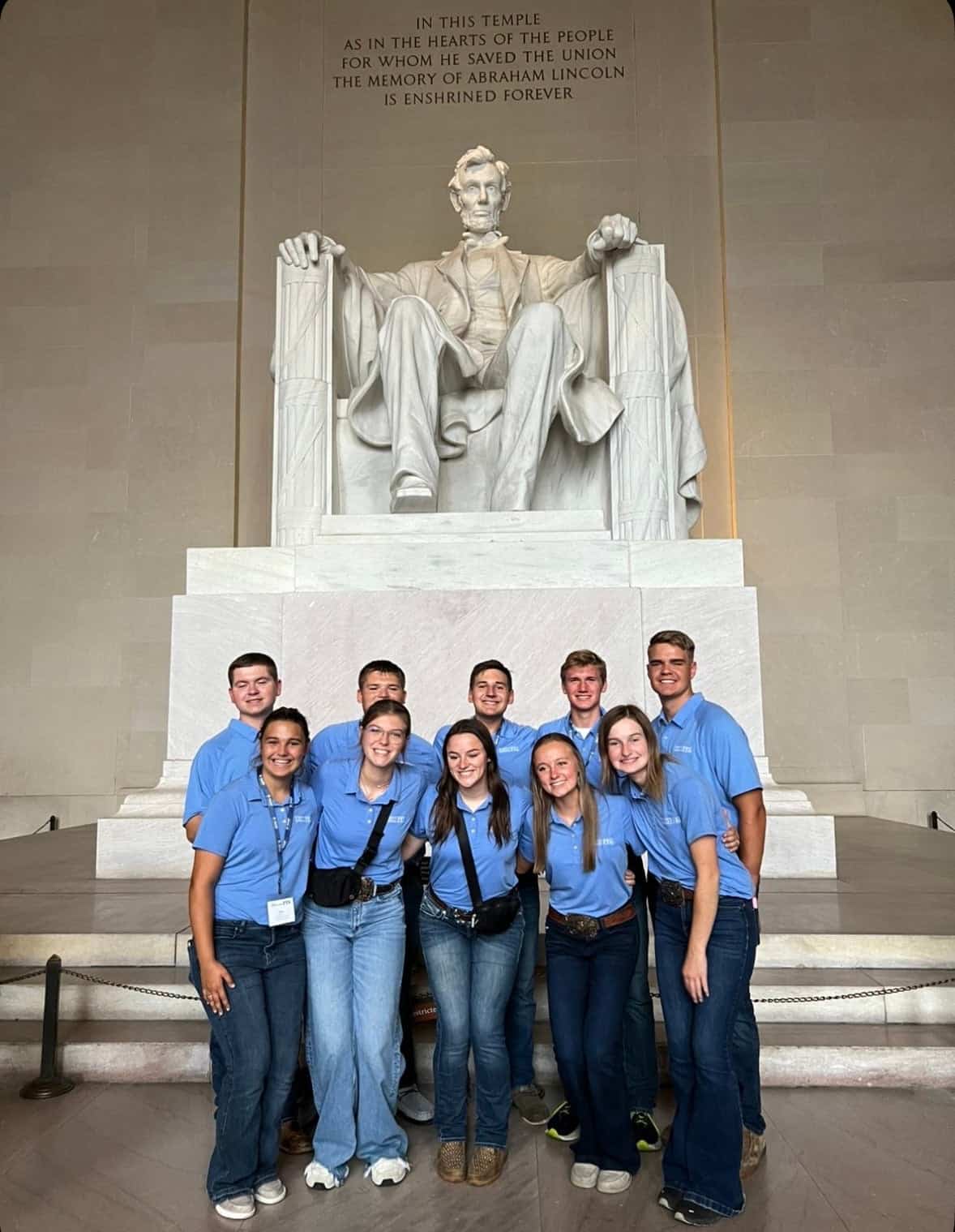
The 2024-25 Ohio FFA State Officer Team during their time in Washington, D.C.
In the winter, Bowsher’s and Seibert’s experiences differed slightly. “We were part of the decision-making team for selecting degree recipients and other honors,” Seibert says. As winter comes to a close, though, officers shift their attention to banquets and preparations for the state convention.
Travel is a major part of serving as a state officer. Bowsher shared some of his favorite experiences, including traveling to New Mexico and visiting White Sands, where he built connections with fellow state officers and members. On a weekly basis, he often attended at least two chapter visits, a banquet and a leadership night. Over the course of his year, he participated in 40 chapter visits, 13 banquets and five leadership nights.
While there is no required number of events officers must attend, Seibert offered an interesting perspective from her time in office: “Your perimeter should be no more than two hours from your home, so you could travel to an event and return the same day,” she says. However, this didn’t stop her from building meaningful connections with members across her area.
The responsibilities of serving as a state officer are significant. Despite the 40-year gap between their experiences, Bowsher and Seibert emphasized that many core duties remain the same. Officers are responsible for coordinating chapter visits, whether chapters reach out to them, or officers take the initiative themselves. One responsibility that may surprise some is the freedom officers have in their messaging. “It’s completely up to you,” Bowsher says. “Your speech is you.”
As a current member of the Spencerville FFA Chapter, the impact Seibert made 40 years ago and the impact Bowsher made just a few years ago is truly inspiring. Seeing fellow members from a small rural community reach such incredible heights shows younger members that anything is possible. Their hard work and dedication to the National FFA Organization motivates me to pursue every opportunity that sparks my interest and to strive to make a difference of my own.
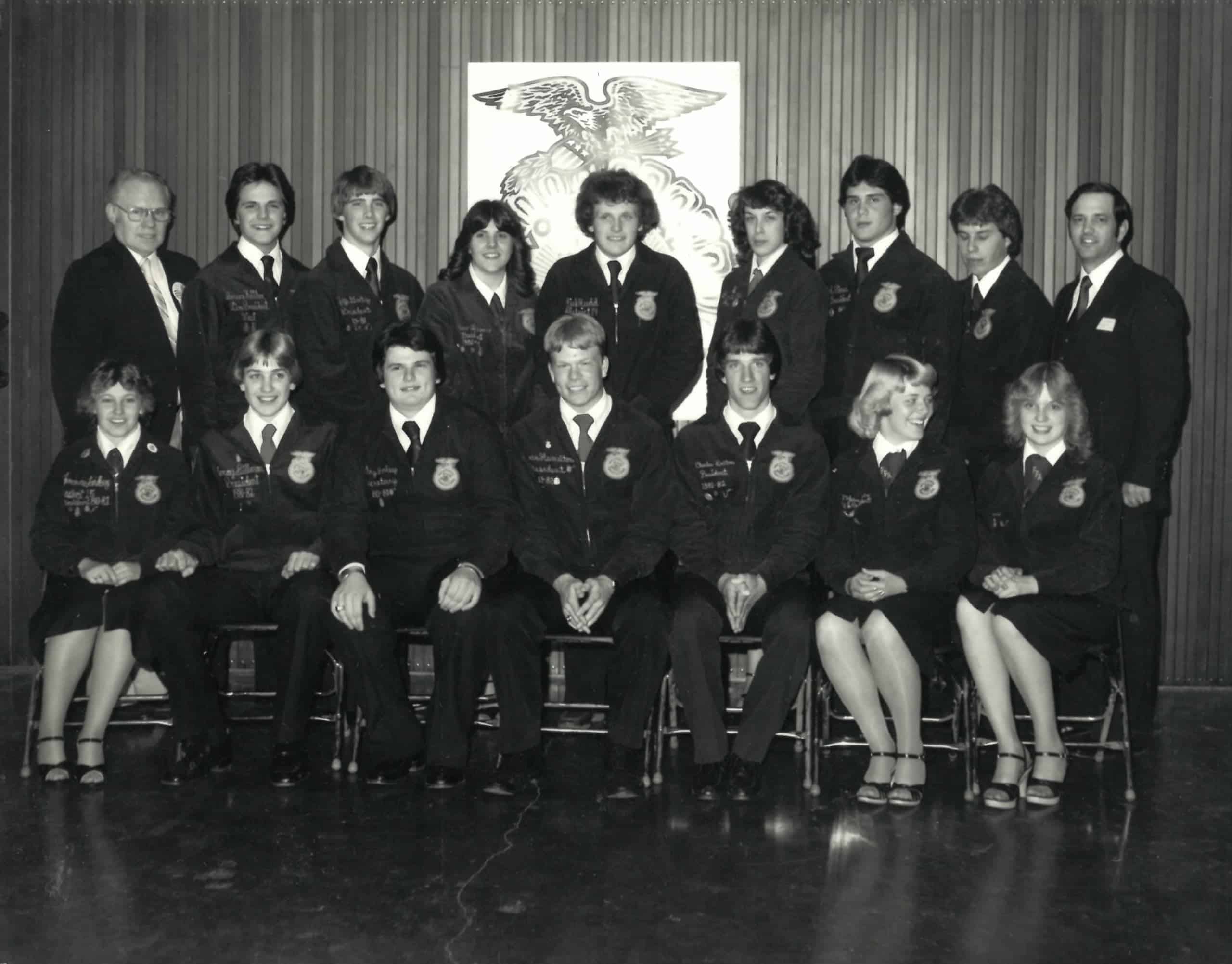
The 1981–82 Ohio FFA State Officer Team.
As candidates begin the process of running for state office, many questions and misconceptions often arise. However, Bowsher and Seibert emphasized an important truth: perfection is not required. “You don’t have to have perfect grades or have your life together all the time. You don’t have to look or act a certain way,” Bowsher says. “The true key is being willing to serve and being yourself.” Seibert echoed this sentiment, adding, “state officers are no different than any other member.”
As state conventions approach and candidates begin their journey, it’s important to remember that running for office isn’t about being perfect — it’s about being willing. Willing to step outside your comfort zone, willing to serve others and willing to grow along the way. No matter the outcome, the experience can shape you into a stronger leader and a more confident individual.
In the end, it’s not just about the title — it’s about the impact you make, and the person you become.