The Leader Behind the Georgia FFA Foundation’s Fundraising Success

Georgia FFA Foundation Executive Director Mrs. Katrina Jones.
Since 2014, the Georgia FFA Foundation has been ranked the third largest state association in the nation. Every year, thousands of students benefit from programs supported by the Georgia FFA Foundation, yet many are unaware of how these opportunities begin.
Behind every student’s success is a community invested in their future. The Georgia FFA Foundation supports this success by raising funds for competitions, proficiency awards and scholarships awarded for college and career readiness.
Through the generosity of donors, sponsors and community partners, the foundation continues to recognize students’ achievements by covering travel expenses, providing event support and creating opportunities in agriculture education and beyond.
Meet the Georgia FFA Foundation Executive Director
Before becoming the executive director for the Georgia FFA Foundation, Mrs. Katrina Jones was a member in the Swainsboro FFA Chapter and was elected to serve as a 1986-87 state officer. She then began her career with the foundation in 1998, before stepping away due to her husband’s career.
She returned in 2008 and has served as the executive director since, continuing her passion and long-standing commitment to supporting agricultural education and FFA members across the state.
Jones is a graduate of the University of Georgia, where she earned a bachelor’s degree in agricultural communications, then received a master’s degree in agricultural education from Clemson University.
She and her husband, Tal, have been married for 33 years and have two children, Gracie and Harrison. Outside of her professional responsibilities, Jones enjoys spending time supporting the Georgia Dawgs, camping, reading and cross stitching.
Read on for a Q&A with Jones about her perspective, experiences and role with the Georgia FFA Foundation.
Q: How does the foundation help students find ways to get more involved in FFA or access resources?
A: Addressing gaps in access to agricultural education frequently requires collaboration at the local level. Gathering regional leaders, including superintendents and community partners, allows for meaningful discussions around expanding programs and creating opportunities for students to engage FFA.
The foundation works closely with donors, sponsors and community partners to support FFA programs by building meaningful relationships and aligning resources with student and program needs. Through events, conferences and direct engagement opportunities, donors are able to connect with educators and students. This allows leaders to see that their money isn’t going to waste and these students are using the money for a good cause — for FFA programs and agriculture education.
Q: What is the mission of the Georgia FFA Foundation, and how does it support students involved in agricultural education?
A: To support and enhance agricultural education in Georgia by providing resources, scholarships and leadership opportunities for students. It allows for members to get more involved by funded programs recognizing achievements, offering professional development and connecting members with mentors community partners and industry partners. Through these partnerships, students develop hands-on experiences that prepares them for future careers in agriculture and related fields.
Q: How does the Georgia FFA Foundation measure its impact on students and local communities?
A: The program has changed over the years. It’s no longer just for students who live on farms or raise livestock. Agriculture now expands to urban and suburban areas, and students may live in apartments or not have access to a family farm. As more students get involved in agricultural programs, FFA continues to grow and adapt, reaching a wider and more diverse group of young people.
Q: What is your advice for current and future FFA members?
A: Find what excites you and dive in! Take full advantage of FFA programs, connect with other members, talk to judges and industry leaders and explore new opportunities. Get out of your comfort zone and engage more. The experiences and relationships you build now could shape your future in ways you never expected. Get involved more and make the most of every chance to grow.
Q: What leadership skills do you believe are most important for success in nonprofit and agricultural organizations?
A: Communication and teamwork skills rely on effective communication and teamwork. Leaders must clearly convey their vision and goals to actively listen to their team members and community partners, foster collaboration and guide groups toward achieving shared objectives while adapting to challenges and creating meaningful impact.
Showing Appreciation
Jones has been a driving force behind expanding opportunities for FFA members across the state. Since starting at the foundation, she has successfully raised over $13 million to support career and leadership programs. She works tirelessly to make sure all 350 Georgia FFA chapters are supported and members are prepared for careers in agriculture. Under her leadership, the Georgia FFA Foundation has raised millions of dollars to fund scholarships, leadership programs, awards and career development events.
Through her vision and dedication, Jones ensures Georgia FFA members have the resources and support they need to succeed, both in school and in their future careers. The Georgia FFA Foundation is grateful to have Jones as its executive director.
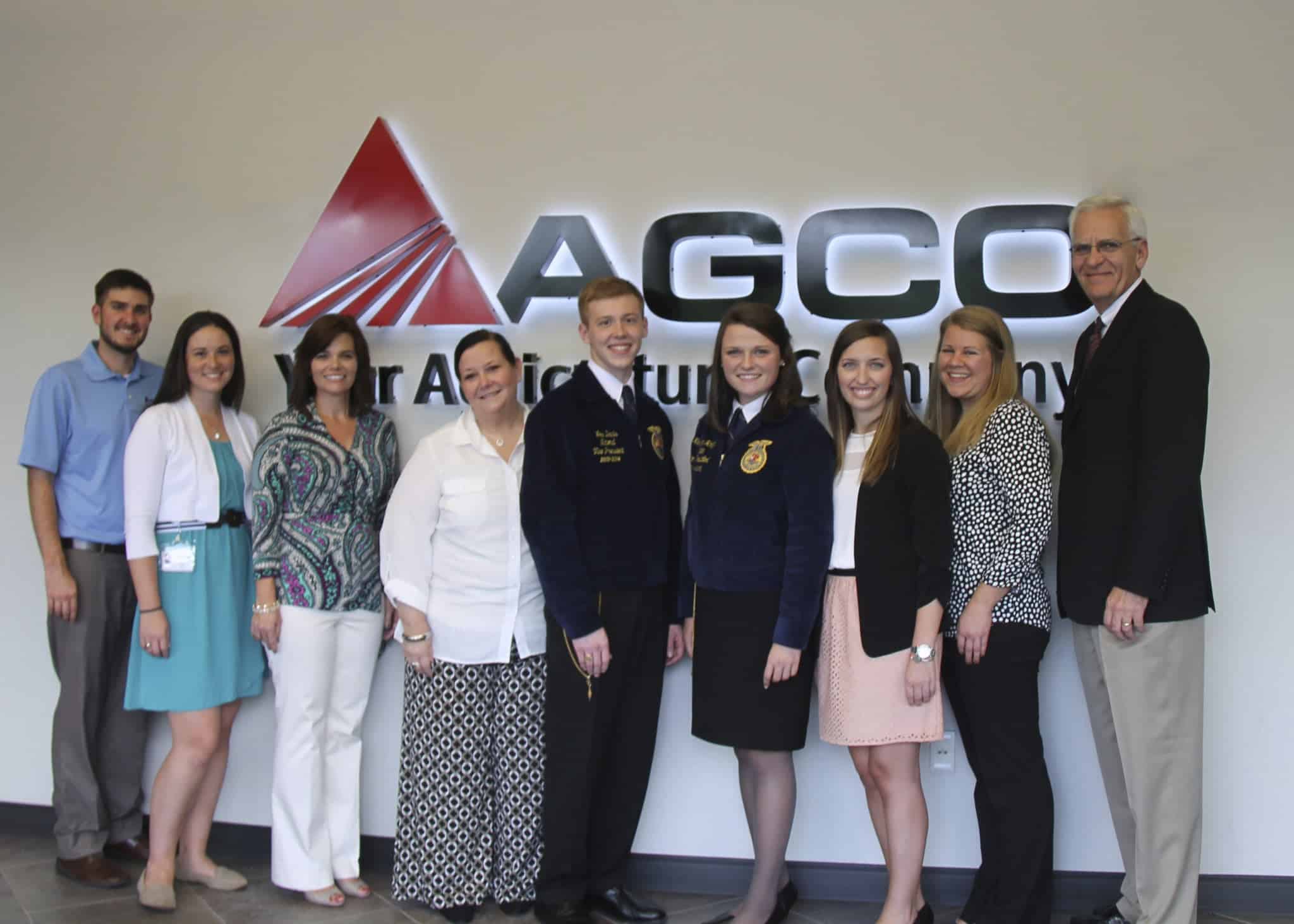
Community leaders take a picture with two Georgia FFA state officers.