From Farm Fallacies to Food Familiarity

Culpeper County FFA advisor Ty Foster demonstrates the bottle feeding process on Charlie, a Red Devon bull calf. In addition, Foster discussed typical husbandry practices, the importance of removing horns from young bulls, the castrating process and other key practices. Photo courtesy of Lakota Ranch.
“Chocolate milk comes from brown cows.” This playful, yet inaccurate statement is a misconception that continues to persist among both children and adults alike. In fact, a surprising 7% of Americans still believe this myth, with an additional 48% unsure about the true origin of chocolate milk (WADairy).
These statistics have left agriculturists and educators alike scratching their heads, prompting a broader discussion regarding the gap in agricultural knowledge among the general public. In a world where technological advancements have taken center stage and screens dominate our daily lives, children are becoming increasingly disconnected from the natural world. This lack of awareness about the origins of our food is concerning, particularly when it comes to fostering an understanding and promoting the future of agriculture.
While it’s fairly commonplace for children to know that food can be found at the local grocery store, few understand the complex journey it takes to get from farm to table. For many, the idea of food production, particularly in relation to farming and livestock, feels distant and abstract. With this knowledge gap in mind, it has never been more crucial to ensure that young students are exposed to the realities of agriculture at an early age.
One of the most effective ways to achieve this is through hands-on learning experiences, such as field trips to farms and agricultural businesses. These trips offer children the chance to experience agriculture in a way that traditional classroom lessons or textbooks are simply unable to replicate. Having the opportunity to engage directly with the environment where food is grown and animals are raised, and to see the work our farmers do every day, allows students to connect personally with the world of agriculture and develop an appreciation for the rigorous role farming plays in their day-to-day lives.
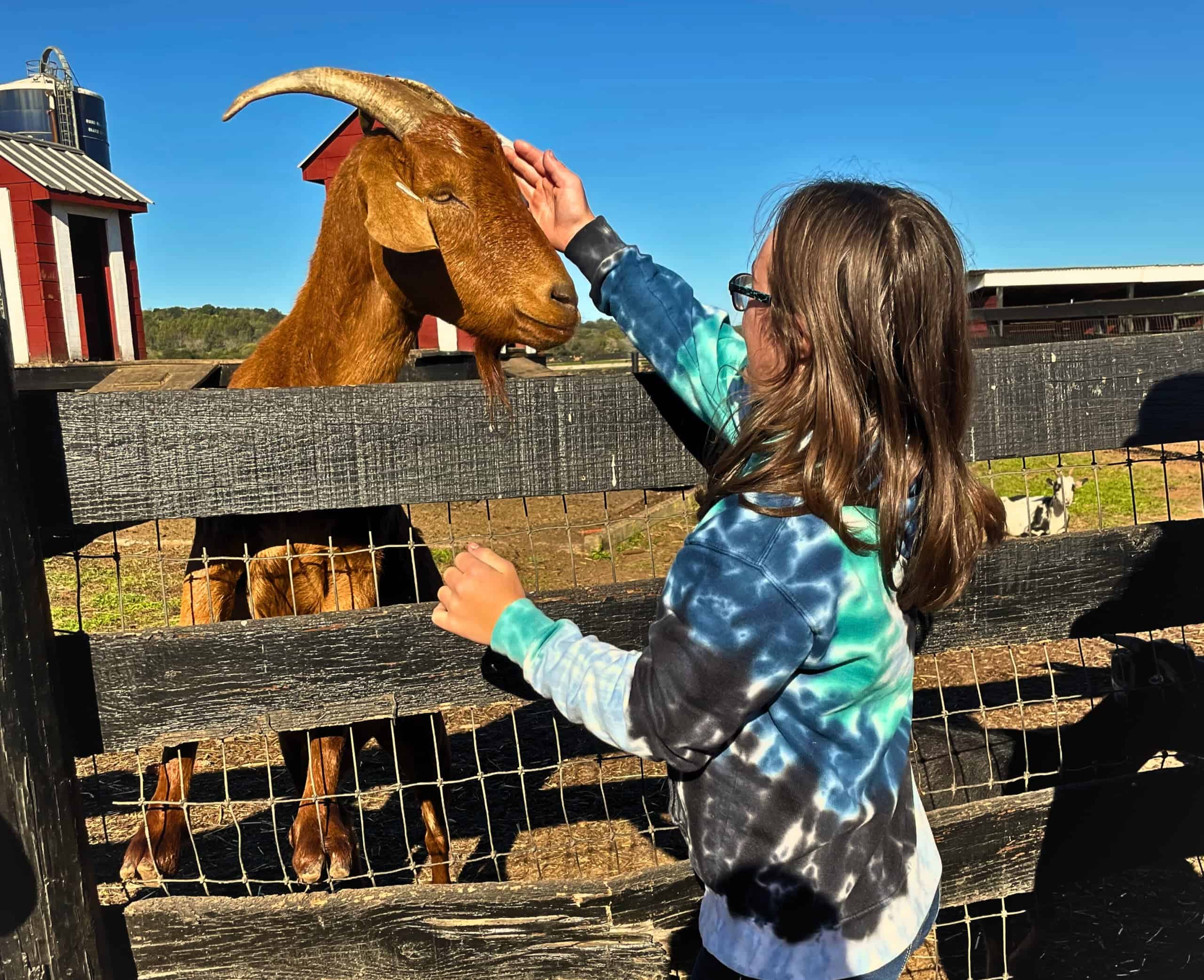
Stella Van Scoy of Culpeper Middle pets a goat during a class field trip to Round Hill Farm. While visiting, students had the opportunity to interact with livestock, learn about the life cycle of a pumpkin and participate in other farm activities. In addition, students also visited Messick’s Farm Market and Maple Tree Farm, where they took a farm tour, identified the needs of and planted seeds and participated in sheep shearing, as well as learned firsthand about the water cycle.
Agricultural education-based field trips provide students with the invaluable opportunity to experience firsthand where their food comes from. Whether it’s learning how cows are milked, churning butter or simply going pumpkin picking, these experiences help to demystify the agricultural process. More importantly, they allow students to connect with the natural world through hands-on learning that many are unable to experience, and build a sense of respect for the people who work to produce our food.
The incorporation of modern agriculture into school curriculum through tactile hands-on learning exposure works to bridge the divide between urban and rural students. Children who grow up in cities and population-dense areas oftentimes have limited access and exposure to the farms and agricultural practices that support their communities. By bringing these experiences into the classroom or organizing trips to local farms, we can ensure that all students, regardless of background or location, understand the importance of agriculture in shaping the world around them.
Ultimately, the goal is not just to debunk myths but to instill a deeper, more accurate understanding of agriculture in the minds of children. The world of farming is far more complex and fascinating than a simple belief that brown cows produce chocolate milk, and it is our responsibility as the upcoming generation of agriculturists to help the next generation grasp the reality behind their food. Just as chocolate milk doesn’t come from brown cows, true understanding of agriculture doesn’t come from textbooks; it requires hands-on experience and a deeper connection to the land.
For similar articles, visit rural-roots-review.my.canva.site.
References
WADairy. (2025). If Not Brown Cows, Where Does Chocolate Milk Really Come From? – Washington Dairy. Dairy Farmers of Washington. Retrieved November 24, 2025, from https://www.wadairy.org/if-not-brown-cows-where-does-chocolate-milk-really-come-from/.