Doing to Learn: A Century of Supervised Agricultural Experiences
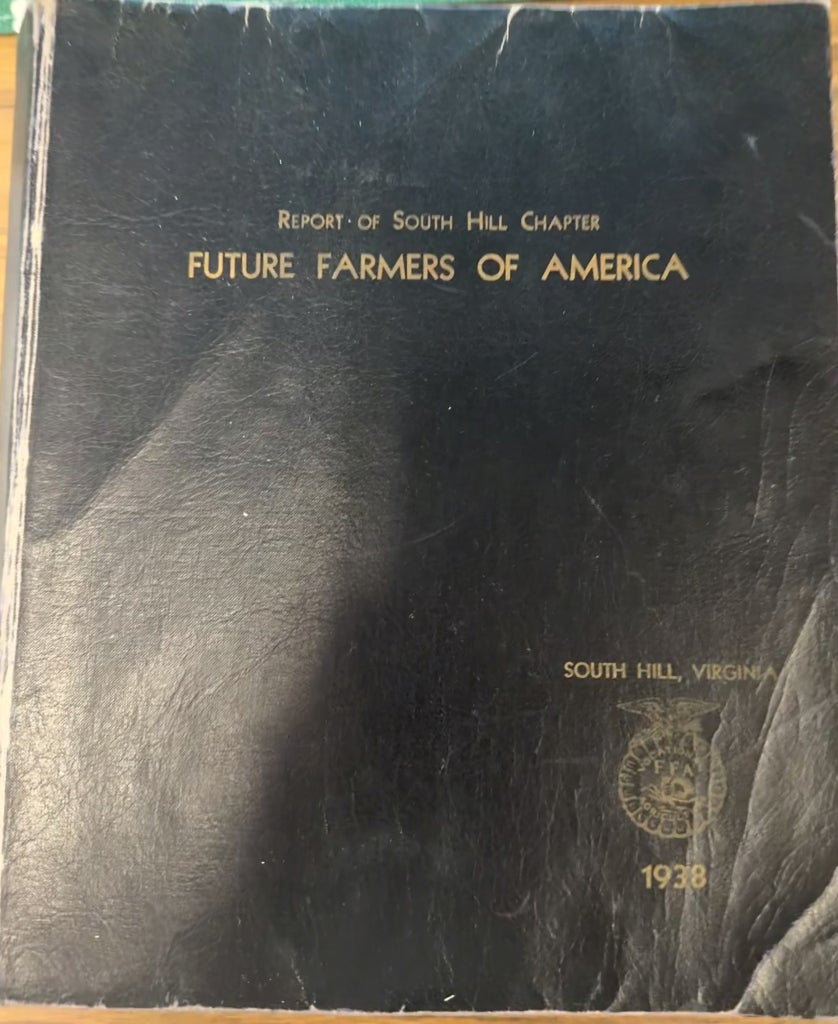
Official 1938 record book of the South Hill FFA Chapter in Virginia.
A combination of dust and nostalgia fills the air as the South Hill FFA Chapter record book opens. The pages take a walk back in time, when Supervised Agricultural Experiences (SAEs) — then called “Supervised Practice” — captured the grit, ambition and vitality of early Virginia FFA members through typewritten documents. Over time, SAEs have changed drastically, but one key aspect remains: hands-on education that bridges classroom learning with real-world agricultural experiences.
SAEs of the Past
According to the South Hill High School Preliminary Report of Supervised Practice Work, session 1931–32, agricultural enterprises included farm management, rural law and citizenship, drainage, farm buildings and machinery, sheep, shop, and projects. Each student recorded the size of his enterprise in acres, animals, breed or variety, production purpose, percent of returns belonging to the pupil, and estimated hours.
In this logbook, C. Harris, a third-year agricultural student, spent 1,100 hours on his Supervised Practice of growing tobacco. Harris cultivated five acres of bright tobacco for sale and earned 20% profit returns. He also produced eight acres of Maryland Twinn corn for feed, spending 320 hours on the project and earning no returns. Additionally, Harris spent 140 hours growing seven acres of Little Red wheat for home use, again with no profit returns.
Also in the 1931–32 session, records show that C.B. Northington, in his third year of vocational agriculture, tended one hog for pork. He spent 45 hours on this supervised project and received no profit. Northington also kept a Jersey dairy cow for home use, a 140-hour project that brought no returns. In addition to his cow and hog, he worked a half-acre home garden for 250 hours, and again received no returns.
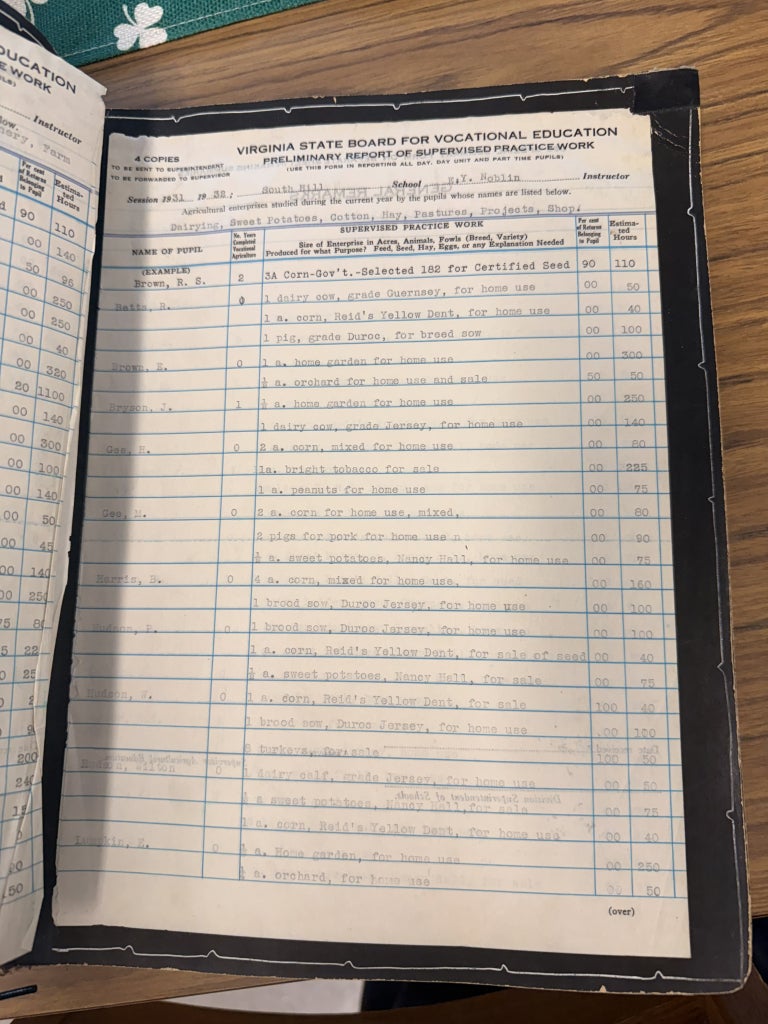
A typewritten, preliminary report of Supervised Practice Work of the 1931-1932 South Hill FFA Chapter.
In 1937–38, the 39 boys of the South Hill FFA Chapter completed a total of 132 projects, compared to 32 members completing 103 projects in 1936–37. Throughout these years, corn and tobacco production remained the most popular enterprises. During this period, females were not able to be part of FFA, so Chapter Programs of Work and Accomplishments documents focused solely on boys.
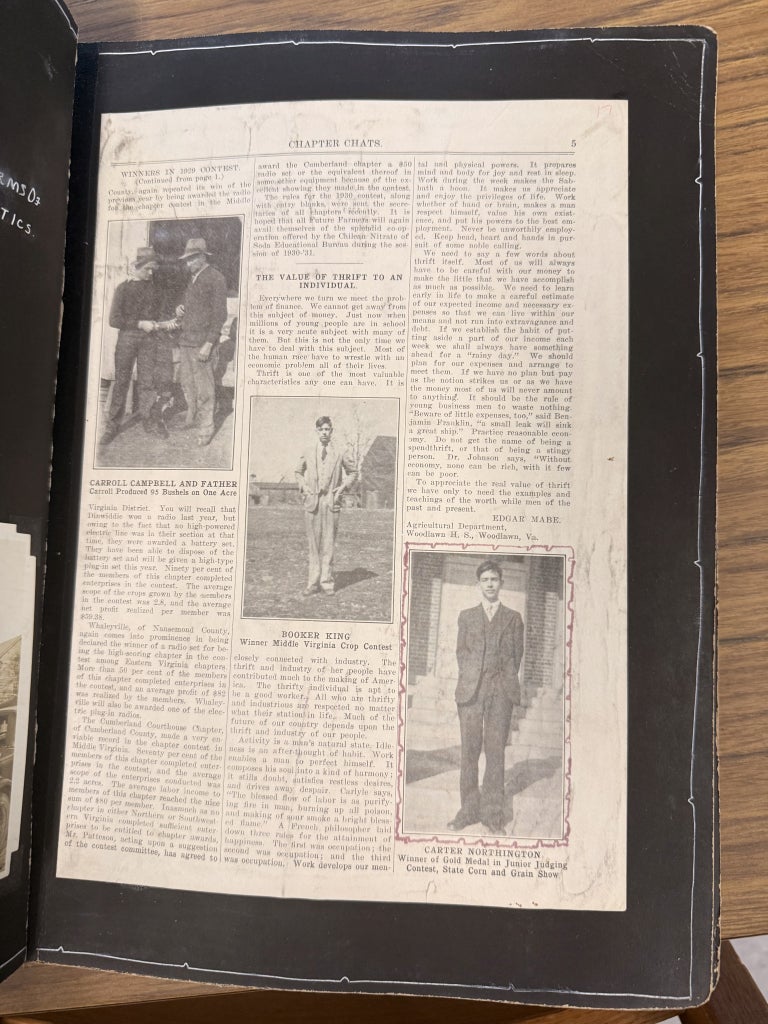
This newspaper clipping, titled “Chapter Chats,” displays the current events of the early 1930s, as well as some Virginia FFA competition winners.
SAE Evolution
Since the 1930s, SAEs in the Virginia FFA Association have evolved significantly. Documents found in the nearly century-old scrapbook show student projects like corn, tobacco, dairy cows, pigs and home gardens carefully organized and recorded on official forms using a typewriter, with every acre, hour and total calculated by hand — reflecting a strong focus on traditional, production-based farming.
Today, while SAEs still emphasize hands-on learning, they now include areas such as agriscience, agribusiness and agricultural communications — all of which are supported by major technological advancements. Instead of paper records, students use digital platforms like the Agricultural Experience Tracker (AET) to track hours, finances and skills instantly, making record-keeping more efficient and detailed.
This transformation highlights how agriculture and education have modernized over time. It becomes especially meaningful as the Virginia FFA Association celebrates its 100th year, marking a century of growth from simple, typewritten farm records to diverse, technology-driven experiences.
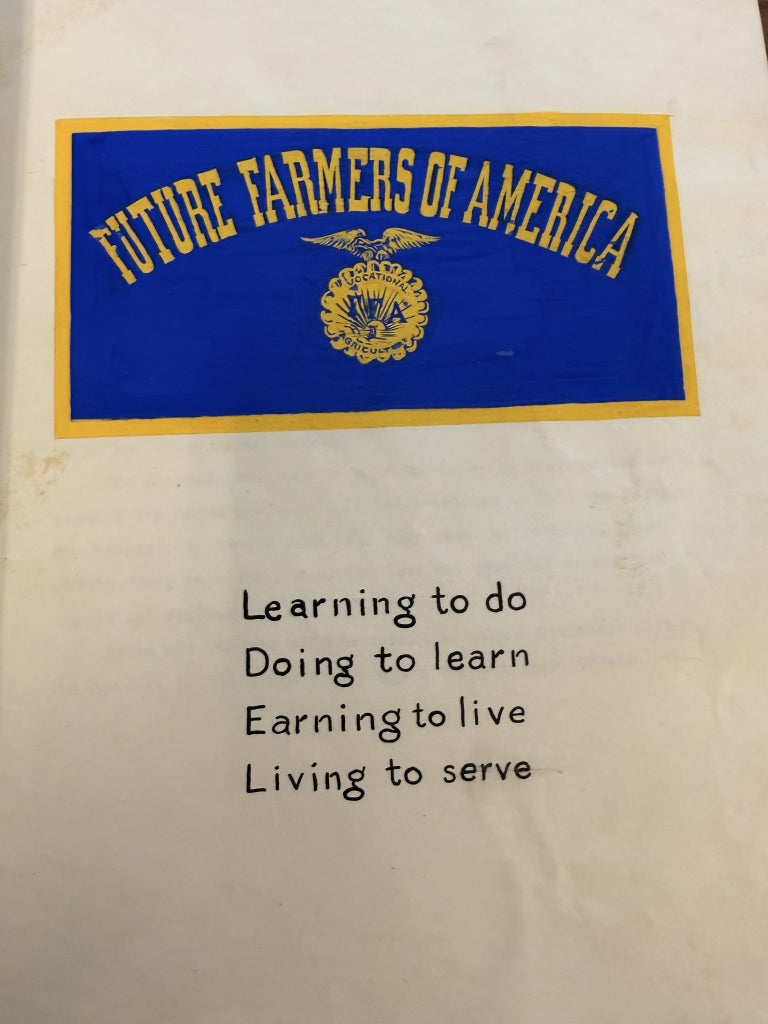
The front page of the South Hill FFA Chapter scrapbook is illustrated with past FFA branding, as well as the motto that still stands today.