Creek Kids: FFA Members and Kids Track Down Water Pollution
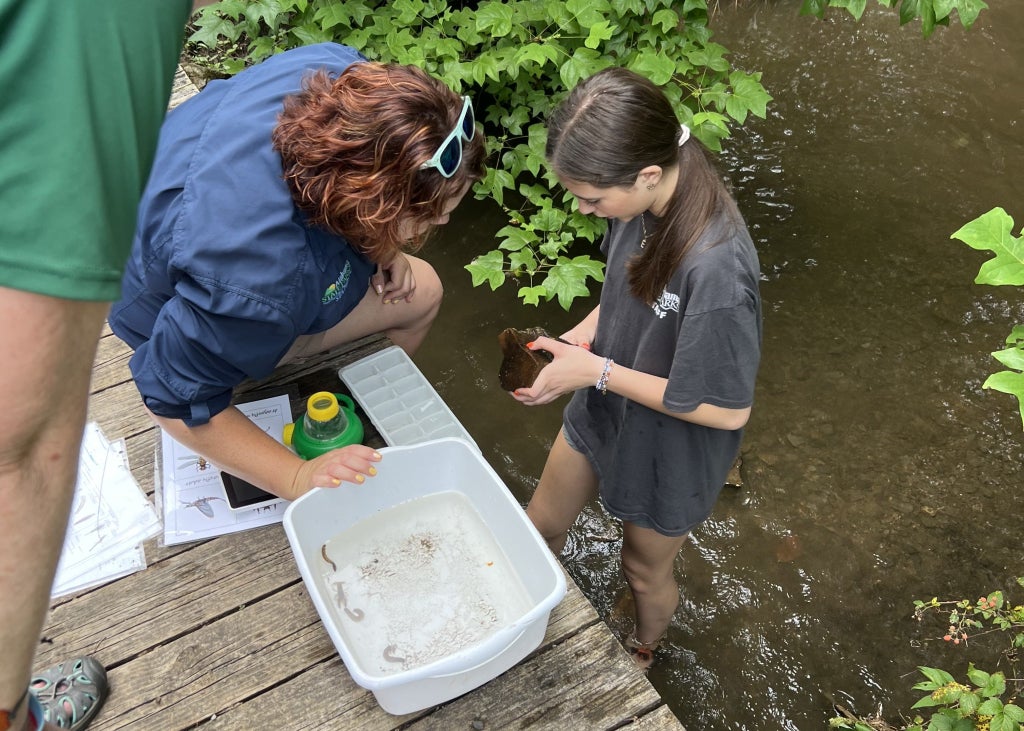
Fort Payne FFA Chapter President Ellie Grace Cyrus (right) and Desoto State Park Naturalist Brittney Hughes (left) find and identify benthic organisms.
When a group of Alabama FFA members from Fort Payne step into a creek at Desoto State Park, they aren’t just splashing around; they’re turning the stream into a pollution lab. Through the Creek Kids program, these members are teaching local children how to track pollution by studying tiny insects that reveal the water’s health.
In 2015, Fort Payne FFA partnered with Desoto State Park to form Creek Kids. The program was created to educate children in the local community about non-point source (NPS) pollution and the damage it causes to the environment. It allowed kids to step into the creek, search for benthic organisms (aquatic plants and animals that live under sediment) and see for themselves how healthy — or unhealthy — the water really is.
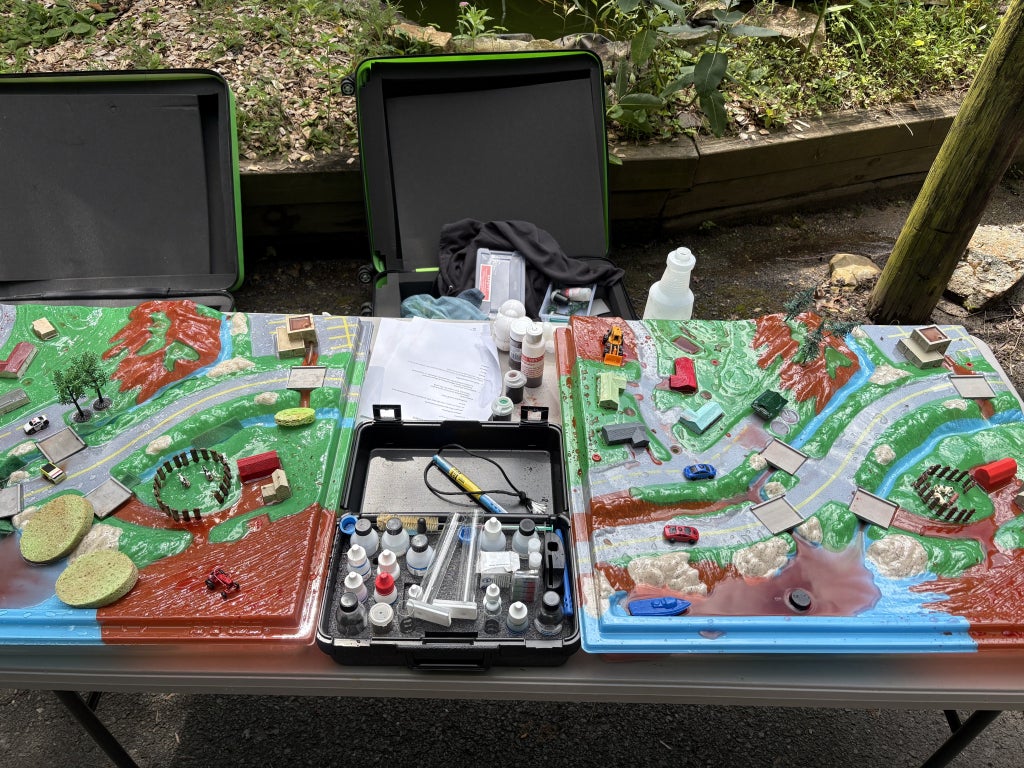
An enviroscape watershed model.
First, they teach the kids about NPS pollution, which occurs when contaminants are carried into a body of water by surface runoff, rather than being discharged from a single, recognizable source like a pipe. To explain this, they use two EnviroScape watershed models to demonstrate how pollution can run into their communities. This visual activity helps the children understand how everyday activities, such as littering or overusing chemicals, can impact the streams they play in.
Next, before they get into the water to look for benthic organisms, they discuss different types they may find and how to safely look for and identify them. The kids learn that sometimes insects like mayflies and stoneflies can only live in clean water, while others can survive in more polluted conditions. The FFA members and some state park staff also show them how to gently lift rocks, search along the stream bed and use nets without harming themselves or the environment. By the time they step into the creek, the kids know exactly what they are looking for and why these tiny organisms matter.
Once the instruction is over, the members take the children into the water to investigate and look for the important organisms in their community’s creek. The FFA members help the children spread out along the stream, using trays to collect what they find, while the state park staff help them identify each insect. As they compare the different species, they start to understand how these tiny insects show the overall health of the water. By the end, the kids aren’t just exploring; they’re learning how their actions can affect their local ecosystem.
Overall, the children in the community learn about NPS pollution, how to identify benthic organisms and ways they can help protect their local ecosystem. At the same time, the program helps FFA members build leadership, environmental science knowledge and communication skills. Together, Creek Kids creates a hands-on learning experience that positively impacts both the students who are teaching and the children who are exploring.