Behind the Quiet Fields
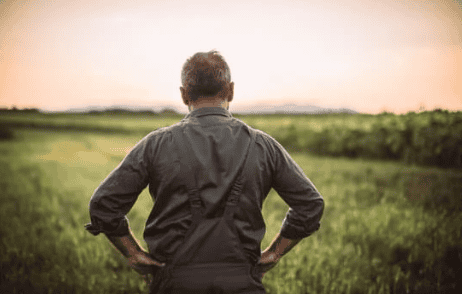
Quiet fields, heavy thoughts.
At dawn, the fields look peaceful — golden light stretching across rows of crops, the hum of machinery rising with the morning air. It’s the image most Americans hold of farming: steady, honest work rooted in tradition and self-reliance.
But beyond this calm exterior lies a crisis many never see.
Farmers across the country are carrying a heavy, often invisible burden. Long hours, volatile markets, climate uncertainty, and isolation have created a perfect storm for mental health struggles — one that researchers say is only getting worse.
A 2021 study of Midwestern farmers found that farmers who internalized stress — the ones who blamed themselves when the weather turned or when markets crashed — were significantly more likely to be at risk of suicide (International Journal of Environmental Research and Public Health, 2021). It’s a heartbreaking statistic that echoes a nationwide trend: suicide rates among male farmers are higher than the average across all U.S. professions.
And the burden is not shared equally.
First-generation farmers often enter the field with passion but face a steep learning curve and massive financial risk. Research from the University of Illinois shows that this group reports higher levels of stress, anxiety, and hopelessness than multi-generation farmers (ACES Illinois, 2022).
Women in agriculture face their own storm. Balancing farm responsibilities with care-giving roles, they are significantly more likely to experience severe depressive symptoms (ACES Illinois, 2022). And then there are LGBTQ+ farmers — a group rarely acknowledged in agricultural conversations. A 2024 study found that 72% struggle with mild to severe depression, and more than half are at risk of suicide (Journal of Agromedicine, 2024). As one researcher noted, “Mental health in farming isn’t one story — it’s many stories, shaped by identity, gender and circumstance.”
For many farmers, the hardest part isn’t the work itself.
It’s the isolation.
Miles of land separate many from the nearest clinic or counselor. Cultural expectations — to stay tough, stay quiet, push through — run deep in rural America. And when help feels far away, suffering silently can seem like the only option.
But research points toward hope. A 2023 study in BMC Psychiatry found that mental health programs are most successful when farmers help design them, making sure resources fit real farm-life demands (BMC Psychiatry, 2023).
Some organizations are already taking that approach. Programs like Farm State of Mind, launched by the American Farm Bureau Federation, offer peer support, training, and mental health resources created specifically for agricultural communities (American Farm Bureau Federation). Program leaders say the impact is clear: when farmers talk to other farmers, lives can be saved.
This issue isn’t just about statistics or headlines — it’s about the backbone of our food system. It’s about communities where every harvest, every storm, every market shift echoes through families and generations.
Talking openly about mental health won’t erase the pressures of farming. But it can chip away at the silence that keeps too many suffering alone.
The people who feed the nation deserve more than admiration for their work — they deserve care, understanding, and a community willing to confront the hidden challenges behind the fields. As one mental health researcher reflected, “We cannot ignore the well-being of those who put food on our tables. Their health is the health of our communities.”
The fields may look peaceful at dawn.
But the stories behind them tell a different truth — one we can no longer afford to ignore.