A Century of Opportunity: Route 66’s Role in Connecting Farmers to America
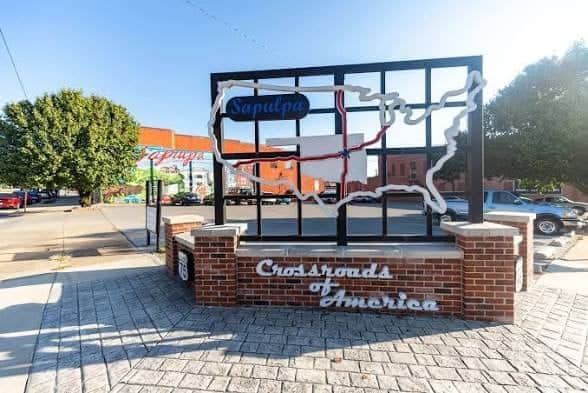
Sign located in downtown Sapulpa, Okla., on historic Route 66.
For generations of Oklahoma farmers, Route 66 was more than pavement stretching across the countryside — it was a pathway to survival, opportunity and growth. Sapulpa, which is proudly known as the “Crossroads of America,” stands on this historic highway just outside of Highway 75, and now celebrates 100 years of Route 66 and its lasting impact on agriculture and rural communities.
When many people think of Route 66, they picture diners, roadside attractions and scenic views. Yet, this historic roadway carried much more than tourists. During the Dust Bowl and beyond, families seeking new opportunities traveled west along the Mother Road. For agriculturalists, Route 66 opened doors to expanded markets and new beginnings. It became a lifeline, connecting rural producers to buyers across the country.
Originally commissioned in 1926, Route 66 connected rural communities to emerging trade markets and strengthened America’s agricultural economy. Stretching diagonally through states including Illinois, Missouri, Kansas and Oklahoma, the route helped transform how farm goods were transported. The growth of trucking along Route 66 allowed Oklahoma wheat, cattle, cotton, dairy products and fresh produce to reach markets more efficiently than ever before. Farmers were no longer limited to local buyers or rail depots; they gained access to broader national markets, as well as farm equipment, seed and supplies critical for modern agriculture.
Today, agriculture remains a cornerstone of Sapulpa’s economy. While transportation has evolved, the foundation laid by Route 66 continues to influence how commodities move across the region and the nation. Local producers still rely on strong transportation networks to deliver livestock, grain and agricultural products to consumers both near and far. The legacy of Route 66 lives on in every truck hauling cattle, every trailer transporting hay and every shipment of grain leaving Oklahoma soil.
As Sapulpa celebrates 100 years of this historic route, the city proudly showcases its own unique role in that story. Sapulpa’s Rock Creek Bridge, revolutionary for its time, featured a newly developed steel truss design and sat along the Ozark Trail — one of the earliest marked U.S. roads. As the Rock Creek Bridge undergoes restoration, it stands not only as an engineering landmark, but as a reminder of the countless agricultural goods that crossed its span on their way to markets across America.
A century later, Route 66 remains a symbol of resilience, innovation and opportunity — a legacy carried forward by local agricultural education programs and FFA members who continue its spirit of leadership and progress. Today’s students are preparing to sustain and advance the very agricultural industries that once depended on the Mother Road to reach new markets, ensuring that the “Crossroads of America” remains rooted in both history and a strong agricultural future.