Ranching Through Generations: Florida’s Native Cattle Story
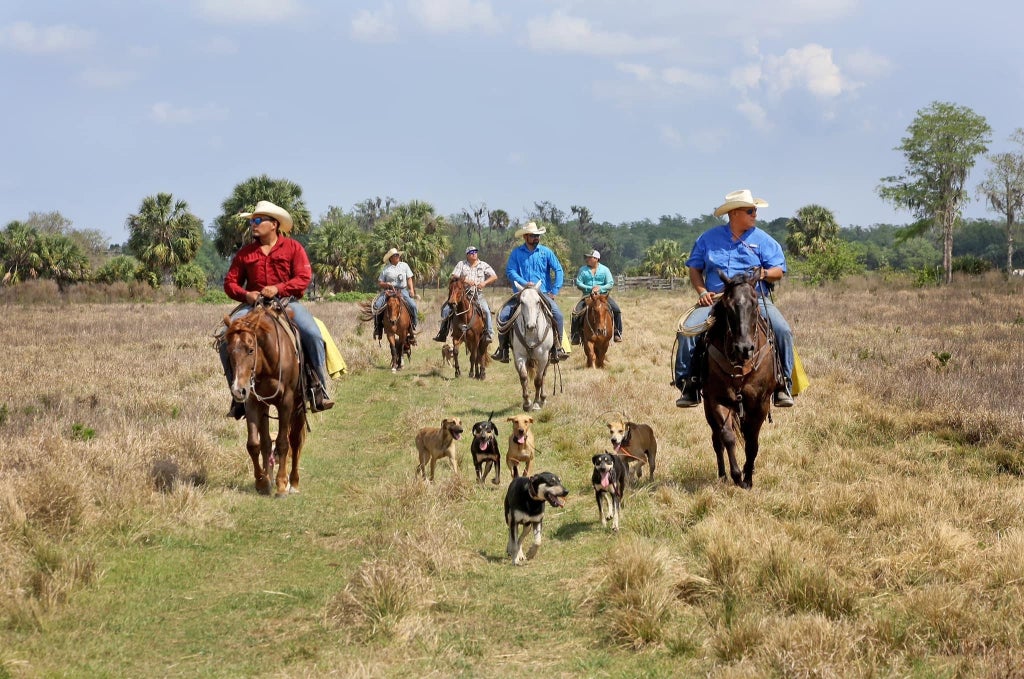
Native Cattle Crew of the Florida Seminole Indian Tribe. Photo by Carlton Ward Jr.
Long before Florida was known for beaches and amusement parks, its vast grasslands sustained cattle that were managed by Native American communities whose stewardship played a key role in establishing Florida as cattle country.
Florida’s environment, which is defined by open grasslands, wetlands and a subtropical climate, created ideal conditions for cattle grazing prior to Florida’s statehood. Native communities, such as the Seminole and Miccosukee, integrated cattle into their agricultural practices, relying on their knowledge of the land to raise livestock while preserving resources. These early practices helped anchor cattle ranching as a lasting part of Florida agriculture.
Carrying Tradition Forward
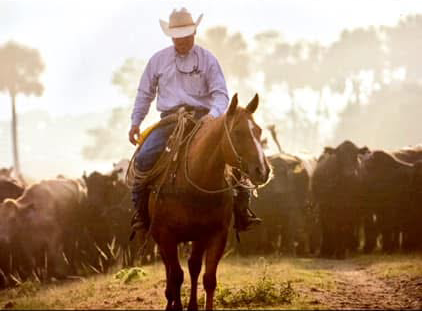
Alex Johns, executive director of agriculture for the Seminole Indian Tribe of Florida.
For Alex Johns, cattle ranching is not just a profession, but a continuation of a Native tradition that has shaped Florida agriculture for centuries. Born into a ranching family on the Brighton Seminole Indian Reservation, Johns has a lifelong commitment to maintaining the Native cattle industry.
After high school, he began his career as a working cowboy and later became the executive director of agriculture for the Seminole Tribe, earning a reputation as a leader who balances tradition with modern practices. He emphasizes practices that “keep in tune with Mother Nature,” he says, using methods such as soil testing and proven modern techniques to blend customs with innovation.
Despite these efforts, Johns sees limited land availability as the biggest challenge facing Native cattle producers today. Johns’ perspective is one of many in Florida’s diverse cattle community.
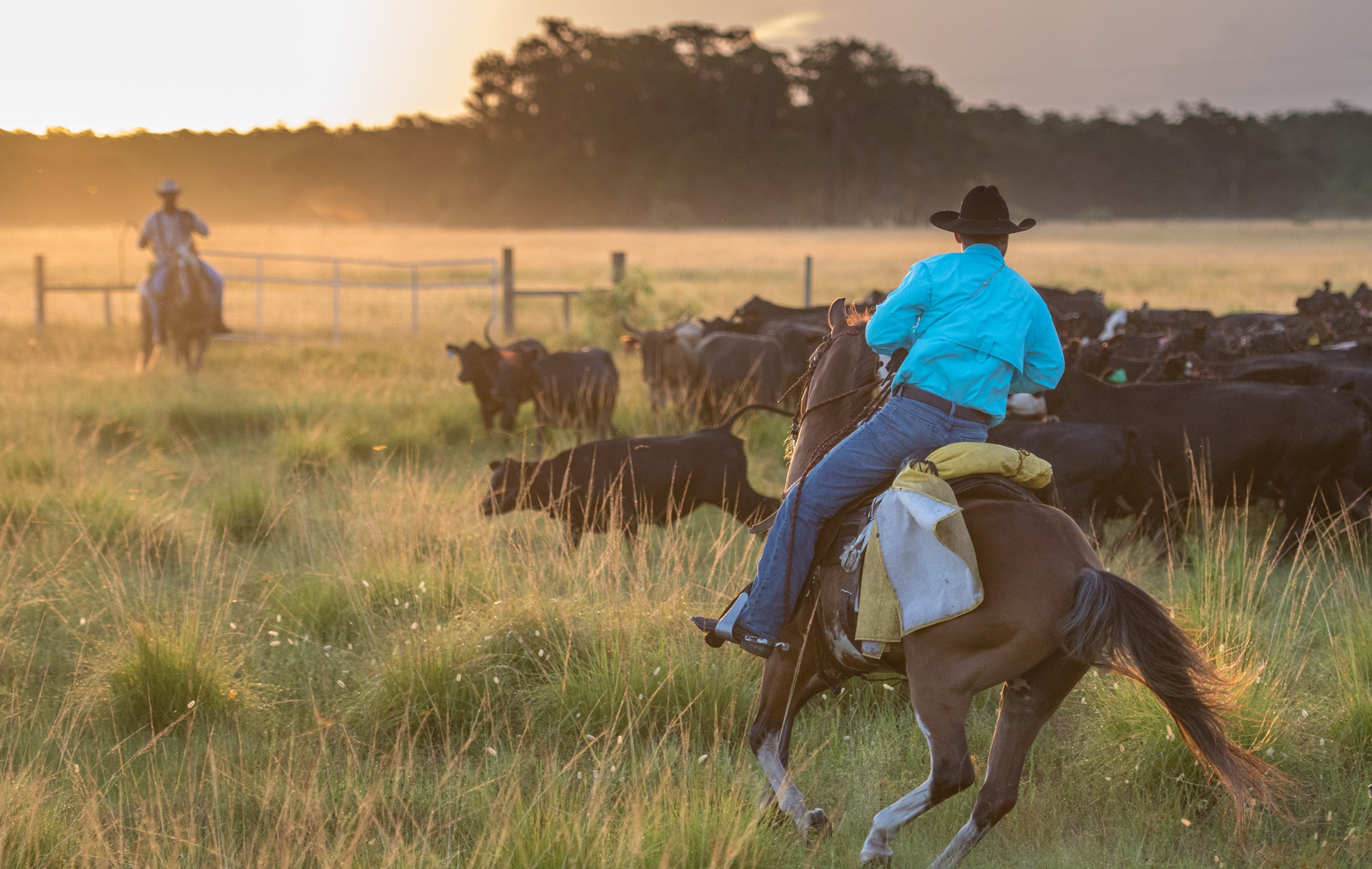
Christopher Green working cattle on Florida’s Big Cypress Reservation. Photo by Carlton Ward Jr.
On the production side of the Native cattle industry are ranchers like Christopher Green. Green runs a cow-calf operation, through which calves are raised for slaughter and a small portion of heifers are kept for replacement production. Like Johns, Green is a fourth-generation producer. He grew up around beef production, starting in 4-H, and eventually graduated into ownership.
Green implements rotational grazing and invasive plant removal to ensure the long-term health of his cattle and pasture, as well as setting up the next generation for success. These sustainable practices set producers like Green apart.
Unfortunately, when looking at demand and costs, Green sees land availability and the price of cattle as the largest inhibitor for the Native cattle industry. There are fewer cattle in America today than there’s been in over 70 years, only coming in at roughly 87.2 million head as of early 2024 — low levels not seen since the early 1950s.
As demand goes up and supply goes down, Native cattle producers face the negative consequences. However, Green continues to persevere, proving that sustainable practices offer a buffer against the changes in the cattle market.
Passing the Torch to Young Ranchers
Both Johns and Green strive to keep cattle production strong for this generation and the next, while also encouraging young ranchers and FFA members to pursue agriculture. Johns advises young people interested in agriculture to “pursue your dreams and think outside the box,” he says. “There are many ways to still get into agriculture — you just may have to do it differently than your grandfather did.”
Green recommends to “start with an education in agricultural science or agricultural marketing,” adding that “understanding the science goes a long way toward natural resources conservation and management.”
The message is clear: the future of agriculture depends on not only the land, but also on the people willing to care for it.