Blue Jackets With a Golden Meaning
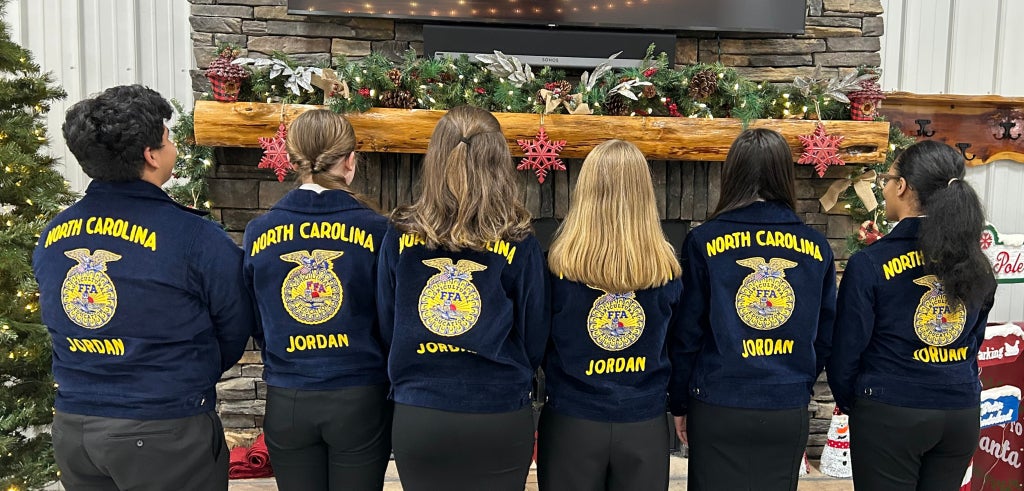
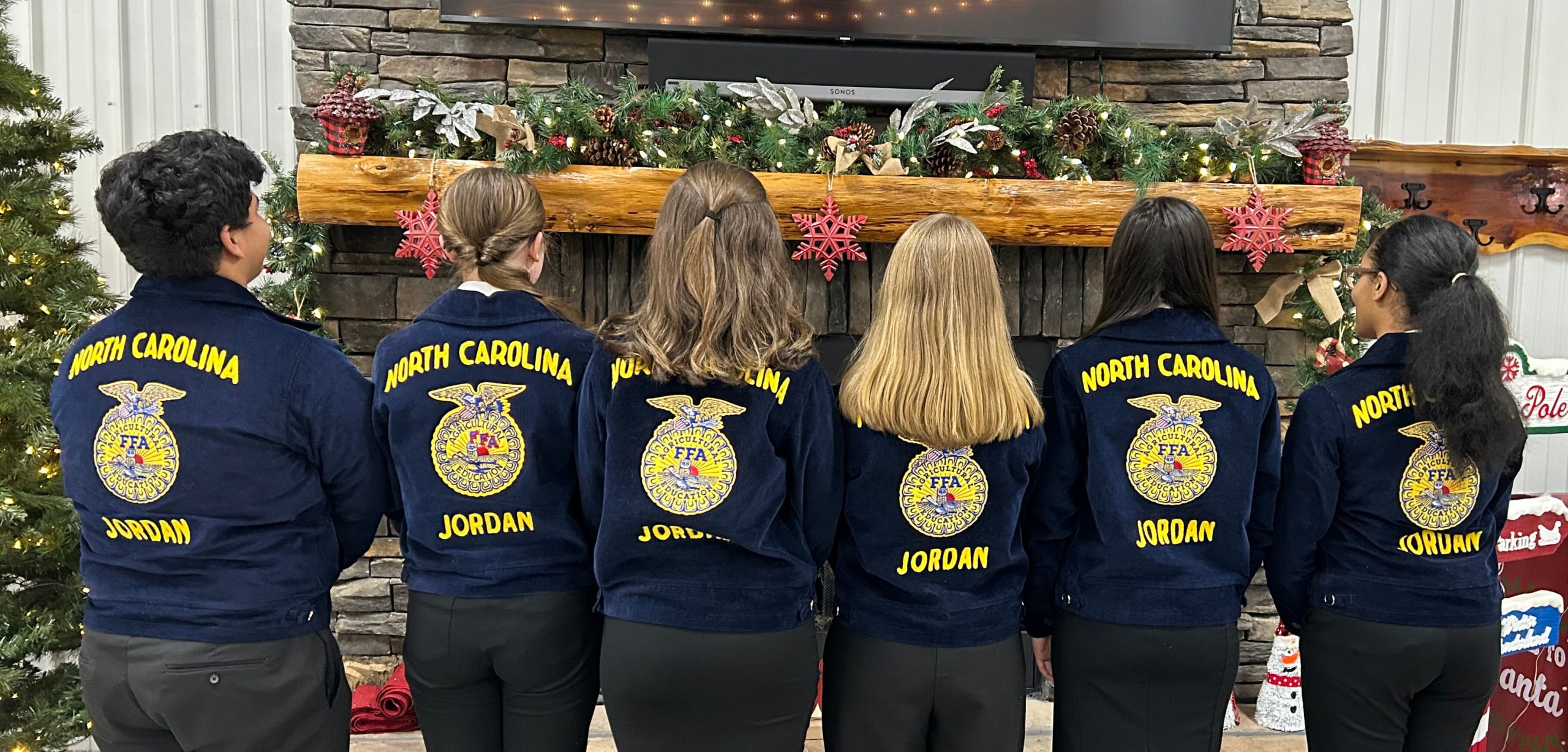
Every October, the streets of Indianapolis flood with FFA members for the annual National FFA Convention & Expo. Onlookers describe the event as a “sea of blue,” referring to the iconic blue corduroy jackets that characterize FFA Official Dress.
Since 1933, when National FFA Delegates voted to establish it as part of FFA Official Dress, the blue corduroy jacket has become a key symbol for the organization and its members who proudly wear it. As FFA has grown, the jacket has become a beacon of community, hard work and honor.
Jordan FFA Alumni and Advisor Hannah Foust from North Carolina emphasizes that the FFA jacket “means community and belonging.” The sentiment is shared by past and present FFA members alike, such as Farmville Central FFA Alumni Michael Powell, who sees the jacket “as a symbol of unity and brotherhood, where everyone is welcomed.” Powell describes his first experiences with agricultural education in his high school as a “warm and welcoming community that [he] had never felt before.”
That community is not contained in just one high school. Jordan FFA member Myles Ferguson said that the community he has found expands to all FFA members around the country.
What exactly creates this national community? Hard work and a love for agriculture.
“Wearing [the jacket] means I’m representing my chapter, my school, and the values of leadership and hard work,” Skylar Nichols, a Farmville Central FFA member, said. With that hard work comes the honor to wear the iconic FFA jacket as a representation of the future of agriculture. FFA entrusts a particular pride and expectation into the members who wear the blue corduroy.
Jordan FFA member Megan Ashley’s views of the jacket have changed since she first entered FFA. “I just saw it as something I had to wear for events.” However, after receiving her own jacket and making friends in FFA, she began to see the jacket as an honor, rather than just another part of Official Dress. “The jacket symbolizes a mutual understanding between members that we are all committed to putting in the work to uphold the future of agriculture,” Ashley said. Similar evolutions of the view of the jacket have been echoed by Jordan FFA Alumni Lila Christie, who “used to think of the FFA jacket as a stuffy requirement, but after four years of wearing it,” she views it as a “privilege.”
Despite the welcoming nature most members feel when entering the organization and the community the jacket represents for them, sadly, this isn’t the case for everyone. For Breanna Saunders, a Perquimans FFA graduate and Jordan FFA advisor, the jacket was a “symbol of status for those who could afford it or were privileged enough to be given one as an officer.” Because of her love for FFA, Saunders works to make the jacket more accessible to her students than it was to her. “Active students, students who are on a competitive team, students who represent the chapter well, and simply want a jacket; I want them to be proud to be in the FFA and have a jacket to be able to wear.”
Nominating members for jackets through the National FFA Organization’s Give the Gift of Blue exhibits the easiest way advisors can achieve Saunders’s hope. Foust shares this need with Saunders and loves “nominating students for the Gift of Blue and witnessing their excitement and passion for FFA.”
Saunders hopes that FFA members will see the jacket as a portrayal of “inclusivity” and wants “students to see the FFA jacket and want their own to showcase that they’re a part of this incredible organization.” Farmville Central FFA Alumni Hunter Winslow hopes that members will understand “the jacket is just blue corduroy with patches, but it’s the student that puts on that jacket that makes the connections.” Members who lead, participate in, and thrive in FFA are the ones who truly define what the jacket represents.
Next time the people of Indianapolis and the rest of the country are confronted with the “sea of blue,” hopefully they will see it as a “sign of ambition. Each member who wears the jacket has some goal in life, and no matter if they are in agriculture or not, they wear the jacket to better themselves through this amazing organization,” Powell added.